
Important Cultural Property of Tokyo
東 京 都 の 重 要 文 化 財Tokyo’s Important Cultural Properties — designated for their value to the nation’s cultural history.

A haori held at the Tokugawa Art Museum in Nagoya. Its own period field says Momoyama, while its own date range reaches well into the Edo era besides.
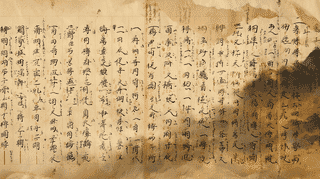
A manuscript owned by the Tokugawa Museum in Mito, Ibaraki Prefecture, which comes down to us here in its own two volumes, the upper and the lower one.
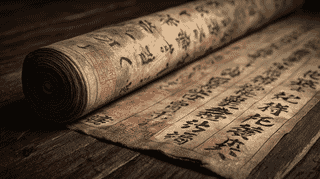
A document at the National Museum of Japanese History in Chiba, owned by an inter-university research corporation, a kind of owner that is quite new here.
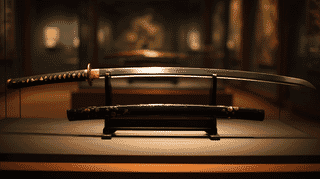
A Kamakura-period blade held at the Tokyo National Museum in Ueno. Its own reading field there reproduces all of the punctuation of the name even now.
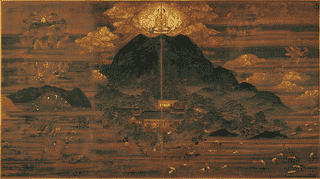
A Kamakura-period mandala on one scroll at the Nezu Museum in Tokyo. Two separate records describe it, one giving the background and one the picture itself.
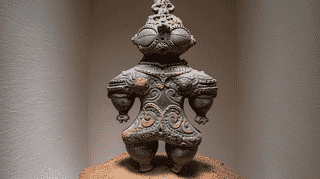
A Jomon-period clay figurine held in Tokyo. Its own name carries the find-spot in Miyagi Prefecture, while its own reading field there does not at all.
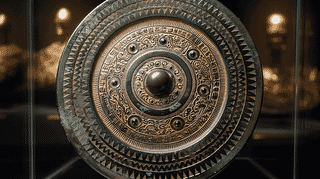
A Kofun-period mirror owned by the Gotoh Museum in Setagaya, Tokyo. Its own commentary there now runs to just one single sentence and no more than this.
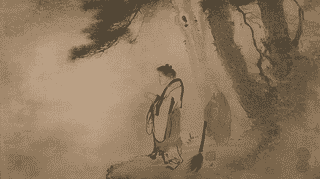
An ink painting on deposit at the Tokyo National Museum, owned by a foundation. Its title names Shide alone, and not the usual pair of the two figures.
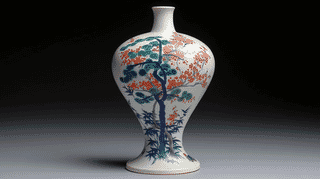
An Edo-period porcelain sake bottle held at Dazaifu in Fukuoka Prefecture, Japan. Its own matching fellow there, of the very same form, is still unlisted.

A Momoyama short sword sheathed in patterned gold, over an earlier Nobukuni blade. Its lion fittings are attributed to the Goto family, with Hosokawa provenance.
Three small silver cups at Tokyo's Eisei Bunko, said to be from China's Jincun tombs near Luoyang. Note the surviving gilding, loose rings, and inscribed bases.
Taken in 1854 by Eliphalet Brown Jr. during Commodore Perry's expedition, this daguerreotype portrait of Tanaka Mitsuyoshi — a samurai official who negotiated with the American squadron — is one of the oldest surviving photographs of a Japanese person taken on Japanese soil. Designated a national Important Cultural Property in 2006, this quarter-plate daguerreotype is entrusted to the Tokyo Photographic Art Museum in Yebisu Garden Place, Meguro, Tokyo.
A collection of autograph manuscript drafts by the Edo-period Buddhist monk and scholar Keichū (1640–1701), designated as an Important Cultural Property of Japan. The collection includes working drafts of groundbreaking works such as the Man'yō Daishōki and Waji Shōran-shō that laid the foundations of Japanese classical studies and linguistics.
This rare 27-centimetre ken, straight and double-edged, is signed by Mitsutada, the Kamakura-era founder of Bizen's Osafune school, a smith famed for curved tachi.
Held at the Tokyo National Museum, this Important Cultural Property is a rare dated hanging scroll painted in 1792 by literati master Uragami Gyokudō at age forty-eight, just two years before he abandoned his samurai life. Discover its bright indigo-and-ochre palette and the seeds of his later masterworks.
A Kamakura silk painting of Aizen Myōō, the red king of passion, an Important Cultural Property of 1953. His iconography and where to see kindred scrolls in Tokyo.
A large Kamakura-period painting of the Buddha Amida descending on clouds with Kannon and Seishi to welcome a dying soul. Held at the Tokyo National Museum.
Held in a private Tokyo collection, this Important Cultural Property is a Kamakura-period silk painting tied to the 1299 National Treasure Ippen Hijiri-e. The single hanging scroll depicts a scene at the sacred island of Enoshima and was designated an Important Cultural Property in 1959.
A Southern Song-period silk painting of a quail bearing the "Zakkashitsu-in" connoisseurship seal of Shogun Ashikaga Yoshinori, this Important Cultural Property descends from the celebrated Higashiyama lineage of Chinese paintings cherished by the Ashikaga shogunal house, and is privately preserved in Tokyo as a quiet witness to Japan's medieval engagement with classical Chinese art.
A hanging scroll in ink and color on silk, named an Important Cultural Property in 1959. Lan Ying, who painted it, was a leading landscape master of the late Ming.
More from Tokyo
Tokyo’s registered properties across designations, with featured heritage and travel notes.
The complete kokuhō catalogue — browse by prefecture, period, and category.
Nationwide jūyō bunkazai — architecture, sculpture, painting, crafts, and documents.