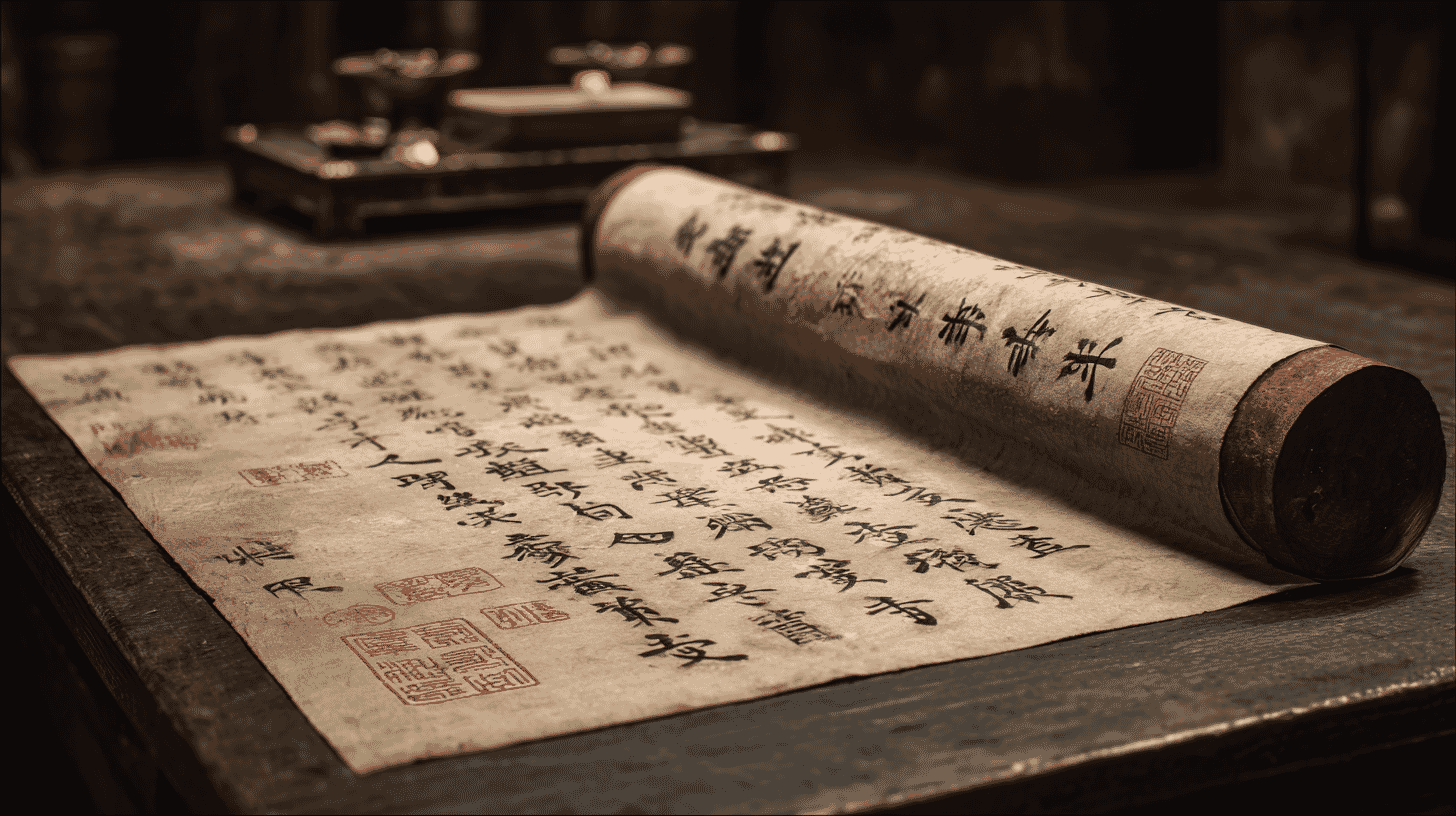
Sōranjō: The Sage of Calligraphy's Letter of Grief, Preserved as a National Treasure of Japan
Deep within the imperial collections of Japan lies one of the most precious calligraphic works in all of East Asia: the Sōranjō (喪乱帖), or "Mourning Disorder Letter." This extraordinary work preserves the brushwork of Wang Xizhi (303–361 CE), widely revered as the greatest calligrapher in Chinese history, honored with the title "Sage of Calligraphy" (書聖). Although Wang Xizhi's original manuscripts have long been lost to time, the Sōranjō survives as an astonishingly faithful copy made during the Tang Dynasty (7th–8th century), and it remains the single most important document through which scholars and calligraphy enthusiasts around the world can experience the master's hand.
Designated a National Treasure of Japan on June 27, 2023, the Sōranjō is housed at the Museum of the Imperial Collections, Sannomaru Shozokan, within the grounds of the Imperial Palace in Tokyo. For centuries, this work has been treasured by Japanese emperors, Buddhist temples, and imperial families, tracing a remarkable journey from Tang-Dynasty China across the sea to Nara-period Japan, where it has been safeguarded for over 1,200 years.
Wang Xizhi: The Sage of Calligraphy
Wang Xizhi lived during one of the most turbulent periods in Chinese history — the Eastern Jin Dynasty (317–420 CE). Born into the powerful Wang clan of Langya in present-day Shandong Province, he fled south as a child following the collapse of the Western Jin Dynasty. Despite the chaos of the era, Wang Xizhi devoted himself to the art of calligraphy, studying under the renowned Lady Wei (Wei Shuo) and ultimately transforming the art form forever.
Wang Xizhi's genius lay in refining and elevating all major script types — regular script (楷書), semi-cursive script (行書), and cursive script (草書) — into forms of unparalleled beauty and expressiveness. His most celebrated work, the "Preface to the Poems Composed at the Orchid Pavilion" (蘭亭集序), written in 353 CE, is widely considered the greatest piece of calligraphy ever created. His influence on East Asian calligraphy is immeasurable: for nearly 1,700 years, every serious student of the brush has studied his methods.
Emperor Taizong of Tang (r. 626–649) was so devoted to Wang Xizhi's work that he declared him the supreme master of calligraphy and ordered the creation of meticulous copies of every surviving original, employing the finest court calligraphers to reproduce them using an extraordinary technique called sōkō tenboku (双鉤填墨). Tragically, all of Wang Xizhi's original manuscripts have since been lost — making these Tang Dynasty copies the closest link we have to the master's own hand.
What Is the Sōranjō?
The Sōranjō is a compilation of three personal letters written by Wang Xizhi, copied onto a single sheet of white hemp paper measuring 26.2 cm tall and 58.9 cm wide. The work contains a total of 17 lines of brushwork, primarily in semi-cursive (running) script with elements of cursive script, and is divided into three parts:
- Sōranjō (喪乱帖) — 8 lines, 62 characters: The opening and longest letter, from which the entire work takes its name. "Mourning Disorder" (喪乱) appears at the beginning of the text, as Wang Xizhi expresses his anguish that his ancestors' tombs in the north have been desecrated by invading forces, and that he cannot travel there to mourn.
- Nishajō (二謝帖) — 5 lines, 36 characters: A shorter letter addressing acquaintances, touching on personal matters.
- Tokushijō (得示帖) — 4 lines, 32 characters: A brief personal message responding to a letter received from a friend.
The content of the primary letter, the Sōranjō itself, is deeply poignant. Wang Xizhi writes of "extreme mourning and disorder" (喪乱之極), lamenting that the ancestral burial grounds of his family have been violated by northern invaders. He describes being unable to contain his grief, weeping and crying out in despair. Based on its content, scholars date the original letter to approximately 356 CE (the 12th year of the Yonghe era), a period when the Eastern Jin was under constant threat from northern kingdoms.
The Art of Sōkō Tenboku: An Ancient Copying Masterpiece
What makes the Sōranjō extraordinarily valuable is the technique by which it was reproduced. Rather than being a freehand copy, the Sōranjō was created using the sōkō tenboku (双鉤填墨) method — an incredibly precise process in which a thin sheet of paper was placed over the original manuscript, the outlines of every stroke were meticulously traced with a fine brush, and then the interiors were carefully filled in with ink.
The result is a reproduction so faithful that even the texture of Wang Xizhi's brushstrokes, including the delicate dry-brush effects and subtle variations in ink density, are preserved in breathtaking detail. Fine lines, sometimes as thin as a single hair, were drawn to reproduce the faint, feathered edges of each stroke. This means that when you look at the Sōranjō, you are seeing the closest possible representation of Wang Xizhi's actual hand — the pressure, speed, rhythm, and emotion of each character are all faithfully captured.
Today, only nine Tang Dynasty sōkō tenboku copies of Wang Xizhi's calligraphy survive worldwide: four in Japan, four in China, and one in the United States. Among these, the Sōranjō is considered the finest — praised for the certainty of its dating, the coherence of its textual content, and the exceptional quality of its reproduction.
Why Was the Sōranjō Designated a National Treasure?
The Sōranjō was officially designated a National Treasure of Japan on June 27, 2023, under the category of "Written Works and Typical Writings" (書跡・典籍). Several factors contributed to its designation:
- Unparalleled historical significance: As no originals by Wang Xizhi survive, the Sōranjō represents the most reliable evidence of the calligraphic style of the most influential calligrapher in East Asian history.
- Superior quality among surviving copies: Among the nine known Tang Dynasty sōkō tenboku copies of Wang Xizhi's work, the Sōranjō is considered the premier example for its precision, state of preservation, and artistic merit.
- Verifiable dating: The original letter can be dated to approximately 356 CE based on its content, providing a rare and secure chronological anchor for studies of Wang Xizhi's late-period calligraphic style.
- Coherent and complete content: Unlike many other surviving fragments, the Sōranjō presents a full, meaningful text with rich emotional depth.
- Imperial provenance: The "Enryaku Chokujō" (延暦勅定) seal of Emperor Kanmu (r. 781–806) confirms its presence in the Japanese imperial collection since the Nara period, establishing a documented chain of custody spanning over 1,200 years.
A Journey Through Centuries: The Provenance of the Sōranjō
The history of the Sōranjō reads like a chronicle of East Asian cultural diplomacy and imperial patronage. During the Nara period (710–794), Japanese envoys to the Tang court (遣唐使) brought this work to Japan, where it entered the collection of Emperor Shōmu (r. 724–749). After the emperor's death, his consort, Empress Kōmyō, donated many of his beloved possessions to Tōdai-ji temple as an offering for his spiritual welfare. The Sōranjō is believed to be part of the "Twenty Scrolls of Wang Xizhi's Calligraphy" (王羲之書法廿巻) recorded in the Tōdai-ji Kenmotsuchō (献物帳), the temple's inventory of donated treasures.
The red seal reading "Enryaku Chokujō" (延暦勅定) stamped on the work confirms that Emperor Kanmu viewed or claimed it during the Enryaku era (782–806). Over the following centuries, the work passed through the hands of Emperor Go-Mizunoo (r. 1611–1629) and Emperor Go-Sai (r. 1655–1663), before being given to Gyōjo Hosshinnō, the head of Myōhō-in temple in Kyoto. In 1880 (Meiji 13), Myōhō-in presented the Sōranjō to the Imperial Household, where it remained as a treasured imperial possession until its eventual transfer to national custody and display at the Sannomaru Shozokan.
Appreciating the Sōranjō: What to Look For
You do not need to be an expert in Chinese calligraphy to appreciate the beauty of the Sōranjō. In fact, many connoisseurs suggest approaching it the way you might appreciate an abstract painting — allowing the rhythm, energy, and emotion of the brushwork to speak directly to your senses.
The semi-cursive script used by Wang Xizhi sits between the formal clarity of regular script and the flowing spontaneity of cursive script, making it accessible yet deeply expressive. Notice how the characters at the beginning of the letter are relatively composed and controlled, but as the emotional content intensifies — as Wang Xizhi writes of his grief over the desecration of his ancestors' tombs — the brushwork becomes more agitated, the strokes more vigorous and unrestrained. This progression from composure to emotional turbulence is one of the most celebrated aspects of the Sōranjō, and it illustrates the Chinese ideal of calligraphy as a direct expression of the calligrapher's inner state.
Pay attention to the individual characters as well: Wang Xizhi's distinctive style features generous, open forms at the top of each character that narrow as the brush descends, creating a sense of dynamism and forward momentum. The interplay between thick and thin strokes, between wet ink and dry brush, creates a visual texture that is both powerful and elegant.
Where to See the Sōranjō
The Sōranjō is housed at the Museum of the Imperial Collections, Sannomaru Shozokan (皇居三の丸尚蔵館), located within the East Gardens of the Imperial Palace in Tokyo. This museum, which reopened in November 2023 after major renovations, showcases approximately 9,800 artworks that have been passed down through the Japanese Imperial Family over the centuries.
Please note that the museum is currently undergoing additional construction for Phase II and is temporarily closed, with a full reopening planned for autumn 2026. Due to the delicate nature of calligraphic works on paper, the Sōranjō is not on permanent display — it is shown only during special exhibitions to protect the centuries-old paper and ink from light damage.
The Sōranjō was most recently exhibited at the "Japanese National Treasure Exhibition" (日本国宝展) held at the Osaka City Museum of Fine Arts from April 26 to May 18, 2025, alongside other iconic National Treasures. Future exhibition opportunities will be announced on the Sannomaru Shozokan official website.
Surrounding Attractions
A visit to the Sannomaru Shozokan offers an excellent opportunity to explore the rich cultural landscape of central Tokyo:
- Imperial Palace East Gardens (皇居東御苑): The museum is located within these beautifully maintained gardens, which are free to enter and feature the ruins of Edo Castle, seasonal flower gardens, and peaceful walking paths.
- Tokyo National Museum (東京国立博物館): Located in Ueno Park, approximately 20 minutes away by train, this is Japan's oldest and largest museum, housing 89 National Treasures and an extraordinary collection of Japanese, Chinese, and Korean art.
- Tokyo Station and Marunouchi Area: Just a 15-minute walk from the museum, the beautifully restored Tokyo Station building and the sophisticated Marunouchi district offer dining, shopping, and architectural sightseeing.
- Calligraphy Museum (書道博物館): Located in the Negishi district of Taito Ward, this specialized museum houses a rich collection of Chinese and Japanese calligraphic works, making it an excellent companion visit for those inspired by the Sōranjō.
- 📍 Plan Your Visit to Tokyo
- Find tours, activities & transport passes near Mourning Book〈Original Site Wang Xizhi〉
- [ Tokyo Skytree Asakusa & teamLab Experiences ]
Q&A
- Is the Sōranjō actually written by Wang Xizhi himself?
- The Sōranjō is not an original manuscript by Wang Xizhi — no original works by him survive today. Instead, it is a Tang Dynasty tracing copy (7th–8th century) made using the sōkō tenboku (双鉤填墨) technique, which reproduces the original brushwork with extraordinary fidelity. Among the nine known surviving Tang tracing copies of Wang Xizhi's work worldwide, the Sōranjō is regarded as the finest and most faithful representation of the master's calligraphic style.
- Can I see the Sōranjō on display at any time?
- No, the Sōranjō is not on permanent display. As a delicate work on paper that is over 1,200 years old, it is exhibited only during special exhibitions for limited periods. The Sannomaru Shozokan (its home museum) is also currently closed for construction and is scheduled to fully reopen in autumn 2026. Please check the museum's official website for upcoming exhibition schedules.
- What does the content of the Sōranjō say?
- The primary letter, the Sōranjō, is a deeply emotional message in which Wang Xizhi laments that his family's ancestral tombs in northern China have been desecrated by invading northern peoples. He writes of his overwhelming grief and his anguish at being unable to visit the tombs to pay his respects. The work also includes two shorter personal letters to friends and acquaintances.
- Why is a Chinese calligraphic work designated as a Japanese National Treasure?
- Japan's National Treasure designation recognizes objects of exceptional cultural and historical significance that are preserved in Japan, regardless of their country of origin. The Sōranjō was brought to Japan during the Nara period (8th century) and has been continuously preserved in Japan for over 1,200 years. It carries the seal of Emperor Kanmu and has been treasured by successive generations of Japanese emperors, temples, and collectors. As the premier surviving example of Wang Xizhi's calligraphic style, it holds immense importance for the history of calligraphy in both China and Japan.
- Is there an English audio guide or explanation available at the museum?
- The Sannomaru Shozokan provides multilingual support for international visitors. Exhibition labels and explanatory panels are typically available in English and Japanese. During special exhibitions, audio guides may also be offered. Please check the museum's official website before your visit for the most current information on language support and accessibility.
Basic Information
| Official Name | 喪乱帖〈原跡王羲之〉 (Sōranjō, Original by Wang Xizhi) |
|---|---|
| Designation | National Treasure (Designated June 27, 2023) |
| Category | Written Works and Typical Writings (書跡・典籍) |
| Original Author | Wang Xizhi (王羲之, c. 303–361), Eastern Jin Dynasty, China |
| Date of Copy | Tang Dynasty, 7th–8th century |
| Technique | Sōkō tenboku (双鉤填墨) — Outline tracing and ink filling |
| Dimensions | 26.2 cm (H) × 58.9 cm (W) |
| Material | Ink on white hemp paper (白麻紙) |
| Content | 17 lines in semi-cursive and cursive script (3 letters) |
| Owner | National property (Agency for Cultural Affairs) |
| Repository | The Museum of the Imperial Collections, Sannomaru Shozokan (皇居三の丸尚蔵館) |
| Address | 1-8 Chiyoda, Chiyoda-ku, Tokyo 100-0001, Japan (within the East Gardens of the Imperial Palace) |
| Access | 5-min walk from Otemachi Station (Exit C13a); 15-min walk from Tokyo Station (Marunouchi North Exit) |
| Museum Status | Currently closed for construction. Full reopening planned for autumn 2026. |
| Official Website | https://shozokan.nich.go.jp/en/ |
References
- 収蔵作品詳細/喪乱帖 — 宮内庁三の丸尚蔵館
- https://shozokan.nich.go.jp/collection/object/SZK003019
- 文化遺産データベース — 喪乱帖〈原跡王羲之〉
- https://bunka.nii.ac.jp/db/heritages/detail/598290
- 国宝-書跡典籍|喪乱帖(原跡王羲之)— WANDER 国宝
- https://wanderkokuho.com/201-12012/
- 王羲之の喪乱帖とは? — 書道専門店 大阪教材社
- https://www.osakakyouzai.com/osaka_kyouzai/?p=2977
- 喪乱帖(そうらんじょう)とは? — コトバンク
- https://kotobank.jp/word/%E5%96%AA%E4%B9%B1%E5%B8%96-89745
- Wang Xizhi — Wikipedia
- https://en.wikipedia.org/wiki/Wang_Xizhi
- The Museum of the Imperial Collections, Sannomaru Shozokan — Japan National Tourism Organization
- https://www.japan.travel/en/spot/1723/
- 本郷和人の皇室のお宝拝見:書聖・王羲之の《喪乱帖》の読み解き方 — 美術展ナビ
- https://artexhibition.jp/topics/features/20241106-AEJ2486068/
- Museum of the Imperial Collections — Wikipedia
- https://en.wikipedia.org/wiki/Museum_of_the_Imperial_Collections
- 日本国宝展 — 大阪市立美術館
- https://www.osaka-art-museum.jp/sp_evt/kokuhou2025
Last verified: 2026.02.17