
Registered Tangible Cultural Properties of Tottori
鳥 取 県 の 登 録 有 形 文 化 財Tottori · Registered Tangible Cultural Properties
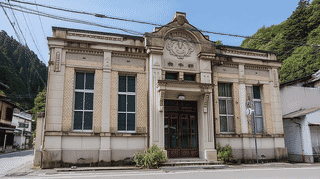
Discover the Former San'in Godo Bank Neu Branch, a beautifully preserved 1927 Western-style bank building along the historic Izumo Highway. This newly registered Tangible Cultural Property features neoclassical design elements including grand pilasters, decorative pediments, and elegant tile work in the charming post town of Neu, Tottori Prefecture.
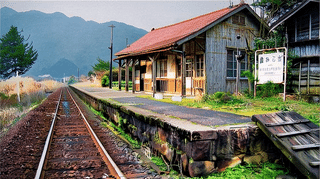
Discover Hayabusa Station, a 1929 wooden railway station in Tottori Prefecture designated as a Registered Tangible Cultural Property. This nostalgic Showa-era station on the Wakasa Railway has become a sacred pilgrimage site for Suzuki Hayabusa motorcycle enthusiasts worldwide, hosting an annual festival attracting thousands of riders.

The Hei-Haiden (offertory and worship hall) of Amenohinatori-no-mikoto Shrine in Tottori City is a Taisho-era wooden shrine building constructed in 1913. Featuring an irimoya-style gable-end entrance with a distinctive cusped gable porch and traditional bargeboard carvings with surviving original-scale drawings, it was registered as a National Tangible Cultural Property in 2022. The building forms an integral part of this ancient Engishiki-listed shrine's historic landscape.
The Main Hall of Amenohinadori no Mikoto Shrine, located atop a hill in the Ohata district of Tottori City, is a Shikinaisha listed in the Engishiki Jimmeicho (927 AD), rebuilt in 1913 during the Taisho era. This elegant ikensha nagare-zukuri structure with a copper-plate roof features restrained yet refined carved ornamentation. With its original design documents preserved, it was registered as a National Tangible Cultural Property in 2022 for its value in documenting modern shrine construction practices.
Discover the Iida Family Main House, a Registered Tangible Cultural Property nestled in Shikano, Tottori. Explore this traditional Japanese residence that preserves the architectural heritage of a charming castle town.
The Ikuta Family Residence Main House in Nanbu Town, Tottori Prefecture, is a Registered Tangible Cultural Property built in 1902. Discover the architectural beauty of this Meiji-era masterpiece, featuring impressive exposed beam work, delicate kumiko transom lattice, and an elegant main reception room with fine timbers.
Discover the Ishio Family Residence Main House, a nationally registered tangible cultural property in Tottori's historic Shikano castle town, featuring exquisite Kyoto-style lattice work and Edo-period merchant architecture.
The Ogawa Shuzo Bottling House in Kurayoshi, Tottori, is a Meiji-era earthen-walled brewery building of 218 square metres, registered nationally in 1998.
The Ogawa Shuzo Pressing House in Kurayoshi, Tottori, held the press that squeezed sake from the mash. A pulley and brick walling from its lost waterwheel survive.
Sugar was worth a fireproof building of its own. This late Meiji storehouse in Sakaiminato holds an earthen floor and, unexpectedly, a Western-style room.
A four-and-a-half mat tea room inside a storehouse. Said to have begun as a rice mill, this Taisho building in Sakaiminato was rebuilt as reception rooms.
Eighteen metres of frontage on the Sakai Channel road. This early Meiji townhouse keeps its plastered half-storey and insect-cage windows, a rare brewer's house.
A two-storey earthen-walled storehouse turns its gable to the road, closing the street front beside the Omotani house in Sakaiminato. Iron doors, notched battens.
Built in 1830 and registered in 2024, this Tottori shrine gate has an off-centre ridge: guardians sit enclosed on one side, visitors stand in the open on the other.
Kiya Ryokan is a nationally registered tangible cultural property in Misasa, Tottori Prefecture. Founded in 1868, this wooden inn preserves Meiji, Taisho, and Showa-era architecture alongside rare foot-emerging radium hot springs and a traditional ondoru bath.
Discover the Former Hino Bridge (Kyū Hino-bashi), a 1929 six-span Warren truss bridge in Yonago, Tottori. Registered as a Tangible Cultural Property, this 366-meter steel bridge offers iconic views with Mt. Daisen as its backdrop.
The Former Yoshida Medical Clinic in Tottori City is a kura-style medical building personally designed by Yoshida Shoya, a leading figure in Japan's Mingei folk craft movement, after the devastating Tottori Great Fire of 1952. Behind its traditional exterior of white plaster walls with namako mortar joints and mushiko-mado windows lies an interior that harmonizes Western Baroque staircases with East Asian decorative patterns—all unified under a warm Mingei aesthetic. Registered as a National Tangible Cultural Property in 2021, it stands as a masterwork of architectural Mingei.
Discover the Former Yonago Kakubancho Post Office, a 1935 wooden Western-style post office in Yonago, Tottori Prefecture. Now known as YORAIYA Kakuban, this Nationally Registered Tangible Cultural Property has been restored as a vibrant community space in the historic castle town district.
The Gallery Building of the Shiotani Teiko Memorial Photo Gallery in Kotoura Town, Tottori Prefecture, is a registered Tangible Cultural Property originally built in 1874 as a merchant storehouse and later converted into a photography studio by Teiko Shiotani, a pioneer of Japanese art photography. This unique cultural heritage site offers visitors an opportunity to experience both Meiji-era storehouse architecture and the legacy of a world-renowned photographer.
A north-facing timber townhouse at Akasaki in Kotoura, Tottori, built in 1906 as a shipping firm's head office, latticed on both floors and registered in 2015.
More from Tottori
Tottori’s registered properties across designations, with featured heritage and travel notes.
The complete kokuhō catalogue — browse by prefecture, period, and category.
Nationwide jūyō bunkazai — architecture, sculpture, painting, crafts, and documents.