
Important Cultural Property of Tottori
鳥 取 県 の 重 要 文 化 財Tottori’s Important Cultural Properties — designated for their value to the nation’s cultural history.
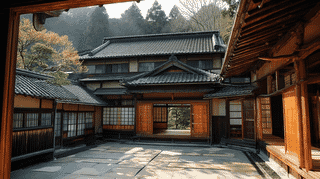
Eight Taisho- and Showa-period buildings in Tottori Prefecture. Their own floor areas there are written out in full in Chinese numerals even now today.
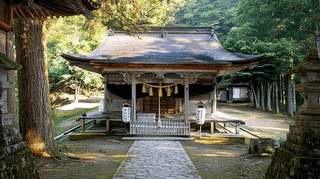
Four Edo-period shrine buildings in Tottori Prefecture. The listing here keeps an older name, while the owner itself now uses a much newer one instead.
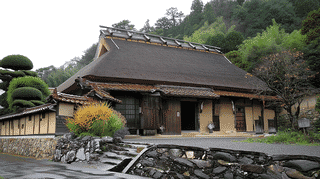
A farmhouse residence in Kagodani, Tottori Prefecture. Its own reading field there covers the bracketed location set within its own name here as well.

Standing on a precipitous cliff along the ascetic path of Mount Mitoku in Tottori Prefecture, the Jizō Hall of Sanbutsu-ji is a late-Muromachi cliff-hanging building designated a National Important Cultural Property in 1904. Enshrining Komori Enmei Jizō Bosatsu, the hall preserves architectural methods rooted in the Heian period and offers visitors a rare encounter with Japan's mountain Buddhism in its original setting.
Discover the Nōkyō-dō of Sanbutsu-ji Temple, a small but remarkable Kasuga-style Important Cultural Property clinging to a cliffside on Mount Mitoku in Tottori. Built in the late Heian period, this sutra hall stands moments before Japan's iconic Nageiredo.
Discover Sanbutsuji Monjudo, an Important Cultural Property perched on the rocky slopes of sacred Mt. Mitoku in Tottori Prefecture. Built around 1580 in the dramatic butai-zukuri (stage-style) architectural technique, this Momoyama-period hall rests with one side on a natural rock outcrop and the other supported by towering wooden columns. After climbing the demanding ascetic trail, visitors are rewarded with sweeping views of the Sea of Japan and Mt. Daisen — a highlight of the Japan Heritage 'Land of Six-Sense Purification and Six-Sense Healing.'
Built in 1907 on the ruins of Tottori Castle to welcome Crown Prince Yoshihito (later Emperor Taishō), Jinpukaku is a gleaming white wooden villa designed in the French Renaissance style by Katayama Tōkuma, Meiji Japan's leading court architect. Designated a National Important Cultural Property, it is celebrated as one of the finest Western-style buildings in the Chūgoku region, featuring a famous column-free spiral staircase and sweeping views over the Hōryū-in Garden.
Hidden in the forests of Mt. Daisen, Daisenji Amidado is the oldest surviving building at Daisenji Temple. Rebuilt in 1552 after a mountain avalanche, this Important Cultural Property enshrines a Heian-period Amida triad carved in 1131 and is opened to the public just once a month.
A nationally designated Important Cultural Property in Kurayoshi, Tottori, the zushi (miniature shrine) inside Hasedera's main hall is one of the few late-Muromachi Zen-style wooden structures still standing in San'in, bearing a 1576 inscription and retaining its original kokera-shingled roof.
Fudōin Iwayado is an extraordinary Shugendo temple built within a natural rock cave approximately 13 meters high, located along the Yoshikawa River in Wakasa, Tottori Prefecture. Dating from the early Muromachi period, it is designated as a nationally Important Cultural Property and celebrated as one of Japan's Three Great Nageiredo (Throw-in) Halls. Its principal deity, the Kurokawa Fudō Myōō, is attributed to the great monk Kūkai and unveiled twice yearly during sacred fire ceremonies.
Discover the Yabe Family Residence in Yazu, Tottori — a nationally designated Important Cultural Property dating to the early 17th century, featuring grand timber architecture and a rare multi-colored camellia tree.
More from Tottori
Tottori’s registered properties across designations, with featured heritage and travel notes.
The complete kokuhō catalogue — browse by prefecture, period, and category.
Nationwide jūyō bunkazai — architecture, sculpture, painting, crafts, and documents.