
Edo
Toyama · 江戸Browse Toyama’s cultural heritage from the Edo period (1603 – 1868). Filter by type and keyword, with concise stories, maps, and travel tips.
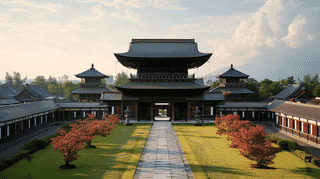
A Soto Zen temple in Toyama Prefecture. Timber taken out during the repairs there was made into a small vessel, and that too is recorded here separately.
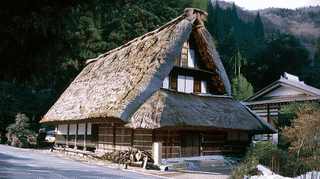
An Edo-period gassho-zukuri farmhouse in Nanto, Toyama Prefecture. The two separate records there narrow down its own date very differently even today.

A large gassho-style farmhouse in Gokayama, Nanto, Toyama, an Important Cultural Property since 1958, the most developed form of the style in the Sho River basin.
The Saeki Family Residence in Takaoka, Toyama, is a farmhouse bought from a Kaga domain headman and re-erected here in 1768. Papers date it; Toyama's oldest minka.
An 18th-century highway farmhouse relocated to the Tateyama Museum grounds in Toyama. Designated an Important Cultural Property in 1971; repaired and reopened 2025.
A True Pure Land temple in Takaoka, Toyama, whose 1795 main hall and great hall became National Treasures in 2022, with ten more listed buildings, all restored.
From 1860, the stone first torii of Ichihara Shrine in Namerikawa is 4.6 m wide with inward-leaning pillars and capital collars, its oldest registered structure.
A Soto Zen hall of 1661 to 1751 at Kanseiji in Takaoka, Toyama, built on the plain eight-room abbot plan. From 1902 it served as a classroom for trainee nuns.
A fairly large wooden yakuimon gate of 1868 in Toyama with bending roofed walls, thatched until 1941; a rare Edo-period farmhouse gate, registered in 1998.
A wooden munamon gate of 1865 to 1868 in Toyama, opening toward land thought to have been the domain lord's hawking ground; registered as heritage in 1998.
An 860 m² farmhouse of 1868 in Toyama, with a great hall of long timbers, Meiji formal rooms and study, and suikinkutsu water chimes; registered 1998, open inside.
A late Edo townhouse on the old Hokuriku highway in Namerikawa, rebuilt after an 1866 fire, with a 14 m front, wakunouchi beams and a facade restored to look Meiji.
An 1855 earthen-walled storehouse in Namerikawa, Toyama, that outlived the 1866 fire. White and black lime plaster, torii-frame windows. Registered in 2017.