
Registered Tangible Cultural Properties of Japan
登 録 有 形 文 化 財Browse Japan’s Registered Tangible Cultural Properties nationwide. Filter by prefecture, period, and category, with concise stories, maps, and practical travel tips.
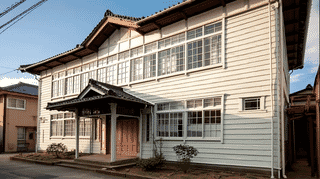
A school building of 1937 south of the Shingu Castle ruins in Wakayama, its entrance porch carrying a transom carved as an abacus. Listed as heritage in 2024.
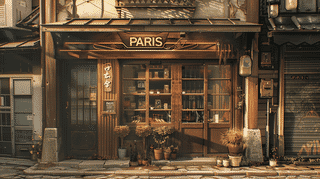
Cafe Parry on Chichibu's Banba-dori is a 1927 timber shop whose raised mortar facade makes two storeys look like three. Registered Tangible Cultural Property, 2004.
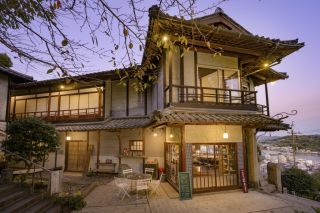
Former inn of about 1923 on Senkoji hill in Onomichi, Hiroshima, set on a high stone wall with a veranda over the Onomichi Channel; now used for lodging.
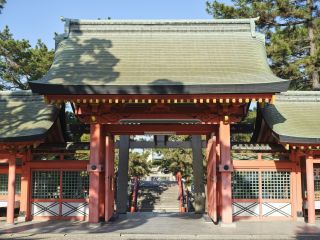
The Sumiyoshi Taisha Kojumon Gate is the early Edo four-legged gate fronting the main sanctuary in Osaka, with an unusual stack of beams and struts above its doors.
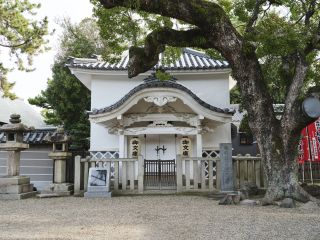
The Sumiyoshi Taisha Obunko Library is a storehouse built around 1723 by booksellers of Osaka, Kyoto and Edo to hold books, called the oldest library in Osaka.
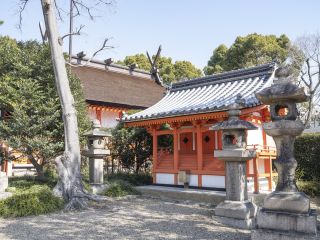
The Sumiyoshi Taisha Shiga Shrine Main Hall in Osaka is a late 17th-century three-bay shrine for the three sea gods, among the oldest buildings in the grounds.
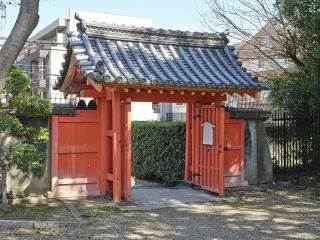
The Sumiyoshi Taisha Daikai Shrine North Small Gate is a late Edo munamon gate in Osaka, paired with a south twin to frame the front of the Daikai subsidiary shrine.
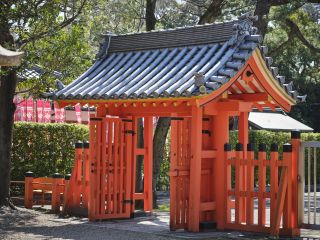
The Sumiyoshi Taisha Daikai Shrine South Small Gate is a late Edo munamon gate in Osaka, moved around 1881, paired with a north twin at the front of Daikai Shrine.
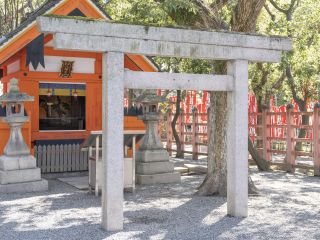
The Sumiyoshi Taisha Wakamiya Hachimangu Torii Gate is a small 1907 stone torii in Osaka with square pillars and straight lintels, a rare form in the grounds.
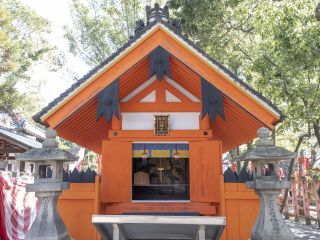
The Sumiyoshi Taisha Wakamiya Hachimangu Main Hall in Osaka is a one-bay shrine of about 1810, the main halls in miniature, with pine and doves on its doors.
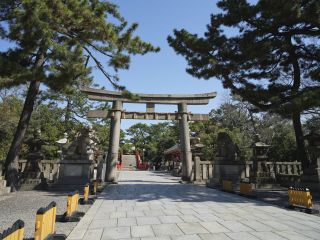
The Sumiyoshi Taisha West Great Torii Gate is the stone Myojin torii at the shrine's main entrance, 6.1 m wide and 6.4 m high, facing the Sumiyoshi Toriimae tram.
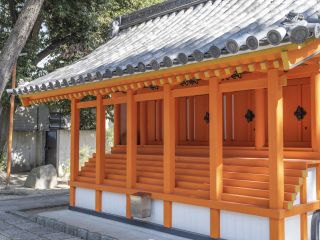
The Sumiyoshi Taisha Gosha Main Hall is a 1964 five-bay shrine in Osaka for the ancestors of seven priestly families, a wide variation among small one-bay shrines.
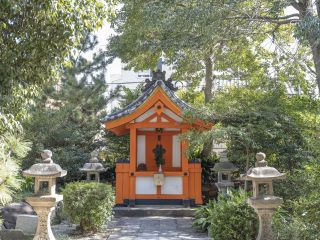
The Sumiyoshi Taisha Godosha Main Hall is a late Edo one-bay shrine deep in the garden in Osaka, dedicated to the god of the land, in small-scale Sumiyoshi style.
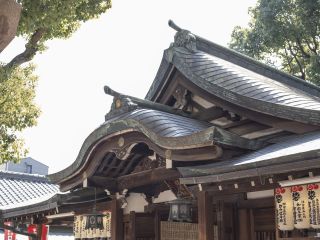
The Sumiyoshi Taisha Nankunsha Worship Hall is a 1956 hall in Osaka with a T-shaped roof and an earth floor for the crowds who come on the monthly Hattatsu days.
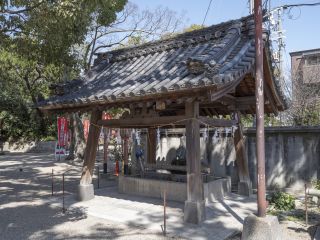
The Sumiyoshi Taisha South Temizuya Pavilion is a late Edo water pavilion in Osaka with fan rafters, projecting brackets and a coffered ceiling, ornate for its size.
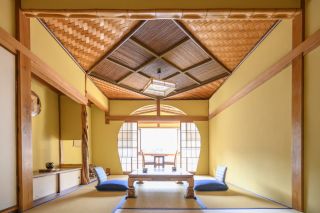
Kiya Ryokan by the river at Misasa Onsen, Tottori, a Meiji inn extended in 1919 and the 1950s, has a complex front of eaves and railed windows over a basement bath.

A 110-metre concrete gravity sabo dam completed in 1950 on the Kamanashi River between Yamanashi and Nagano, the first and largest on the main river. Registered.
Tunnel of 1912 on the Watarase Keikoku Railway under the Gunma-Tochigi border, 362 metres long, the Ashio Railway's longest, with a brick arch and six refuges.
Clad in brown scratch tile, this 1928 schoolhouse on Aichi Gakuin University's Kusumoto campus in Nagoya was designed by a pupil of the architect Suzuki Teiji.
Two reinforced-concrete pillars built in 1938 still mark the entrance to Nagoya's Asahigaoka High School, a campus with roots in an 1870 school of Western studies.
More across Japan
The complete kokuhō catalogue — browse by prefecture, period, and category.
Nationwide jūyō bunkazai — architecture, sculpture, painting, crafts, and documents.
UNESCO-inscribed cultural and natural sites across the archipelago.