
Meiji
Gunma · 明治Browse Gunma’s cultural heritage from the Meiji period (1868 – 1912). Filter by type and keyword, with concise stories, maps, and travel tips.
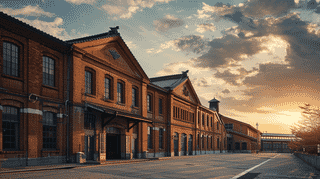
The Former Tomioka Silk Mill in Gunma opened in 1872 as a state reeling mill. Its 140-metre reeling hall and two 104-metre cocoon warehouses are National Treasures.
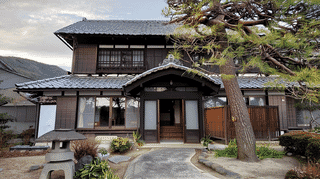
A Meiji-period timber main building in Tamamura, Gunma Prefecture, Japan. It once served as both a house and as a doctor's very own surgery in it too.
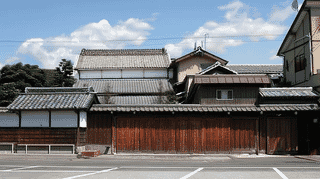
A Meiji-period main house in Kiryu, Gunma Prefecture, Japan. Its grounds meet the main street, yet the house is unseen from it; the family's looms stood elsewhere.

At Kusatsu Onsen's center, 4,040 liters surface every minute through seven wooden conduits in Taro Okamoto's gourd-shaped basin. A National Scenic Beauty since 2017.
A 1908 brick chimney at Imai Sake Brewery in Ota, Gunma, about 14 meters tall in English bond with a steel top, linked underground to the steaming room.
A 1908 work building at Imai Sake Brewery in Ota, Gunma, where rice was washed and steamed and sake was bottled, with a flue running to the brick chimney.
A 1909 brewhouse at Imai Sake Brewery in Ota, Gunma, with a koji room in its west lean-to and a wide interior now used for concerts, markets and exhibits.
An early Meiji farmhouse moved to Imai Sake Brewery in Ota, Gunma, in 1900 as shop, office and home, with a wide earthen floor and a four-room grid plan.
A small 1908 plastered storehouse at Imai Sake Brewery in Ota, Gunma, built to hold license papers and ledgers, with a separate placed roof and plaster shutters.
A large 1908 earthen brewhouse at Imai Sake Brewery in Ota, Gunma, with cedar-boarded lower walls under white plaster, where the yeast starter and mash were made.
A small early-Meiji pawn storehouse moved to Mt. Akagi, its plaster walls and layered doors marking careful work. Registered in 2025, it is now a Seiho Sanso guest room.
One of the oldest brick warehouses by Maebashi Station, No. 3 dates to 1896. Cornices wrap its walls and arched windows run the long front. It once held silk and cocoons.
Facing west at the east edge of the yard, No. 2 Brick Warehouse was built in 1896 like No. 3. Cornices and arched windows line its walls; once a silk and cocoon store.
Built between 1883 and 1897 and spared by the great Omama fire of 1895, this timber merchant house in Midori City, Gunma, still trades as a soy sauce shop.
A 1905 fireproof storehouse in Shimonita, Gunma, the largest on the Ogino property, with kakegonuri doors and an exposed truss roof upstairs. Registered in 2009.
A late-Meiji fireproof shop in Shimonita, Gunma, with white lime plaster, a washed-mortar base, a front canopy and an elaborate ridge. Registered in 2009.
The oldest structure at the Ogino Family Residence in Shimonita, Gunma: an 1891 gable-entry fireproof storehouse with kakegonuri doors. Registered in 2009.
A late-Meiji storehouse and row house on the south edge of the Ogino Family Residence in Shimonita, Gunma, lining a lane with white plaster walls. Registered 2009.
An 1885 tool store in the corner of a headman's homestead in Ota, Gunma, with a separately framed okiyane roof, a covered forecourt and plastered fireproof doors.
An 1873 headman's farmhouse in Ota, Gunma: a long two-storey gabled core with lean-tos, a formal shikidai entrance and a kebudashi roof vent for raising silkworms.