
Edo
Kagoshima · 江戸Browse Kagoshima’s cultural heritage from the Edo period (1603 – 1868). Filter by type and keyword, with concise stories, maps, and travel tips.
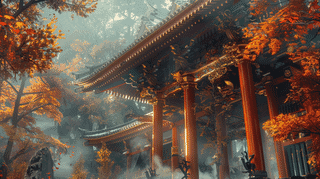
A middle Edo-period shrine in Kagoshima Prefecture. Three separate halls are named in its own title, and yet the quantity there is given as one alone.
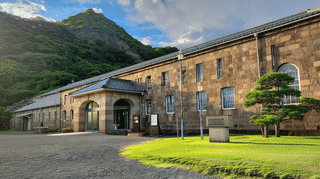
An Edo-period stone factory in Kagoshima Prefecture. The very same ground carries a second listing there, one that was made some three years earlier still.

The Furuichi Family Residence on Tanegashima is the island's oldest dated house, built in 1846 by a rural samurai and village headman. A ridge tag fixes its date.
A late Edo samurai house on Tanegashima, registered in 2017. Its attic yielded a 1551 spear licence issued to Tanegashima Tokitaka and a 1513 paired portrait.
A late Edo bracket-arm gate on Tanegashima, registered in 2017. Round log posts are rare in old Satsuma, and carved mouldings survive in its smallest members.
A stone breakwater on the Miyagahama coast of Ibusuki City, Kagoshima, built in 1834 by order of Shimazu Narioki, the 27th head of the Shimazu clan. Extending approximately 220 meters with a distinctive bent shape, it is registered as a National Tangible Cultural Property as a rare example of large-scale Edo-period maritime infrastructure.
Yaita House Main Building, a late Edo townhouse at Nishinoomote's old harbour on Tanegashima, was registered in 2017. The interior is closed; view from the street.
The Okubo Toshimichi Related Documents, designated as an Important Cultural Property of Japan and housed at the Reimeikan in Kagoshima, comprise 1,650 items including diaries, letters, government documents, and personal artifacts of Okubo Toshimichi — one of the Three Great Nobles of the Meiji Restoration. Featuring correspondence with Saigo Takamori, Iwakura Tomomi, and other founding figures of modern Japan, this extraordinary collection reveals the behind-the-scenes story of Japan's transformation from feudal society to modern nation-state.