
National Treasures of Kanagawa
神 奈 川 県 の 国 宝Kanagawa’s national treasures — properties designated kokuhō for their exceptional value to the nation.
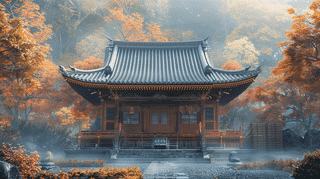
A mid-Muromachi hall at Shozokuin within Engakuji in Kamakura, held the oldest and purest Zen-style hall in Japan. Kanagawa's only National Treasure building.
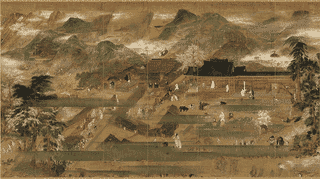
A Kamakura-period handscroll set at Shojokoji in Kanagawa. Its seventh scroll alone is held in Tokyo and recorded there as a wholly separate property.
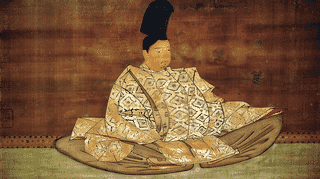
A Kamakura-period portrait at Shomyoji in Yokohama, showing the fourth and last of the four generations among the commanders that are all kept there today.
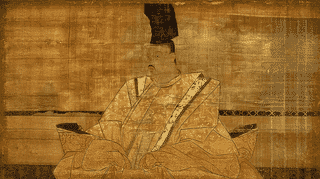
A Kamakura-period portrait at Shomyoji in Yokohama, one of the four scrolls that together span four generations of a single warrior house in Kamakura.
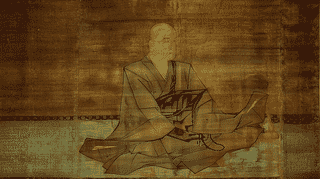
A Kamakura-period portrait at Shomyoji in Yokohama, one of the four scrolls that together span four generations of a single warrior house in Kamakura.
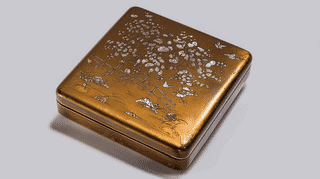
A Kamakura-period inkstone box at Tsurugaoka Hachimangu in Kanagawa. Its own design reaches even a floor that is seen only when the tray is lifted out.
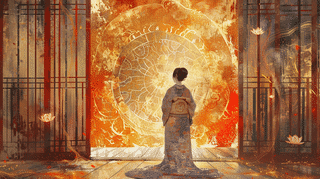
Two Kamakura-period handscrolls at Komyoji in Kanagawa Prefecture. A document dated to the year 1793 is designated alongside them here as an appendage.

Held at Kenchoji, this 1271 portrait of Lanxi Daolong is Japan's oldest dated Zen-master portrait. The monk inscribed it himself, and his eyes are ringed in gold.
Explore the silk portrait of Hojo Sanetoki at Shomyo-ji, Yokohama — a rarely-shown National Treasure depicting the Kamakura samurai-scholar who founded Kanazawa Bunko, Japan's oldest samurai library.
Five Kamakura-period silk court robes and lacquered arms, kept together at Tsurugaoka Hachimangu. Complete court dress of that age survives almost nowhere else.
Sacred arms offered to the war god Hachiman at Tsurugaoka Hachimangū: a vermilion bow, arrows, and gold-ground quivers and swords inlaid with mother-of-pearl.
A National Treasure at Yokohama's Kanazawa Bunko: 16,692 Buddhist scriptures and 4,149 medieval documents from the Kanazawa Hojo library and the temple of Shomyoji.
Preserved at Kenchō-ji in Kamakura, the National Treasure Daikaku Zenji Bokuseki (Hōgo Kisoku) is a pair of hanging scrolls written by Rankei Dōryū, the Chinese Chan master invited from Southern Song to found Japan's first pure Zen monastery in 1253. One scroll admonishes monks to devote themselves to practice; the other lays out the monastery's daily rules in remarkable detail. Executed in a calligraphic style derived from the Southern Song master Zhang Jizhi, the scrolls are both an unparalleled document of Kamakura-era Zen and a work of art.
Preserved at Tsurugaoka Hachimangu Shrine in Kamakura, this National Treasure tachi was forged by Masatsune of the Ko-Aoe school in Bitchu Province during the Kamakura period. Offered to the shrine in 1736 by the eighth Tokugawa shogun, Yoshimune, at the rededication of its halls, the sword is admired for its distinctive chirimen-hada steel and graceful curvature, and is shown with its ornate silk-wrapped mounting in periodic special exhibitions at the Kamakura Museum of National Treasures.
Kōtoku-in's Great Buddha is a bronze Amida cast from 1252, about 11.3 m tall and 121 tonnes. Once housed in a hall, it has stood outdoors for over five centuries.
A National Treasure bell cast in 1255 for Kamakura's Kencho-ji. Its inscription names patron Hojo Tokiyori, abbot Rankei Doryu, and founder Mononobe Shigemitsu.
Engaku-ji's Ogane, cast in 1301, is Kamakura's largest temple bell and a National Treasure. A steep stone staircase climbs to its hilltop belfry and Mt. Fuji views.
Nineteen Heian-period scrolls of Tang commentaries on the Wen Xuan, lost in China, survive at Yokohama's Kanazawa Bunko, designated a National Treasure in 1955.
Painted by Yosa Buson in 1771, this National Treasure album captures ten pleasures of nature in palm-sized scenes and pairs with Ike no Taiga's Jubenzu.
Juben-zu, Ike no Taiga's 1771 National Treasure album, depicts ten conveniences of villa life in palm-sized leaves, with ties to Buson and Kawabata Yasunari.
More from Kanagawa
Kanagawa’s registered properties across designations, with featured heritage and travel notes.
The complete kokuhō catalogue — browse by prefecture, period, and category.
Nationwide jūyō bunkazai — architecture, sculpture, painting, crafts, and documents.