
Edo
Mie · 江戸Browse Mie’s cultural heritage from the Edo period (1603 – 1868). Filter by type and keyword, with concise stories, maps, and travel tips.
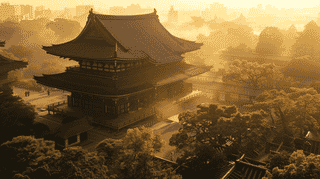
A middle Edo-period hall in Mie Prefecture. Zen in its outward appearance, it nonetheless keeps the plan usual to a Shin Buddhist main hall inside it.

A middle Edo-period hall in Mie Prefecture. Nine bays in each direction, it has the largest square plan met among all of the buildings covered so far.
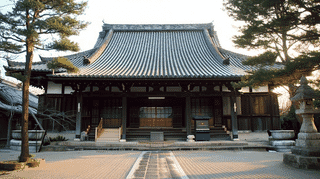
An Edo-period Buddhist temple main hall in Matsusaka, Mie Prefecture. Two other listed halls elsewhere in Japan carry this very same name here as well.

Discover the Kadoya Family Trade-Related Documents, Important Cultural Properties of Japan preserved at Jingu Chokokan Museum in Ise. This remarkable collection of 11 artifacts—including a rare parchment navigation chart, vermilion seal flags, and historic documents—reveals the fascinating story of Japanese maritime merchants who sailed to Vietnam in the early 17th century. Learn about Kadoya Shichirōbei, who chose exile over abandoning his Vietnamese family during Japan's sakoku isolation.

Discover the Jingu Saishu Shokusha Main Building, a nationally designated Important Cultural Property in Ise City. Originally built as the guest hall of Keikoin, a Buddhist nunnery whose abbesses revived Ise Jingu's sacred Shikinen Sengu ceremony, this early Edo-period shoin-zukuri masterpiece stands along the famous Oharai-machi Street near the Inner Shrine.
Built in 1863 for samurai guarding Matsusaka Castle, two row houses face each other across a hedged lane in Mie, the largest of their kind, still lived in today.
The Juenro of Asakichi Ryokan in Ise, registered in 2005, pairs a three-storey and a two-storey timber range, with a twenty-one mat banquet room on its top floor.
The Storehouse of Asakichi Ryokan in Ise, registered in 2005, is a three-storey earthen-walled dozo whose ridge follows a bending lane. Today it holds the archive.
The Main Building of Asakichi Ryokan in Ise, registered in 2005, is a late Edo timber inn whose entrance opens on the third floor, level with the Furuichi lane.
Discover Asakichi Ryokan Maegura, a Registered Tangible Cultural Property in Ise, Mie Prefecture. This Edo-period storehouse is part of the last surviving inn on the historic Furuichi pilgrimage road connecting Ise Grand Shrine's outer and inner sanctuaries.
The Kadoya Ryokan Main Building in Tsu City, Mie Prefecture, is a remarkably preserved Edo-period inn on the historic Ise Betsu Kaidō highway. Its traditional façade with sliding shutters and lattice windows, along with pilgrimage confraternity tablets, vividly recalls the era of mass Ise pilgrimage. Registered as a national Tangible Cultural Property in 2008.
A 44-metre dry-stone boundary wall of the late Edo period at Komagano in Watarai, Mie. Undressed local stone, a clipped maki hedge above, registered in 2016.
A two-storey earthen storehouse of the late Edo period at Komagano in Watarai, Mie. Boarded walls, a white plaster band, an okiyane roof; registered in 2016.
The Shimozu gatehouse in Isshinden, Tsu, faces the street before Senjuji. Its lattices and slatted windows mark a late-Edo temple retainer's home. Listed 2014.
Registered in 2011, Jakushoji Kannon Hall in Ise buries its timber frame under thick storehouse plaster, and shelters a Kannon image tied to Senhime's memory.
Dated to 1839 by its ridge tag, Jakushoji Konpira Hall in Ise packs full temple carpentry into seventeen square metres. A dragon covers its mirror ceiling.
Jakushoji Gate in Ise was raised around 1797 by Gessen, the painter-monk who gave his fees to the poor. Its zelkova frame carries almost no carving at all.
At the Nagatani-en works in Iga, a multi-chamber climbing kiln runs 34 meters up a south-facing slope. Built in the late Edo period, it fired Iga ware into the 1970s.
The well shelter and board fence of the Nakamori Residence in Iga, Mie, shelter a stone-curbed well and divide the inner court from the garden. Late Edo; closed.
The storehouse of the Nakamori Residence in Iga, Mie, rises two storeys against a wall on the line of Ueno Castle's lost outer moat. Late Edo; registered in 2014.