
Taishō
Miyagi · 大正Browse Miyagi’s cultural heritage from the Taishō period (1912 – 1926). Filter by type and keyword, with concise stories, maps, and travel tips.
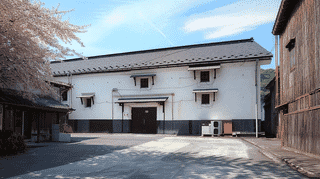
A large Taisho-period storehouse in Tome, Miyagi, fifteen bays long. Its roof frame imitates a Western truss, bolted and strapped together with iron straps.

The Oimatsu Nagata Brewery Inari Shrine Sayado is a Taisho-era protective shrine shelter in Watari, Miyagi Prefecture, registered as a national Tangible Cultural Property. Despite its compact size of just 4.8 square meters, this wooden structure features magnificent woodcarvings attributed to the legendary Kesen carpenters of Tohoku, including bamboo-and-sparrow and dragon-and-cloud motifs. Discover the artistry and history behind this hidden gem on the grounds of a brewery with over 300 years of tradition.
Discover Otakamori Yakushido, a nationally registered tangible cultural property on Miyato Island in Higashimatsushima, Miyagi. Built in 1915 with revivalist architectural style and tiles from the same kiln as National Treasure Zuiganji, this Buddhist hall stands on the slopes of Otakamori—one of the Four Great Views of Matsushima.
Located in the quiet mountains of Kesennuma, Miyagi Prefecture, the Former Tsukidate Elementary School Building is a two-story wooden schoolhouse built in 1922 and registered as a National Tangible Cultural Property in 2007. With its Stick Style exterior, Western-style truss roof, and rotating transom windows, it offers a rare and atmospheric glimpse into Taishō-era educational architecture.
Built in 1926, this granite-clad gate with pen-nib capitals spans 6.3 meters; its doors were lost to wartime requisition, yet the pillars still stand.
Built in 1926 by Tsuyoshi Ogura, this Romanesque former library reading room now houses the Tohoku University Archives, open free on weekdays in Sendai.
This V-shaped 1924 building, among Sendai's first concrete works, has a cylindrical corner and Secession entrance; Gallery Historia opens free twice weekly.
Built in 1921 in Kesennuma, Miyagi Prefecture, the Former Hirano Honten Store and Main House is a two-story wooden building combining a flamboyant Western-style shopfront with a traditional hipped-roof residence. Long cherished as a landmark at the crossroads of two historic highways, it is a Registered Tangible Cultural Property.
Discover Warabe no Kura (Children's Storehouse), a Registered Tangible Cultural Property at the Sairi Yashiki museum complex in Marumori, Miyagi. This charming Taisho-era earthen storehouse showcases traditional Japanese toys and games from the early 20th century.
A Taisho shop-house in Kesennuma's inner bay, its upper windows crowned with segmental pediments, its walls white-plastered. Registered in 2006, it still trades.
Behind a registered Kesennuma shop sits this 25-square-metre Taisho storehouse, roofed by a Western truss. Tsunami repairs reinstated its namako-kabe walls.
Tucked away in the hills of Shiroishi, Miyagi Prefecture, the small but vivid vermilion-lacquered Koshido Hall (a Registered Tangible Cultural Property) enshrines the spirits of the Miyagino and Shinobu sisters — the heroines of the celebrated kabuki revenge play "Goban Taiheiki Shiraishi Banashi."
Completed in 1923 and nationally registered in 2024, this Taishō-era worship hall in Tome, Miyagi displays masterly carvings by Tōhoku artisan Ishii Torashō.
The Main Hall of Tsushima Shrine in Tome City, Miyagi Prefecture, is a one-bay Nagare-zukuri style structure registered as a Tangible Cultural Property of Japan in 2024. Rebuilt in 1919 after the great Sanuma fire, the small wooden hall is densely adorned with vibrant carvings by Ishii Toramasa, one of the foremost shrine carvers of the Tohoku region. Originally relocated in 1614 by order of Date Masamune to guard Sanuma Castle, the Main Hall faces north — a rare orientation that reflects its unique role as spiritual protector of the castle town.
Built in 1926 and designed by American architect J.H. Morgan in the Collegiate Gothic style, the Main Gate of Tohoku Gakuin University features a reinforced concrete structure with a washed-out finish imitating stone masonry. Registered as a National Tangible Cultural Property in 2021, it has stood as the symbolic entrance to one of Tohoku's most prestigious private universities for nearly a century.
Designed by American architect J.H. Morgan and completed in 1926, the Main Hall of Tohoku Gakuin University is a three-story reinforced concrete building in the College Gothic style, clad in locally quarried Akiu stone. A beloved campus landmark symbolizing Tohoku Gakuin's growth era, it was registered as a national Tangible Cultural Property in 2014.
Built in 1923 as Isatomae Elementary School and later a night-school branch, this timber building survived the 2011 tsunami and was registered in 2017.
The Taisho-era residence at the Moritami Sake Brewery in Iwadeyama keeps a Japanese plan but adds sash windows, a bay window and a ceiling medallion. Registered in 2015.
The Yusaya Ryokan Storehouse in Naruko Onsen, Miyagi Prefecture, is a Taishō-era (1912–1925) warehouse built using a rare timber-reinforced concrete technique. Registered as a National Tangible Cultural Property in 2000, it features arched openings and washed-aggregate stone walls that reflect the eclectic architectural spirit of its era. Part of the nearly 390-year-old Yusaya Ryokan complex, it stands as a testament to the region's rich hot spring heritage.