
Edo
Okayama · 江戸Browse Okayama’s cultural heritage from the Edo period (1603 – 1868). Filter by type and keyword, with concise stories, maps, and travel tips.
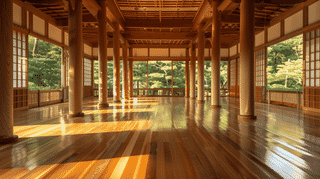
A local school begun in 1666 by Ikeda Mitsumasa in Bizen, Okayama. Its lecture hall of 1701, roofed in Bizen ware, became a National Treasure in 1953.
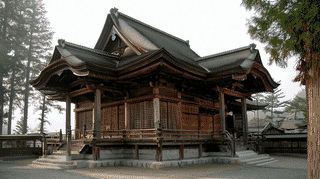
A shrine hall in Tsuyama, Okayama, entered from the gable end. The Agency dates it to 1657; the shrine records building in 1562 and repair in that year.

Discover the National Treasure 'Portrait of a Court Lady' (Kyūjo-zu), a Yuan Dynasty masterpiece depicting a woman in male court attire with a flute at her sash. Explore its storied provenance from the Ashikaga Shogunal collection to the legendary collector Ohara Magosaburō, its connection to the ancient flute virtuoso Huan Yi, and how to view this enigmatic painting at the Kyoto National Museum and the 2026 special exhibition at the Ohara Museum of Art in Kurashiki.
Former Inukai Family Residence in Okayama City is the tiled farmhouse where Inukai Tsuyoshi was born. Its main house and storehouse are designated; entry is free.
Inoue Family Residence is the oldest townhouse in Kurashiki's Bikan district, its 1721 frame confirmed by ink inscriptions. Three buildings, open since 2023.
Six buildings of the Former Okuni Family Residence in Wake, Okayama, became an Important Cultural Property in 2004. Its 1760 Main House carries a rare linked roof.
The Ohashi Family Residence in Kurashiki, Okayama, built between 1796 and 1799, became an Important Cultural Property in 1978. Its four buildings and how to visit.
Built in the 1620s, Okayama Castle Tsukimi Yagura is the only original building on the main bailey: stone-drop hatches face out, tatami and a veranda face in.
Former Katayama Family Residence at Fukiya in Okayama: a bengara pigment merchant's compound of five buildings designated in 2006, with hours and access.
A 764.9-metre cut-stone enclosure raised around 1701 at Shizutani School in Bizen City, chiselled to a rounded ridge and still free of weeds after three centuries.
Eleven structures at Shizutani in Bizen City, completed in 1684. The gilt bronze Confucius in the Taiseiden is shown only a few days a year, at the sekisai rite.
Eight structures of 1686 at Shizutani in Bizen City, honouring school founder Ikeda Mitsumasa. Set a terrace below the Confucian shrine as an act of deference.
The Main Hall of Tsuruyama Hachimangu in Tsuyama City, Okayama Prefecture, is a nationally designated Important Cultural Property built in 1669 by Mori Nagatsugu, the second lord of the Tsuyama domain. It is the most elaborate and ornate example of the Nakayama-zukuri architectural style unique to the former Mimasaka Province, featuring triple-bracket systems and exquisite carvings throughout.
Rebuilt in 1652 by a Tsuyama lord, the three-story pagoda at Honzan-ji in Okayama keeps a classical exterior while hiding newer structural methods within its frame.
Discover Myohonji Bandindo, a Momoyama-period Important Cultural Property in Kibichuo Town, Okayama. This intricately carved shrine to thirty guardian deities sits within the Nichiren stronghold known as the "Western Minobu," offering travelers a quiet encounter with vibrant lacquer carvings, autumn foliage, and seven centuries of Buddhist history.
The late Edo Oga Family Residence Front Gate faces a canal in Okayama, with deep bracketed eaves and sliding board and lattice doors across 4.1 metres.
Only 1 bay deep, the Oga Family Residence Sundries Store and Mortar Shed turns the street corner of an Okayama merchant estate under a continuous tiled roof.
Okayama's Oga Family Residence Main House anchors a late Edo merchant estate of 9 registered buildings, with a 6-room plan and a tiled namako gable wall.
The Oga Family Residence Pickle Barn and Cargo Barn holds a closed pickling room at one end and an open loading bay at the other, 48 square metres in all.
At 19 square metres the Oga Family Residence Barn is the smallest registered building on this Okayama estate, its northeast corner cut back for a canal.