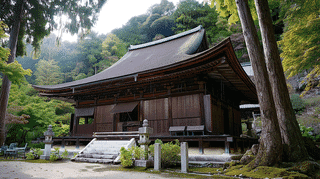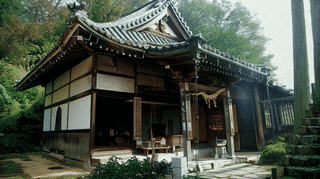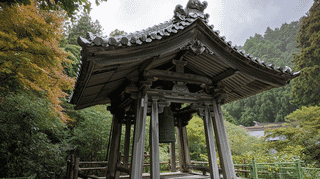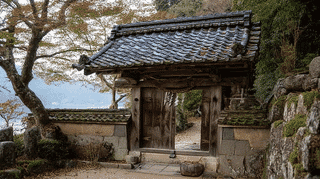
One Fuda Hall, a Registered Tangible Cultural Property since 2021
Kannonshoji Temple Fudado (観音正寺札堂, Kannonshoji Fudado) stands at Kinugasayama 2, Ishidera, Azuchi, Omihachiman City, Shiga Prefecture, a Showa-period structure entered on the register of tangible cultural properties on 14 October 2021. It is a registered property rather than a designated one.
The quantity is one building. The owner is the temple.
The structure is timber, single-storeyed, tiled, with a floor area of 19 square metres. The date field reads early Showa and the year field 1928.
What It Enshrined Is Written in the Past
What this hall held is given with a word meaning formerly.
The Agency closes that it formerly enshrined the thirty-three forms of Kannon, and calls it a hall characteristic of a pilgrimage temple.
Those forms come from the belief that Kannon appears in thirty-three guises. The record says the hall held them, and puts it in the past.
What it holds now is not recorded. Only the word formerly remains.
With the Kumedera pagoda, the doors of the lower storey carry paintings and an image is enshrined within. That is the present state.
Here what is enshrined has changed. The building stands, and its contents have been replaced.
Longer Across the Front, and Entered on the Long Side
The plan and the side of entry both differ from the other halls at this temple.
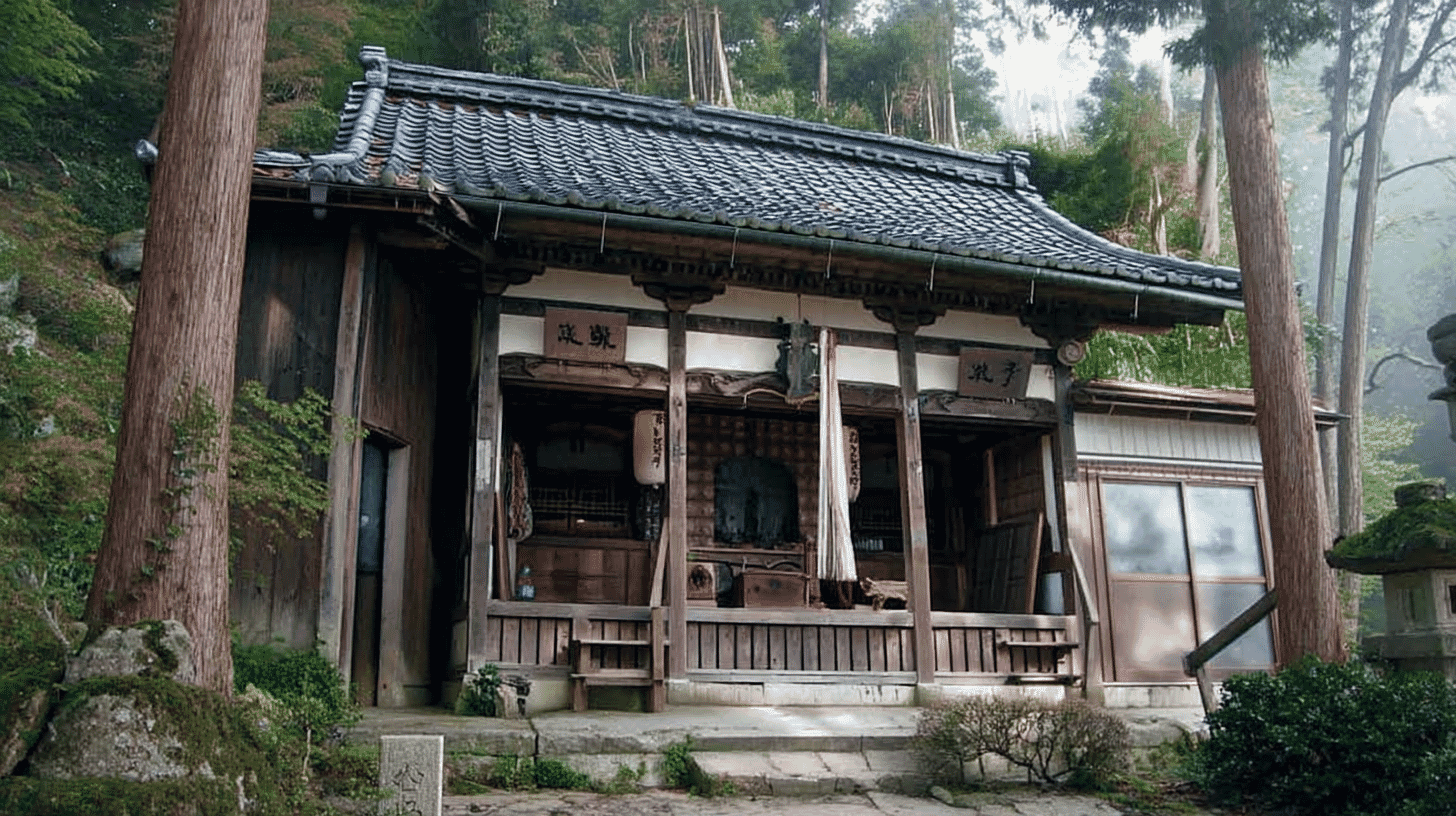
The Agency gives it as 3 bays across and 2 deep, gabled and roofed in pantiles, entered on the long side.
Three bays at the front against 2 in depth: the front is the longer. Entering on the long side means the doorway lies on the slope of the roof rather than under a gable.
The Jizo hall is 2 bays square and the goma hall 3 bays square. In both, front and depth are equal.
Only this hall has them unequal. The roofs differ too: the Jizo hall is pyramidal, the goma hall hip-and-gable at the front and gabled at the back.
This hall is gabled, the same at front and back. The Nikaido residence and the Wakato Bridge were entered at the gable end. This one is not.
The Interior Described in Exactly the Words Used of the Jizo Hall
Two halls carry the same description inside.
Of this hall, the Agency writes that the interior is a single room, with an altar in the innermost half-bay under a curved beam.
Of the Jizo hall, the same: a single room, an altar in the innermost half-bay, a curved beam thrown across.
Three things agree: the single room, the altar in the innermost half-bay, and the beam above it.
Outside they differ. The Jizo hall is 2 bays square and pyramidal, on round posts; this hall is 3 bays by 2 and gabled.
The years differ as well, 1881 for the Jizo hall and 1928 for this one, 47 apart. The interiors are still described in the same words.
Visiting
The hall stands at Kinugasayama 2, Ishidera, Azuchi, Omihachiman City, Shiga Prefecture, owned by the temple.
Its position is recorded: south of the goma hall, facing west.
From the main hall southward run the Jizo hall, the goma hall and this hall in order, all three facing west.
The bracketing is a large block with a shaped arm. Across the front, each bay carries a beam-shaped tie with a half-shutter hung below, all 3 alike.
All 3 bays at the front carry half-shutters, so the hall looks quite different open and closed. The temple lies in the hills, and visiting follows its own arrangements. Check before travelling.
Q&A
- When was the hall registered?
- On 14 October 2021, as a registered tangible cultural property. It is registered rather than designated, and the quantity is one building.
- What did it enshrine?
- The Agency writes that it formerly enshrined the thirty-three forms of Kannon. The word formerly puts it in the past, and what it holds now is not recorded.
- What shape is it?
- Three bays across and 2 deep, so the front is the longer. It is gabled, roofed in pantiles, and entered on the long side.
- What is the interior like?
- A single room, with an altar in the innermost half-bay under a curved beam. The Jizo hall at the same temple is described in exactly the same words.
- Where does it stand?
- South of the goma hall, facing west. From the main hall southward run the Jizo hall, the goma hall and this one.
Basic Information
| Name | Kannonshoji Temple Fudado (観音正寺札堂, Kannonshoji Fudado) |
|---|---|
| Location | Kinugasayama 2, Ishidera, Azuchi, Omihachiman City, Shiga Prefecture |
| Designation | Registered tangible cultural property (structure, religious architecture); registered rather than designated; 7 buildings at the temple were registered on the same day |
| Year Designated | 2021 (14 October), registered |
| Quantity | 1 building |
| Dimensions | Timber, single-storeyed, tiled, with a floor area of 19 square metres. 3 bays across and 2 deep, gabled and roofed in pantiles, entered on the long side, with bracketing of a large block and a shaped arm. Across the front, each bay carries a beam-shaped tie with a half-shutter hung below. Inside is one room, with an altar in the innermost half-bay under a curved beam. The date field reads early Showa and the year field 1928 |
| Owner | Kannonshoji |
| Public Access | Within the grounds of a temple in the hills; visiting follows its own arrangements |
References
- Cultural Heritage Online: the Kannonshoji fuda hall
- https://bunka.nii.ac.jp/heritages/detail/572622
- Cultural Heritage Online: the Kannonshoji Jizo hall
- https://bunka.nii.ac.jp/heritages/detail/592040
- Agency for Cultural Affairs, National Cultural Properties Database
- https://kunishitei.bunka.go.jp/
- Omihachiman City: cultural properties
- https://www.city.omihachiman.lg.jp/
Last verified: 2026.09.13