Kannon-shoji Jizo-do: A Hidden Meiji-Era Treasure at Japan's Sacred Mountain Temple

Discover Kannon-shoji Jizo-do, a registered cultural property from 1881, nestled within the ancient pilgrimage temple founded by Prince Shotoku on Mt. Kinugasa in Shiga Prefecture. Experience authentic Japanese Buddhist architecture and the legendary mermaid tale.

Introduction: A Sacred Hall in the Sky

Perched high on the slopes of Mt. Kinugasa in Shiga Prefecture, where misty clouds often embrace the ancient forest, stands a small but exquisite Buddhist hall that has witnessed over 140 years of prayers and devotion. Kannon-shoji Jizo-do, registered as a Tangible Cultural Property of Japan in 2021, offers visitors a rare glimpse into Meiji-era religious architecture while serving as a tranquil sanctuary within one of Japan's most storied pilgrimage temples.

Unlike the famous temples that draw massive crowds, this intimate hall rewards those who venture beyond the beaten path with an authentic experience of Japanese Buddhist heritage. Here, amid the fragrance of incense and the whisper of mountain winds, you can connect with centuries of spiritual tradition.

What Makes Jizo-do Special: Understanding Its Cultural Value

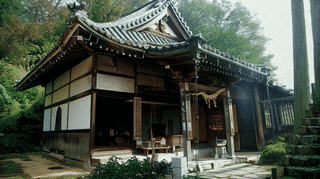
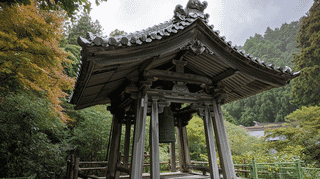
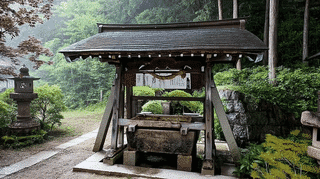
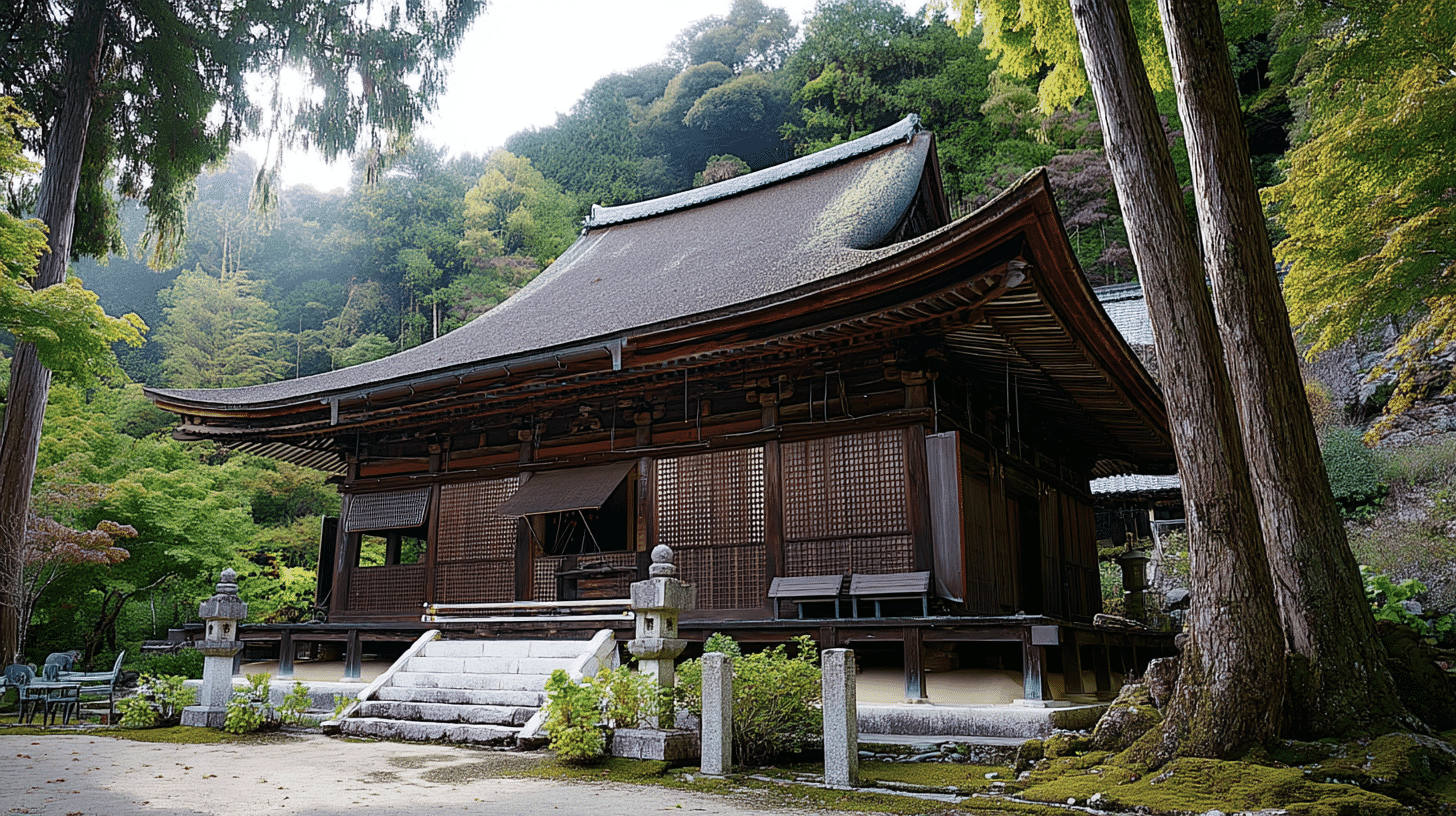
Constructed in 1881 during the Meiji period, Kannon-shoji Jizo-do exemplifies the refined craftsmanship of traditional Japanese religious architecture. The hall features a distinctive hogyo-zukuri style—a pyramidal roof design where four triangular roof surfaces meet at a single peak, crowned with a decorative finial. This architectural choice, traditionally reserved for sacred structures, creates an elegant silhouette against the mountain backdrop.

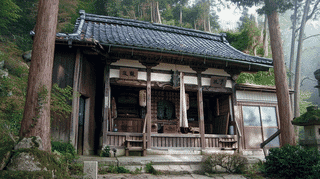
The hall's compact two-bay square footprint (approximately 11 square meters) belies its sophisticated construction. Round wooden pillars support elaborate bracket complexes called hiramitsudo, while the closely-spaced single-eave rafters demonstrate the builder's attention to proportional harmony. The façade features half-shutters at the center flanked by graceful cusped windows (kato-mado)—an architectural element borrowed from Zen temple design that adds visual refinement while allowing filtered light to enter the sacred space.

Why Was It Designated a Cultural Property?

The Agency for Cultural Affairs registered Jizo-do as a Tangible Cultural Property because it authentically preserves the atmosphere and architectural vocabulary of a pilgrimage temple's subsidiary hall. In an era when many historic structures have been lost to fire, decay, or modernization, this small building serves as a valuable document of Meiji-period Buddhist architecture and the continuing traditions of the Saigoku Kannon Pilgrimage.

The hall's interior arrangement—a single room with the rear section elevated as a Buddha altar connected by a rainbow beam (koryo)—follows classical patterns that have defined Japanese Buddhist architecture for centuries. This preservation of both exterior appearance and interior spiritual function makes Jizo-do an important cultural touchstone.

The Legend of the Mermaid: Kannon-shoji's Mysterious Origins

No visit to Jizo-do is complete without understanding the extraordinary legend that surrounds its parent temple. According to temple tradition, Prince Shotoku—the 7th-century statesman credited with establishing Buddhism in Japan—encountered a mermaid while traveling through the Omi region in 605 CE.

The creature, emerging from the reed-filled waters near Lake Biwa, revealed that she had been a fisherman in her previous life. Her occupation of taking lives had condemned her to this form as karmic punishment. She pleaded with the prince to build a temple on Mt. Kinugasa and carve an image of Kannon, the Bodhisattva of Compassion, to help release her from suffering.

Moved by her appeal, Prince Shotoku personally carved a thousand-armed Kannon image and established the temple, granting the mermaid salvation. This poignant tale of redemption and compassion has drawn pilgrims to these mountain slopes for over 1,400 years. While the temple's famous "mermaid mummy" was unfortunately lost in a 1993 fire, the legend continues to resonate with visitors who climb the ancient stone steps.

Highlights and Attractions

While Jizo-do itself offers a contemplative experience of traditional architecture, the broader Kannon-shoji temple complex presents numerous opportunities for discovery.

The Magnificent Main Hall and Giant Sandalwood Kannon

The temple's main hall, reconstructed in 2004 following the devastating 1993 fire, houses one of Japan's most impressive Buddhist statues: a 6.3-meter seated Kannon carved from 23 tons of Indian sandalwood. The aromatic wood—normally prohibited from export—was obtained through special permission after the temple's abbot made over 20 trips to India to negotiate its release. Standing before this golden-hued statue, visitors often report detecting the subtle fragrance of sandalwood permeating the hall.

The Guardian Nio Statues

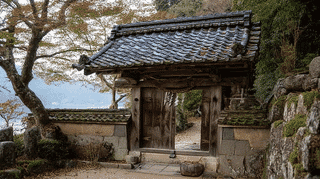
Unlike many temples where fierce guardian figures stand within a formal gate, Kannon-shoji's muscular Nio statues guard the entrance in the open air, their powerful forms weathered by mountain elements. This unusual arrangement creates a dramatic first impression for arriving pilgrims.

Panoramic Views of Lake Biwa

From the temple grounds, visitors can enjoy sweeping vistas across the rice paddies to Lake Biwa, Japan's largest lake. On clear days, the Shinkansen bullet train can be spotted far below, its silent passage a striking contrast to the timeless atmosphere of the mountain temple. The temple even posts predicted times when the rare "Doctor Yellow" inspection train might pass!

The 33 Wisdom Stones

The path from the parking area to the temple is lined with 33 stone markers, each bearing a piece of Buddhist wisdom. This thoughtful arrangement—corresponding to the 33 temples of the Saigoku Pilgrimage—transforms the approach into a walking meditation.

Exploring the Surroundings

Kannon-shoji sits at the heart of one of Japan's most historically significant regions, offering visitors the opportunity to combine their temple visit with exploration of legendary castle ruins and scenic waterways.

Kannonji Castle Ruins

Sharing Mt. Kinugasa with the temple, the ruins of Kannonji Castle once served as the stronghold of the Sasaki Rokkaku clan, who dominated the region for centuries. The castle's stone walls, scattered throughout the forest, represent some of Japan's earliest examples of sophisticated stone fortification. History enthusiasts can spend hours exploring the various baileys and defensive positions that made this one of the most formidable mountain castles of medieval Japan. This site is designated as one of Japan's Top 100 Castles.

Azuchi Castle Ruins

Just a few kilometers away, the ruins of Azuchi Castle mark the site where warlord Oda Nobunaga built Japan's first truly magnificent castle in 1576. Though the castle itself burned shortly after Nobunaga's death, the massive stone foundations and grand approach stairway remain awe-inspiring. The nearby Nobunaga no Yakata museum features a full-scale reconstruction of the castle's top floors, complete with gold-leaf walls.

Kyorinbo Temple

This former sub-temple of Kannon-shoji, located at the base of the mountain, features a remarkable hidden garden and is famous for its spectacular autumn foliage. The intimate moss garden and traditional architecture offer a completely different but complementary experience to the mountain temple above.

Omihachiman Canal District

The historic merchant town of Omihachiman, with its picturesque canal lined with traditional white-walled warehouses, lies a short distance away. Visitors can take boat rides through the waterways that once made this a prosperous trading hub, then explore the charming streets where Omi merchants built their fortunes.

Lake Biwa viewed from mountain temple with traditional architecture in foreground

Planning Your Visit

Reaching Kannon-shoji requires some effort, but the journey itself becomes part of the pilgrimage experience. The temple sits at approximately 370 meters elevation on Mt. Kinugasa, and there are several approaches to consider.

For those arriving by car, the rear approach (ura-sando) via the Gokasho Forest Road offers the easiest access, with a parking area just a 10-minute walk from the temple. The front approach (omote-sando) from Ishidera requires climbing approximately 400 stone steps from the mid-mountain parking area—a more challenging but historically authentic experience.

Those using public transportation can take a bus from JR Notogawa Station to Kannonjiguchi stop, followed by a 40-minute walk up the mountain. While demanding, this approach allows visitors to experience the full pilgrimage path that devotees have walked for centuries.

The temple welcomes visitors year-round, though each season offers different charms: cherry blossoms in spring, lush greenery and cool mountain air in summer, vivid autumn colors, and pristine snow views in winter. Note that mountain roads may close during severe winter weather.

📍 Plan Your Visit to Shiga
Find tours, activities & transport passes near Kannonshoji Temple Jizo Hall
[ Hikone Castle & Lake Biwa Cruise Experiences ]

Q&A

QHow long should I plan for visiting Kannon-shoji and Jizo-do?
AAllow at least 1.5 to 2 hours for a leisurely visit to the temple complex, including time to appreciate Jizo-do and the main hall. If you plan to explore Kannonji Castle ruins as well, add another 1-2 hours. The climb from the parking area takes approximately 10-40 minutes depending on your chosen approach.
QIs the temple accessible for those with mobility limitations?
ADue to its mountain location, the temple involves uneven terrain and stairs. The rear approach offers the easiest access with minimal steps from the parking area, but the paths within the temple grounds can still be challenging. Please consider your physical condition before visiting.
QCan I receive a goshuin (temple stamp) at Kannon-shoji?
AYes, the temple offers goshuin as the 32nd station of the Saigoku Kannon Pilgrimage. The stamp office is open from 8:00 AM to 5:00 PM. The temple also provides stamps for the Omi Saigoku Pilgrimage and other collections.
QWhat is the best season to visit?
AEach season has its appeal. Spring offers cherry blossoms and fresh greenery, summer provides cool mountain breezes, autumn brings spectacular foliage (particularly at nearby Kyorinbo), and winter offers peaceful snowy landscapes. However, winter visitors should check road conditions as mountain roads may be closed due to snow.
QAre there English explanations available at the temple?
ASignage at the temple is primarily in Japanese, though some basic information may be available in English. We recommend researching the temple's history beforehand or bringing a translation app to enhance your understanding of this culturally rich site.

Basic Information

Name Kannon-shoji Jizo-do (観音正寺地蔵堂)
Cultural Property Status Registered Tangible Cultural Property (Registered October 14, 2021)
Construction Period 1881 (Meiji 14)
Architectural Style Wooden single-story, pyramidal roof (hogyo-zukuri), san-kawara tile roofing
Building Area Approximately 11 square meters
Location 2 Ishidera, Azuchi-cho, Omihachiman City, Shiga Prefecture 521-1331, Japan
Parent Temple Kannon-shoji (観音正寺) - 32nd Temple of Saigoku Kannon Pilgrimage
Temple Hours 8:00 AM - 5:00 PM
Admission Fee Adults: ¥500 / Junior & Senior High School Students: ¥300 / Elementary and younger: Free
Mountain Road Hours 8:00 AM - 4:30 PM (roads closed outside these hours and during winter conditions)
Contact 0748-46-2549
Access By car: Via Gokasho Forest Road (rear) or Ishidera Forest Road (front) from Meishin Expressway Hikone IC or Ryuo IC. By public transport: Bus from JR Notogawa Station to Kannonjiguchi, then 40-minute walk.

References

Cultural Heritage Online - Kannon-shoji Jizo-do
https://bunka.nii.ac.jp/heritages/detail/592040
Kannon-shoji Temple Official Website
https://kannonshoji.or.jp/
Saigoku 33 Kannon Pilgrimage - Temple 32
https://saikoku33.gr.jp/place/32
Shiga Prefecture Official Tourism Site - Kannon-shoji
https://www.biwako-visitors.jp/spot/detail/20484/
Omihachiman Official Tourism Site - Castle Information
https://www.omi8.com/stories/castle
Wikipedia - Kannon-shoji
https://ja.wikipedia.org/wiki/観音正寺

Last verified: 2026.01.02

Nearby heritages