
Nara
Shiga · 奈良Browse Shiga’s cultural heritage from the Nara period (710 – 794). Filter by type and keyword, with concise stories, maps, and travel tips.
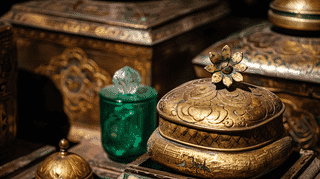
Finds from the site of Sufukuji in Otsu, Shiga, recovered in 1938 from a cavity in the pagoda's foundation stone. Four nested containers held three crystal relics.

A Tang-period text owned by Enryakuji in Shiga Prefecture. Its own country field reads China, while its own period field gives the Tang dynasty of it.

Discover the Shichijō Shinō Kesa, a rare Tang dynasty hemp kesa designated as a National Treasure of Japan. Brought from China by the monk Saichō over 1,200 years ago, this sacred Buddhist vestment is preserved at Enryaku-ji Temple on Mount Hiei, a UNESCO World Heritage Site.
Two scrolls at Ishiyama-dera preserve the Book of Han, China's history of the Former Han, copied by hand in eighth-century Japan, with a Buddhist text on the back.
Compiled in 543 and lost in China, the Yupian survives only in Tang manuscripts in Japan. This National Treasure at Ishiyama-dera is volume 27's latter half.
At Ishiyama-dera in Shiga, one of the oldest copies of the Shiji sits on paper a Heian monk later reused for a Shingon ritual. The scroll is a National Treasure.
At Ishiyama-dera in Shiga, the Shaku Makaen Ron is a rare Tang-dynasty manuscript of a commentary on the Awakening of Faith, kept in five folding booklets.
Copied in 768 by order of Empress Shōtoku for a departed sovereign's repose, this scroll of the Sarvāstivāda monastic code survives at Ishiyama-dera in Shiga.
Kept at Taiheiji in mountainous Shiga, these 142 volumes are the oldest dated copy of the Great Wisdom Sutra in Japan, brushed in 712 at the wish of Prince Nagaya.
Twenty-seven sutra volumes kept at Jomyoji Temple in Koka, Shiga, copied in 712 for Prince Nagaya: Japan's oldest dated Daihannya-kyo, a National Treasure.
Held at Enryaku-ji, this National Treasure is a single scroll of two Tang government permits issued to the monk Saichō in 804 and 805. Part is in his own hand.
A National Treasure at Onjo-ji near Lake Biwa, this Tang handscroll in ink line maps the deities of the Diamond World mandala, brought from China by Enchin in 855.