
Edo
Shiga · 江戸Browse Shiga’s cultural heritage from the Edo period (1603 – 1868). Filter by type and keyword, with concise stories, maps, and travel tips.
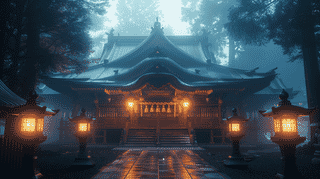
A hall of 1640 at Enryakuji on Mount Hiei in Shiga. Its earthen inner sanctuary lies three metres below the boarded worship space, keeping the basic esoteric plan.
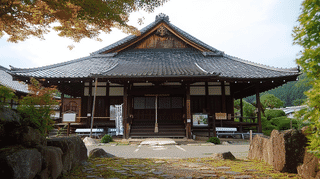
Discover the Seianji Guest Hall, an Important Cultural Property of Japan near Lake Biwa. Explore Momoyama-era architecture, Hasegawa school paintings, and legendary Ano-shu stone walls in Sakamoto, Otsu.
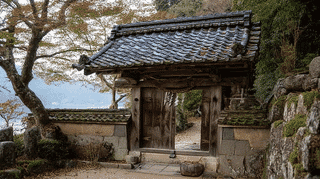
Discover the Kannon-shoji Shoin Garden Gate, a Registered Tangible Cultural Property from 1844. This rare Yakuimon gate survives from the Edo period, offering a unique glimpse into traditional Japanese temple architecture near Lake Biwa.
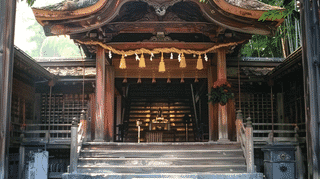
Discover Nidouji Shrine's 1703 Main Hall, an Important Cultural Property showcasing rare Kasuga-zukuri architecture with exquisite craftsmanship from the Edo period in Shiga Prefecture, Japan.

Nine documents by Kawachiya Kashō, a wealthy farmer and brewer, and his heirs reveal how an educated villager in Edo Japan weighed family, learning, and survival.
Discover the 953-item Important Cultural Property collection documenting the achievements of Kunitomo Ikkansai (1778–1840), the 'Edison of the Edo Period.' From Japan's first reflecting telescope and sunspot observation records to the country's first practical air gun, explore the extraordinary scientific legacy born in a small gunsmith village in Shiga Prefecture.
The Main Hall of Hando Shrine, perched atop Mt. Hando (664 m) in Koka City, Shiga Prefecture, is a nationally designated Important Cultural Property rebuilt in 1650. Adorned with vermilion lacquer and gold leaf in the Momoyama architectural style, it crowns a sacred mountain renowned as a Shugendo training ground and legendary home of the Koga ninja.
Built inside the Kyoto palace in 1619 for Tokugawa Masako and granted to Enman-in in 1647, this 19.7-metre shingle-roofed shoin hall in Otsu was designated in 1902.
Built in 1634 as a Tokugawa shrine hall, Enryaku-ji's Great Lecture Hall was moved up Mount Hiei in 1963. An Important Cultural Property of early Edo carpentry.
An Important Cultural Property in Otsu, this 1670 shoin of Otsu Betsuin wraps in a U shape around a courtyard. A rare niche, hearth and shelf set its plan apart.
Ōtsu Betsuin Main Hall, Shiga, rebuilt in 1649, anchors a Higashi Hongan-ji branch founded in 1600 by the priest Kyonyo. An early-Edo Important Cultural Property.
Kannonji Shoin in Kusatsu, Shiga, is an early Edo building 11.9 metres wide with a shingled roof. Listed in 1907; said to be moved from a shogunal palace in 1685.
Completed in 1764 at Kondo in Higashiomi, Guzeiji's main hall is a mature eighteenth-century Shinshu hall, designated in 1987 with four construction documents.
The former main sanctuary of Kora Shrine at Amago in Shiga, this one-bay hall of 1634 was set aside in 1883 and preserved by that demotion; designated in 1915.
Built in 1739 almost entirely of zelkova, the main hall of Saikyo-ji in Otsu is a rare large Edo hall in Shiga. Monkeys perch on its eaves; a Heian Amida sits in it.
Saitoku-ji's main hall, built in 1713 north of Lake Biwa, keeps a thatched roof and a gable-end entrance at 16.5 metres wide. Akao was an Azai retainer seat.
Discover the Important Cultural Properties of Ganzanken and Rantei at Daitsuji Temple in Nagahama, Shiga. These Edo-period shoin halls feature sliding door paintings by Kano Sanraku, Kano Sansetsu, and Maruyama Okyo, with nationally designated scenic gardens incorporating Mt. Ibuki as borrowed scenery.
The Grand Hall (Hiroma) of Daitsuji Temple in Nagahama, Shiga Prefecture, is an Important Cultural Property of Japan believed to have originated as the formal audience chamber of Fushimi Castle. Its shoin-zukuri architecture and vivid Momoyama-era screen paintings by Kano school artists offer visitors an extraordinary window into Japan's feudal past. Discover the intertwined history of this Higashi Honganji branch temple and the powerful Ii clan of Hikone.
The Amida hall of Daitsuji in Nagahama, Shiga, dated 1657 by the register yet held by temple tradition to be a relocated hall from Hideyoshi's Fushimi Castle.
Chiyo Shrine in Hikone City, Shiga Prefecture, is home to a main hall (honden) designated as an Important Cultural Property of Japan, built in 1638 during the early Edo period. As reportedly the only shrine in Japan enshrining Ame-no-Uzume-no-Mikoto—the goddess of performing arts—as its principal deity, it attracts actors, musicians, and artists from across the country. The three-bay nagare-zukuri hall features exquisite polychrome carvings and lacquerwork, representing the finest of early Edo shrine architecture.