
Momoyama
Shiga · 安土桃山Browse Shiga’s cultural heritage from the Momoyama period (1573 – 1603). Filter by type and keyword, with concise stories, maps, and travel tips.
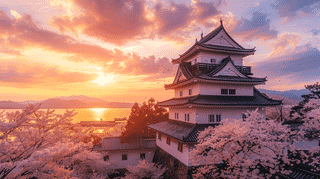
The keep of Hikone Castle in Shiga, finished in 1606, has three tiers with gables and stepped roofs. It and its two turrets became National Treasures in 1952.
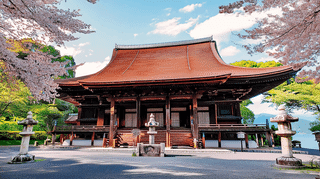
A Momoyama-period golden hall in Shiga Prefecture, dated to 1599. Its commentary field stands empty, while the structural field of it is a fuller one.
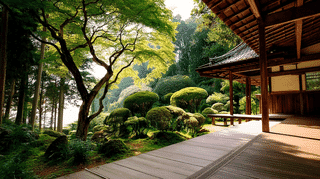
A Momoyama-period guest hall in Shiga Prefecture, built in the year 1600. Its category field here reads residence rather than temple or else a shrine.

Discover the 953-item Important Cultural Property collection documenting the achievements of Kunitomo Ikkansai (1778–1840), the 'Edison of the Edo Period.' From Japan's first reflecting telescope and sunspot observation records to the country's first practical air gun, explore the extraordinary scientific legacy born in a small gunsmith village in Shiga Prefecture.
Rebuilt in 1581 on Oda Nobunaga's order, the Main Hall of Oiso Shrine in Shiga is a three-bay nagare-zukuri hall roofed in cypress bark, set in the old Oiso Forest.
Discover the Kojoin Guest Hall (Kojoin Kyakuden), a National Treasure at Miidera Temple in Otsu, Shiga. Built in 1601, this masterpiece of shoin-zukuri architecture features Kano school screen paintings and a stunning Muromachi-period garden.
Saikyo-ji's guest hall in Otsu is said to have come from Hideyoshi's Fushimi Castle. Four rooms carry Kano school panels, and its interior first opened in 2026.
Once Zeze Castle's North Great Gate on Lake Biwa, this korai-mon was rebuilt at Shinozu Shrine, Otsu, in 1872. Its tiles still carry the Honda hollyhock crest.
Discover the Main Hall of Shirahige Shrine in Takashima, Shiga — an Important Cultural Property built in 1603 by Toyotomi Hideyori. Explore Momoyama-era architecture, the iconic floating torii gate on Lake Biwa, and over 2,000 years of sacred history.
The Bell Tower at Chomeiji Temple in Omihachiman, Shiga Prefecture, is a nationally designated Important Cultural Property built in 1608. Featuring an elegant two-story hakama-goshi design with cypress bark roofing, it houses a medieval bronze bell and offers breathtaking panoramic views of Lake Biwa from its elevated hillside position within the 31st temple of the Saigoku Kannon Pilgrimage.
Discover the National Treasure main hall of Tsukubusuma Shrine on Chikubu Island in Lake Biwa, Shiga Prefecture. Relocated from Fushimi Castle, this architectural masterpiece showcases exquisite Momoyama-period art including gold maki-e lacquerwork, Kano school paintings, and ornate metalwork.
Two 1595 halls near the summit above Hiyoshi Taisha in Otsu. The worship hall is cantilevered over a cliff and joined at the rear to the sanctuary behind it.
Two 1598 halls at Hiyoshi Taisha in Otsu. The last of the shrine's three Hiyoshi-zukuri sanctuaries, it was set down over bedrock left exposed beneath the floor.
Two summit halls above Hiyoshi Taisha in Otsu, dated 1599. Nearly a twin of neighbouring Ushio Shrine, it differs in frontage, entrance and how the gable is built.
Two 1595 halls at Hiyoshi Taisha in Otsu. The sanctuary of the consort deity carries lavish metal fittings; its worship hall is the only latticed one here.
Two Momoyama halls at Hiyoshi Taisha in Otsu. The sanctuary repeats a neighbouring design with its metalwork stripped back; the worship hall has no walls at all.
Two Momoyama buildings at Hiyoshi Taisha in Otsu: an 1586 National Treasure whose roof stops at the rear, raised over a chamber that once held Buddhist images.
A 1586 tower gate at Hiyoshi Taisha in Otsu, listed in 1917. Four carved monkeys prop the eaves, and three more play in pine branches on the upper storey.
Momoyama halls at Hiyoshi Taisha in Otsu, built 1595 and 1596. The 1595 Main Hall is a National Treasure whose details diverge quietly from its western twin.
A Momoyama gate at Hiyoshi Taisha in Otsu, dated only to a twenty-year span. Step through and the sanctuary is not ahead of you but turned aside from the path.