
Shōwa
Tottori · 昭和Browse Tottori’s cultural heritage from the Shōwa period (1926 – 1989). Filter by type and keyword, with concise stories, maps, and travel tips.
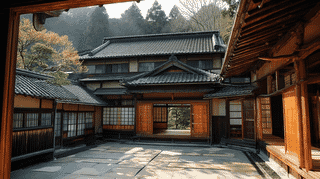
Eight Taisho- and Showa-period buildings in Tottori Prefecture. Their own floor areas there are written out in full in Chinese numerals even now today.
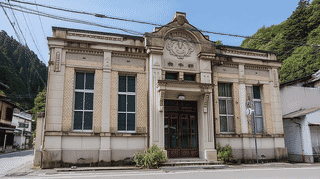
Discover the Former San'in Godo Bank Neu Branch, a beautifully preserved 1927 Western-style bank building along the historic Izumo Highway. This newly registered Tangible Cultural Property features neoclassical design elements including grand pilasters, decorative pediments, and elegant tile work in the charming post town of Neu, Tottori Prefecture.
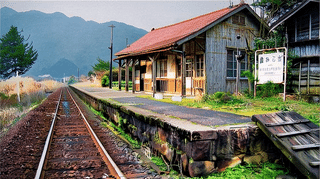
Discover Hayabusa Station, a 1929 wooden railway station in Tottori Prefecture designated as a Registered Tangible Cultural Property. This nostalgic Showa-era station on the Wakasa Railway has become a sacred pilgrimage site for Suzuki Hayabusa motorcycle enthusiasts worldwide, hosting an annual festival attracting thousands of riders.

Discover the Former Hino Bridge (Kyū Hino-bashi), a 1929 six-span Warren truss bridge in Yonago, Tottori. Registered as a Tangible Cultural Property, this 366-meter steel bridge offers iconic views with Mt. Daisen as its backdrop.
The Former Yoshida Medical Clinic in Tottori City is a kura-style medical building personally designed by Yoshida Shoya, a leading figure in Japan's Mingei folk craft movement, after the devastating Tottori Great Fire of 1952. Behind its traditional exterior of white plaster walls with namako mortar joints and mushiko-mado windows lies an interior that harmonizes Western Baroque staircases with East Asian decorative patterns—all unified under a warm Mingei aesthetic. Registered as a National Tangible Cultural Property in 2021, it stands as a masterwork of architectural Mingei.
Discover the Former Yonago Kakubancho Post Office, a 1935 wooden Western-style post office in Yonago, Tottori Prefecture. Now known as YORAIYA Kakuban, this Nationally Registered Tangible Cultural Property has been restored as a vibrant community space in the historic castle town district.
Completed in 1937, this is the tallest of five stone-faced erosion-control dams on the upper Shimizu River. A square weep hole pierces the base of its spillway.
Completed in 1939, this low stone dam anchors the top of the Shimizu River group above Kurayoshi. Its weathered masonry sinks into a forest replanted after erosion.
Completed in 1938 and 80 metres long, this is the longest Shimizu River dam. A carved stone plaque on its left abutment bears the crest of the Home Ministry.
The lowest of the Shimizu River dams, completed in 1938. An irrigation channel through its left abutment lets one wall both hold back flood sediment and feed the fields.
The last of the Shimizu River dams, completed in 1944 at a bend in the stream. Its spillway is shifted aside to ease the current, with Mt. Hiruzen on the horizon.
Completed in 1951 on the upper Hiketa River in Tottori, Somagoya Arch Dam is a stone-faced concrete sabo dam, 24 metres long and 10 metres high. Registered in 2004.
Discover the Kaisando (Founder's Hall) of Daijuji Temple in Yazu, Tottori Prefecture—a nationally registered tangible cultural property housing centuries of Zen heritage, memorial tablets, and the largest Uraku Camellia in Japan.
Daijuji Bell Tower in Yazu, Tottori, raised in 1954 to mark a bell recast after wartime requisition, packs Zen-style bracketing into 9.9 square meters under copper.
Daijuji Monks' Hall in Yazu, Tottori, built in 1955 and registered in 2024, sets three rows of training platforms around an earthen floor, Manjushri at its center.
Main hall of Daisen-ji on Mount Daisen in Tottori, rebuilt in timber in 1951 after a 1928 fire and registered in 2017. Medieval wayo plan, modern carved ornament.
Discover the Chizu Fire Brigade Honmachi Branch Station, a nationally registered tangible cultural property in Tottori's Chizu-juku. Built in 1941 with a distinctive fire lookout tower, this Western-style wooden building still serves as an active fire station.
Step inside a 1942 wooden schoolhouse in Tottori's Chizu Town, where an 81-meter corridor, local cedar craftsmanship, and forestry heritage come together in a rare surviving example of modern rural school architecture.
The Tokoen Main Building 'Tendai' at Kaike Onsen in Yonago City, Tottori Prefecture, is the crowning achievement of Metabolism architecture, designed by architect Kikutake Kiyonori in 1964. Featuring the world's only 'double pilotis' structure with guest rooms suspended from six main columns, it was registered as a National Registered Tangible Cultural Property in 2017. With seven gardens by sculptor Nagare Masayuki and skin-beautifying alkaline hot springs, this living cultural property offers a one-of-a-kind overnight architectural experience.
Completed in 1934 at Misasa Onsen in Tottori, this 69-metre concrete bridge copies timber design: giboshi finials, Kasuga lanterns and plank-like deck joints.