
Muromachi
Gifu · 室町Browse Gifu’s cultural heritage from the Muromachi period (1336 – 1573). Filter by type and keyword, with concise stories, maps, and travel tips.
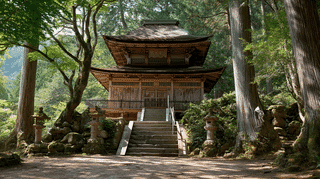
A sutra repository of 1408 at Ankokuji in Takayama, Gifu. Inside it stands an octagonal cabinet for the scriptures that turns about a post at its centre.
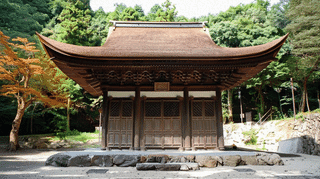
A founder's hall at Eihoji in Tajimi, Gifu, joining an outer and an inner chamber through a linking bay. The inner chamber is thought the older of the two.
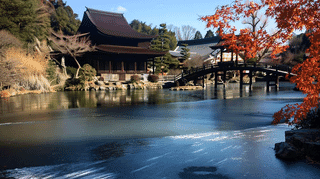
A middle-sized Zen Buddha hall at Eihoji in Tajimi, Gifu, three bays square. It simplifies the Zen manner and leaves its front open to the outside air.

Designated an Important Cultural Property in 1961, Atayuta Shrine Main Hall in Takayama stands inside a protective shelter, its Muromachi shingled roof rarely seen.
Araki Shrine Main Hall in Takayama dates to 1390. Its three-bay nagare-zukuri form, cypress shingles and carved frog-leg strut reward close study. Entry is free.
Rebuilt in 1412 by a Hida warlord, this shrine hall in Gero keeps carved warblers said to have sung as it was built, beside a pair of vast sacred cedars.
At Ankoku-ji temple in Takayama, the Main Hall of Kumano Shrine outlasted the fires of the Sengoku wars. A rare one-bay misedana hall, it is among the city's oldest.
Discover the Main Hall of Hida Kokubunji Temple in Takayama, Gifu — an Important Cultural Property from the Muromachi period. Explore its ancient Buddhist statues, a 1,250-year-old ginkgo tree, and the enduring craftsmanship of the legendary Hida artisans.
Standing serenely in Shiroyama Park in Takayama, Gifu Prefecture, the Main Hall of Shorenji Temple is a nationally designated Important Cultural Property built around 1504, recognized as the oldest surviving Jodo Shinshu temple main hall in Japan. Constructed in the shoin-zukuri style and said to have been built from a single giant cedar, the hall showcases the extraordinary skill of the Hida craftsmen. Relocated from Shirakawa-go to escape dam flooding in 1960, its story is one of resilience and devotion to preserving irreplaceable cultural heritage.
Discover the Main Hall of Takenami Shrine in Ena, Gifu Prefecture—a nationally designated Important Cultural Property built in 1564. Explore its exquisite Muromachi-period architecture, Kamakura-era cedar legends, and the historic Nakasendo trail surroundings.
Built in 1502 and designated an Important Cultural Property in 1956, this Muromachi worship hall in Yamagata City, Gifu, keeps its cypress-bark roof. Free entry.
Rising 24.6 metres in the grounds of a Shinto shrine in Godo, Gifu, this late Muromachi pagoda was designated an Important Cultural Property in 1914. Grounds free.
This late fifteenth-century hall in Yaotsu, Gifu, applies Zen-style building to a small three-bay plan under a thatched roof. An Important Cultural Property.
Known as Kokaya Yakushido, this square hall in Hida City, Gifu, was rebuilt in early Muromachi times from Kamakura-era timbers, as repair work in 1974 confirmed.
Five mountain forts ringing the Furukawa Basin in Gifu, designated a national historic site in 2024 for layered work by the Anekoji, Miki, and Kanamori clans.
Preserved at Entoku-ji Temple in Gifu City, the Rakuichi-Rakuza Seisatsu is a set of four original wooden placards (with one attached) issued by Oda Nobunaga and the Ikeda lords between 1567 and 1584. Posted at the gate of the Kanō market just after Nobunaga renamed Inabayama Castle to Gifu, they survive in remarkable physical form. Designated a Nationally Important Cultural Property in 1993, they are a primary source at the heart of Japan's economic history.
Gifu's Nagataki Hakusan Shrine holds 27 wooden masks from late Kamakura to late Edo — Okina, Sanbasō, kishin and rare hanataka faces of Hakusan worship.