
Registered Tangible Cultural Properties of Kanagawa
神 奈 川 県 の 登 録 有 形 文 化 財Kanagawa · Registered Tangible Cultural Properties
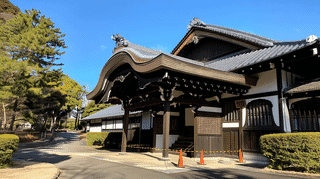
Discover Sojiji Temple in Yokohama, home to 18 magnificent Registered Tangible Cultural Properties from the Taisho and early Showa periods. Explore authentic Zen architecture, the 152-meter Hyakken Corridor, and traditional training halls at one of Japan's two head temples of Soto Zen Buddhism, just 7 minutes from Tsurumi Station.
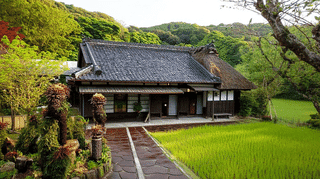
Explore the Hara Family Residence, a National Registered Tangible Cultural Property in Hiratsuka City. This exceptional compound of four historic buildings—main house, tea room, storehouse, and Edo-period gatehouse—preserves the traditional lifestyle of prosperous Meiji-era farming families in Kanagawa Prefecture.
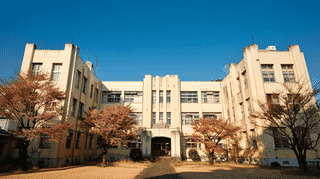
Discover the Former Yokohama Technical College Main Building, a Registered Tangible Cultural Property showcasing the elegant fusion of Renaissance and Modernist architecture from 1938. Located in Gumyoji, this historic school building represents Japan's prewar educational heritage.

The Former Main Building of the Convent of the Daughters of Jesus in Hayama, Kanagawa Prefecture, is an elegant Western-style villa built in 1914 as a seaside retreat for Prince Higashifushimi Yorihito. Designed by imperial architect Kigo Kozaburo, the building features distinctive white German-style weatherboard cladding and a commanding tower. As the sole surviving imperial family villa in Hayama and the only pre-Great Kanto Earthquake imperial residence in the Shonan region, it was registered as a National Registered Tangible Cultural Property in 2017.
A 27-square-metre timber storehouse behind a Hadano shop, its mortar walls scored to read as coursed stone. Registered in 2017 as a Tangible Cultural Property.
Frontage of 1.2 metres, depth of 1.8 metres, and a national registration number. This mortar-sealed box behind a Hadano shop is among Japan's smallest listings.
Twin in size to the storehouse beside it, this Hadano warehouse carries a king post truss overhead, a Western technique the national record singles out.
The Iwamotoro Roman Bath is a Western-style bathhouse built around 1930 within the historic Iwamotoro Honkan ryokan on Enoshima Island, Kanagawa Prefecture. Featuring a horseshoe-shaped Roman thermae-style tub, a glass dome ceiling, terracotta ornaments by ceramicist Komori Shinobu, and irreplaceable Italian peacock stained glass by Beppu Shichirō, it was registered as a national Tangible Cultural Property in 2001.
The Main Hall of Oyamadera, perched on the slopes of Mount Oyama in Isehara, Kanagawa, is a majestic esoteric Buddhist hall rebuilt in 1885 through nationwide donations. Registered as a National Tangible Cultural Property in 2024, it features impressive dragon carvings, a traditional five-bay layout, and over 1,200 years of pilgrimage history.
Built in 1924 for a Fujisawa druggist, this shop-house moved to a farm in 1938 and to Seiganji temple in 2014. Registered in 2017, it now serves as a Buddhist hall.
Designed in 1936 by Kasai Manji, co-architect of Tokyo Station, this Kamakura house joins Japanese rooms and a garden veranda to a Western porch. Registered in 2020.
The Former Kaji Residence in Hayama, Kanagawa Prefecture, is a nationally registered tangible cultural property designed in 1928 by Arata Endo, a devoted disciple of Frank Lloyd Wright. This Prairie Style masterpiece, known as the 'Little Imperial Hotel' for its lavish use of Oya stone, now operates as an exclusive rental accommodation.
This 1929 half-timbered house in Kamakura was built for Marquis Kacho Hironobu. Its French formal garden opens free all year; the interior opens twice a year.
Built in 1936 beside the Daibutsuzaka Tunnel in Kamakura's Hase district, this scratch-tile-clad reinforced concrete pump station is the earliest surviving structure from Kanagawa Prefecture's public waterworks. Now a nationally Registered Tangible Cultural Property, it has been beautifully repurposed as MOKICHI KAMAKURA restaurant by Shonan's historic Kumazawa Brewery.
A 1922 wooden villa above Isshiki beach, Hayama, built by constitution drafter Kaneko Kentaro after the imperial household took his seafront plot. Registered 2021.
A two-storey house of about 1940 beside Onshi Matsuso in Hayama, built by Kaneko Kentaro in his eighty-eighth year. Farmhouse below, tea-house above. Registered 2021.
Discover the Former Kamakura Library in Kamakura, Kanagawa Prefecture — a charming 1936 wooden library building featuring a unique blend of Western modern and Japanese architectural design, registered as a National Tangible Cultural Property in 2024.
The Kamakura villa of film importer Kawakita Nagamasa, built about 1942 with an arched corner porch. Registered in 2021, it is private and closed to visitors.
Dated 1899 and moved in 1933, this 17-square-metre plastered storehouse is the oldest building on its Yokohama plot, kept when the main house was rebuilt.
A small tiled gate with a gently swelling roof stands above stone steps, while seventy metres of tuff laid in Yokohama's Bluff bond wraps this hillside plot.
More from Kanagawa
Kanagawa’s registered properties across designations, with featured heritage and travel notes.
The complete kokuhō catalogue — browse by prefecture, period, and category.
Nationwide jūyō bunkazai — architecture, sculpture, painting, crafts, and documents.