
Heian
Shiga · 平安Browse Shiga’s cultural heritage from the Heian period (794 – 1185). Filter by type and keyword, with concise stories, maps, and travel tips.
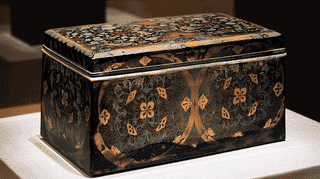
A Heian-period sutra box owned by Enryakuji in Shiga Prefecture. Gold marks out the flowers and the rings, and silver marks out the leaves and the stems.
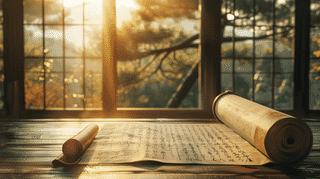
A Tang-period text owned by Enryakuji in Shiga Prefecture. Its own country field reads China, while its own period field gives the Tang dynasty of it.
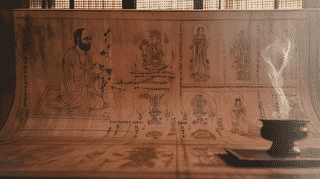
A Heian-period scroll of iconographic drawings at Onjoji in Shiga, lacking its opening. A complete scroll shares the very same designation number with it.

A National Treasure cast in 858 on Mt. Hiei, this bell bears a dated mirror-script inscription and is Japan's sixth oldest dated bell, now at the Sagawa Art Museum.
The Main Hall of Ishiyamadera in Ōtsu, Shiga, is the oldest wooden building in the prefecture — a National Treasure uniting a 1096 inner sanctum with a cliff-hanging outer hall donated by Yodo-dono in 1602. Built on a natural-monument wollastonite outcrop, it preserves the Genji-no-Ma chamber where Murasaki Shikibu is said to have conceived The Tale of Genji, and remains a living icon of Japanese literary and Buddhist heritage.
Unearthed on Mount Hiei in 1924, this Heian gilt-bronze box held a Lotus Sutra copied by Empress Jotomon-in in 1031. Its lid bears the title in hollow script.
Discover the Shichijō Shinō Kesa, a rare Tang dynasty hemp kesa designated as a National Treasure of Japan. Brought from China by the monk Saichō over 1,200 years ago, this sacred Buddhist vestment is preserved at Enryaku-ji Temple on Mount Hiei, a UNESCO World Heritage Site.
Discover the Ecchū no Kuni Kansō Nōkoku Kōtaiki Zankan, a National Treasure scroll at Ishiyama-dera Temple in Shiga Prefecture. This rare Nara-period document records grain storage transfers in ancient Etchū Province, offering a unique window into Japan's 8th-century governance system.
Held at Ishiyamadera, this National Treasure carries the Enryaku Kotaishiki, an 803 law on handing over provincial office, with a Sanskrit primer on its reverse.
Saichō wrote this fire-damaged Enryaku-ji scroll in 811, listing the Buddhist ritual objects he carried home from Tang China, each entry signed in his own hand.
Compiled in 543 and lost in China, the Yupian survives only in Tang manuscripts in Japan. This National Treasure at Ishiyama-dera is volume 27's latter half.
Onjo-ji's National Treasure near Lake Biwa: the oldest surviving painting of Fudo Myoo alone, a yellow deity in empty space, born of the monk Enchin's vision.
A scroll Emperor Saga wrote in 823 certifying the monk Kojo's ordination on Mount Hiei. The only authenticated example of his hand, now a National Treasure.
A Heian document at Enryaku-ji, Mount Hiei, tied to the 805 transmission of the bodhisattva precepts from the master Daosui to Saichō, founder of Tendai.
At Jōraku-ji in Shiga, a Heian cast-bronze ringed staff sets a pagoda and water vessel in its loop. An Important Cultural Property and stored treasure, rarely shown.
At Ishiyama-dera in Shiga, the Shaku Makaen Ron is a rare Tang-dynasty manuscript of a commentary on the Awakening of Faith, kept in five folding booklets.
A Heian-period Japanese copy of Du Yu's Confucian commentary, this National Treasure scroll at Ishiyama-dera carries esoteric Buddhist ritual on its reverse side.
A Heian-period copy of Du Yu's annotated Spring and Autumn Annals, this scroll at Shiga's Ishiyama-dera is a National Treasure, with Buddhist precepts on its back.
Copied by the Heian monk Shunyu at Ishiyama-dera, these scrolls are said to carry a fragrance from Kukai's robe. An 83-scroll National Treasure, shown only rarely.
A fragment of a household register from 908 for a district in present-day Yamaguchi, it survived because a Buddhist text was later copied on its reverse.