
Important Cultural Property of Yamanashi
山 梨 県 の 重 要 文 化 財Yamanashi’s Important Cultural Properties — designated for their value to the nation’s cultural history.
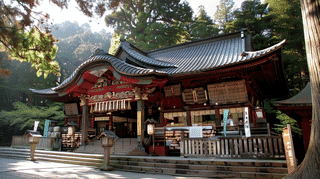
Mid-Edo-period shrine buildings in Yamanashi Prefecture. Their own marked regional character is itself given here as the reason for the value even now.
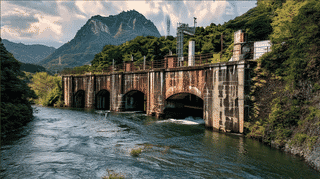
A Meiji-period hydroelectric installation in Yamanashi Prefecture. Its own structures there are recorded under two quite different owner names even now.
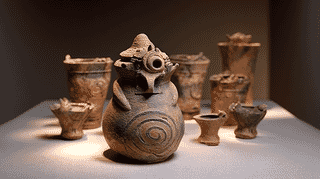
Discover the National Important Cultural Property artifacts from Yamanashi's Imojiya Site, including the iconic "Goddess of Fertility LAVIE" dogu and dancing figurine pottery that have toured world-famous museums from London to Rome. Free admission at Furusato Bunka Denshokan Museum.

An iron sword guard carved with shore pines and plovers by Tsuchiya Yasuchika, a leading master of Edo metalwork. Designated an Important Cultural Property in 1955.
An Important Cultural Property in Yamanashi, this iron sword guard by Hayashi Matashichi pierces cherry blossoms and nine-luminary crests, the two Hosokawa emblems.
Rebuilt by Takeda Shingen in 1558 at the site where Kai Province's first-ranked shrine began, this cypress-bark hall carries helmets carved on its struts.
Designated in 1935, this one-bay Momoyama sanctuary in central Kofu keeps painted carving and metal-fitted doors. Its name recalls a legend of draining the basin.
The kuri at Unpoji in Koshu, Yamanashi, held the kitchen and living quarters: a long thatched, gable-entry building of the early Edo period, the widest of the four halls.
Unpoji's shoin in Koshu, Yamanashi, is a mid-Edo Important Cultural Property of 1716: a hipped, thatched residential hall behind the garden, the newest of its four.
The Niomon at Unpoji in Koshu, Yamanashi, is a late-Muromachi three-bay eight-legged gate, copper-roofed and flanked by two Nio guardian kings on the stone approach.
Unpoji's main hall in Koshu, Yamanashi, is a late-Muromachi Important Cultural Property with a cypress-bark hip-and-gable roof and a curved karahafu worship porch.
Rebuilt by Tokugawa Ieyasu in 1606 after Erinji burned, this vermilion four-legged gate is the temple's oldest building and is free to walk through today.
On Mt. Yumura in Kōfu, Entaku-ji's hipped-roof Jizō-dō shelters a stone Jizō. An Important Cultural Property since 1949, its soot-black interior rewards a visit.
A late-Kamakura Important Cultural Property in Kosuge, Yamanashi, this hall preserves rare Heian residential carpentry and shelters a hidden Nyoirin Kannon.
Discover the Sanmon Gate of Kai Zenkoji Temple in Kofu, Yamanashi — an Important Cultural Property of Japan built in 1767. Explore the samurai history of Takeda Shingen, experience the Roaring Dragon and underground pilgrimage, and visit one of eastern Japan's largest wooden temple complexes.
Discover the Main Hall of Kai Zenkoji Temple in Kofu, Yamanashi — an Important Cultural Property founded by warlord Takeda Shingen in 1558. Experience the legendary Roaring Dragon ceiling, the pitch-dark Kaidan Meguri passage, and one of the largest wooden structures in eastern Japan.
The Takamuro Family Residence in Kofu, Yamanashi Prefecture, is a rare surviving Edo-period physician's compound designated as an Important Cultural Property of Japan. The estate encompasses nine historic structures across approximately 5,000 square meters, including the main house built in 1788 featuring a medicine compounding room and herb-drying attic. The Takamuro family served as official physicians to the Kofu Kinban, the Tokugawa shogunate's garrison, and the estate preserves an exceptionally complete picture of medical practice and daily life in feudal Japan.
The Main Hall of Takeda Hachiman Shrine in Nirasaki City, Yamanashi Prefecture, is a nationally designated Important Cultural Property rebuilt by the legendary warlord Takeda Shingen in 1541. Discover the history, architecture, highlights, and surrounding attractions of this sacred site at the birthplace of the Takeda clan.
The Main Hall of Chōkoku-ji Temple in Minami-Alps City, Yamanashi Prefecture, is the oldest building in the city, constructed in 1524 during the late Muromachi period. Designated as an Important Cultural Property of Japan, this compact Buddhist worship hall blends traditional Japanese and Zen architectural elements and enshrines a secret Eleven-Headed Kannon statue unveiled only once every 33 years.
Tenjinsha Honden in Yamanashi City is a nationally designated Important Cultural Property rebuilt in 1522 under the patronage of Takeda Nobutora. This ichikensha nagare-zukuri shrine with a cypress bark roof preserves the elegant, refined architectural beauty of the late Muromachi period.
More from Yamanashi
Yamanashi’s registered properties across designations, with featured heritage and travel notes.
The complete kokuhō catalogue — browse by prefecture, period, and category.
Nationwide jūyō bunkazai — architecture, sculpture, painting, crafts, and documents.