
Historic Sites, Places of Scenic Beauty, and Natural Monuments of Nara
奈 良 県 の 史 跡 名 勝 天 然 記 念 物Nara · Historic Sites, Places of Scenic Beauty, and Natural Monuments
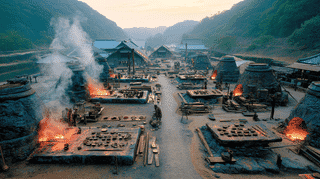
Explore the Asuka-ike Workshop Site in Nara, a 7th-century imperial workshop where Japan's oldest coins (Fuhonsen) were minted. Free admission for foreign visitors at Man'yo Museum. Discover ancient metalworking, glassmaking, and the earliest written use of "Emperor."
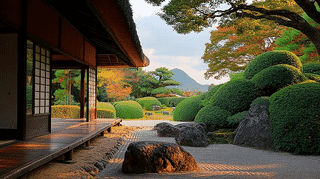
Discover Jikoin Temple Garden, a nationally designated Place of Scenic Beauty in Nara. Created by tea master Katagiri Sekishu in 1663, this remarkable temple treats visitors to matcha tea while overlooking a stunning borrowed landscape garden. One of Nara's Three Great Gardens.
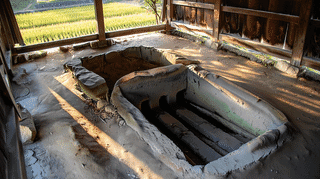
Discover the Nukatabe Kiln Site, a nationally designated historic site in Yamatokoriyama, Nara. Explore this rare 13th-century tile kiln connected to Buddhist temple restoration and Japan's medieval craftsmanship.
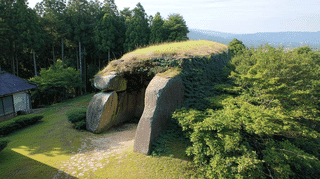
Discover Futatsuzuka Kofun in Katsuragi, Nara - a unique 6th-century keyhole-shaped burial mound featuring three distinct stone chambers, panoramic views of Nara Basin, and rich archaeological treasures. Explore this National Historic Site off the beaten path.
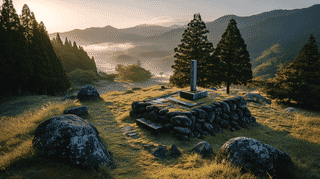
Discover the Tomb of Fumi no Nemaro in Uda City, Nara – a National Historic Site revealing ancient Japanese burial customs. Explore the story of a heroic general from the Jinshin War (672 CE) whose exquisite grave goods became National Treasures.

Spread across the foothills of Tenri City in Nara Prefecture, the Yamato Tumulus Group is a cluster of 24 ancient mounds dating from the late 3rd to early 4th century—the formative era of the Yamato polity. In 2014, three of its most significant mounds—Nomugi, Nakayama Otsuka, and Shimoikeyama Kofun—were designated a National Historic Site. With its unusual mix of keyhole and square-rear tombs, remarkable finds including special pedestal pottery and a silk-wrapped bronze mirror, and a setting along the ancient Yamanobe-no-michi path, the site offers a rare encounter with the very dawn of the Japanese state.
High in the Omine Range of Nara Prefecture, between Mt. Misen and Mt. Hakkyogatake, lies the native habitat of the Oyamarenge—a rare Japanese magnolia subspecies designated a National Natural Monument in 1928. Each year from late June through mid-July, fragrant white blossoms nicknamed the 'Celestial Maiden Flower' bloom amid primeval forest at nearly 1,800 meters. Reached via a sacred trail that forms part of the UNESCO World Heritage 'Sacred Sites and Pilgrimage Routes in the Kii Mountain Range,' the habitat unites botanical rarity with deep spiritual heritage.
A pure 9.3-hectare nagi forest on Mount Mikasa behind Kasuga Taisha in Nara, planted as sacred trees a millennium ago. National Natural Monument since 1923.
A 42-hectare Yayoi moated settlement in the Nara Basin whose excavations rewrote Japan's prehistoric chronology, anchored by a 12.5-meter reconstructed pavilion.
Once one of Asuka's four great state temples, this seventh-century site in Nara preserves the rare one-pagoda, twin-hall plan and 28 marble foundation stones.
A late-7th-century round tomb in Asuka with painted Four Symbols, zodiac figures, and East Asia's oldest precise star chart, designated National Treasure in 2019.
In a quiet upland village in eastern Nara lie carved foundation stones of an eighth-century temple that no record names. Its main hall rivaled Tōshōdaiji.
Kengoshizuka Kofun is a seventh-century octagonal mound in Asuka, restored in white stone in 2022 and thought to be the tomb of Empress Saimei and her daughter.
Kōriyama Castle in Nara, a National Historic Site, preserves walls built partly from reused Buddhist statues and an inverted Jizō, remains of a Toyotomi power base.
About 700 burial mounds cover the Koseyama hills in Gose, Nara, forming Japan's largest cluster-tomb group, built between the mid-5th and late-6th centuries.
A late sixth-century round burial mound in Ikaruga, Nara Prefecture, just 350 meters west of Horyu-ji Temple. The unlooted tomb yielded a vermilion sarcophagus with two occupants and dazzling gilt bronze crowns, shoes, and saddle fittings now designated National Treasures. National Historic Site.
The Fujiwara-kyō Site in Kashihara, Nara—covering the great Suzaku Avenue and the Sakyō and Ukyō Seventh Avenue districts—preserves the southern heart of Japan's first true grid-planned capital, which served three sovereigns from 694 to 710. The 21-metre-wide central boulevard and the dense cluster of government office sites south of the palace document the moment when Japan adopted Chinese-style city planning. Today the area offers seasonal flower fields, sweeping views of the Yamato Three Mountains, and free museums.
Spanning roughly 120 hectares in northern Nara City, the Heijō Palace Site preserves the ceremonial and political heart of Japan's ancient capital from 710 to 784. Designated a Special Historic Site in 1952 and inscribed on the UNESCO World Heritage List in 1998 as a component of the Historic Monuments of Ancient Nara, the site features stunning reconstructed buildings—including the First Daigokuden, Suzakumon Gate, Daigokumon, and the Tōin Garden—that vividly evoke the grandeur of the Nara-period imperial capital.
Discover the East Palace Garden (Tōin Teien) of Heijō Palace, a UNESCO World Heritage component and Special Place of Scenic Beauty in Nara. Restored on its original 8th-century site, this elegant pond garden is considered the prototype of the Japanese garden tradition. Includes history, highlights, and visitor information. Free admission.
Quietly tucked into a residential corner of modern Nara City, the Heijo-kyo Sakyo Sanjo Nibo Palace Garden Site is a Nara-period garden built around 750 AD that lay buried and almost untouched for over 1,200 years until its rediscovery in 1975. Its graceful S-shaped pebble-lined pond was the setting for the elegant winding-stream poetry banquets of imperial nobles. As one of only three ancient gardens in Japan to hold both National Special Historic Site and National Special Place of Scenic Beauty designations, it offers a rare and authentic window into eighth-century courtly aesthetics.
More from Nara
Nara’s registered properties across designations, with featured heritage and travel notes.
The complete kokuhō catalogue — browse by prefecture, period, and category.
Nationwide jūyō bunkazai — architecture, sculpture, painting, crafts, and documents.