
National Treasures of Nara
奈 良 県 の 国 宝Nara’s national treasures — properties designated kokuhō for their exceptional value to the nation.
A Nara-period bronze finial inscribed with a date matching 715. Part of a pagoda mast, it survives where the pagoda does not. National Treasure since 1953.
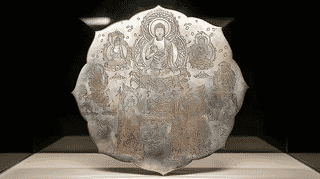
An eight-lobed Heian-period mirror in Nara Prefecture. Nine Buddhist figures stand engraved upon its face, while flowers and birds cover all the back.
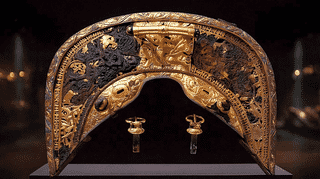
Kofun-period finds in Nara Prefecture, listed as a single lot. The tomb itself is placed about 350 metres to the west of Horyuji, and not by any address.
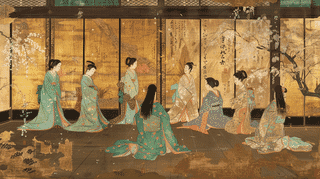
A Heian-period handscroll in Nara owned by a listed company. The company owns the scroll itself while a museum that it runs is the place that keeps it.

Five Asuka-period murals from the Kitora tomb in Nara, the only set in Japan where all four guardians survive. Its ceiling star chart is the oldest in East Asia.
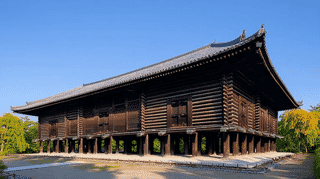
A Nara-period storehouse northwest of the Great Buddha Hall at Todaiji, the only azekura building keeping the twin-storehouse form. National Treasure since 1997.
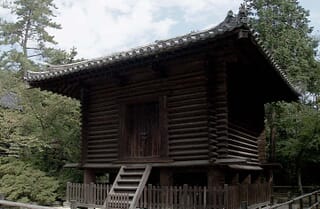
A Nara-period log storehouse in Nara Prefecture. It had stood there before the temple did, and was converted later on when the precinct was laid out here.
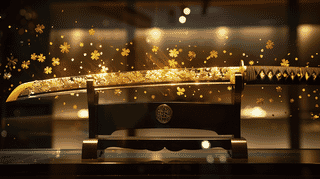
A Kamakura-period sword owned by Kasuga Taisha in Nara Prefecture. Its own commentary here lists only how it differs from the other sword kept there now.
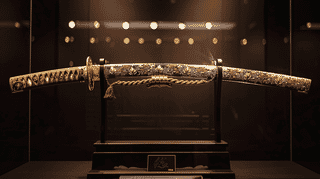
A Kamakura-period sword owned by Kasuga Taisha in Nara Prefecture. Unlike its own companion sword there, its commentary stands on its own two feet here.
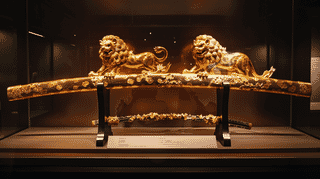
A Kamakura-period sword owned by Kasuga Taisha in Nara Prefecture. Of the three swords numbered in sequence there, only this one was listed early on now.
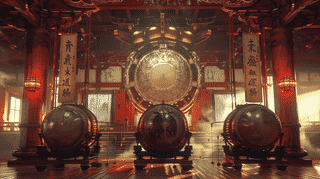
A pair of great ceremonial drums owned by Kasuga Taisha in Nara Prefecture. A hundred and nineteen full years lie between its own two listings here now.
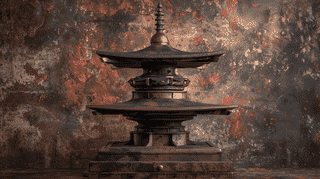
A Kamakura-period pagoda owned by Saidaiji in Nara Prefecture. A museum now holds it, so its own location and its own owner are recorded well apart here.

An Asuka-period embroidery owned by Chuguji in Nara Prefecture. Asuka work and a Kamakura copy of it sit together within one and the very same frame now.
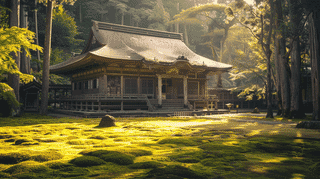
Experience Akishino-dera Temple's 8th-century National Treasure hall, Japan's only ancient Gigeiten statue, and enchanting moss garden with 120 varieties. This hidden Nara sanctuary offers intimate access to 1,300 years of Buddhist art away from crowds.

Discover the Kofuku-ji Kondo Chindangu, a National Treasure collection of over 1,800 sacred ritual objects buried beneath the Central Golden Hall in the 8th century. View gold, silver vessels, mirrors, crystals, and precious gems at the National Treasure Hall in Nara and the Tokyo National Museum.
Discover the Seven-Branched Sword (Shichishitō), a unique National Treasure from the 4th century preserved at Isonokami Shrine in Tenri, Nara. Learn about its gold-inlaid inscription, the Baekje-Japan diplomatic connection, and how to visit this ancient sacred site.
Discover the Todai-ji Kondo Chindangu, a National Treasure collection of 8th-century ritual objects—including legendary swords, crystal vessels, and gilded artifacts—unearthed from beneath Nara's Great Buddha. Learn about their connection to Emperor Shomu, Empress Komyo, and the Shoso-in treasures.
The Bussokuseki at Yakushi-ji Temple in Nara is Japan's oldest Buddha footprint stone, carved in 753 CE and designated a National Treasure. This archaeological artifact preserves the sacred footprints of Shakyamuni Buddha, transmitted from Sarnath in India through Chang'an in China to the ancient Nara capital. Together with the accompanying poem monument — also a National Treasure — it offers a rare window into pre-iconic Buddhist worship and Silk Road cultural exchange during the Nara period.
The Bussokuseki-kahi, a National Treasure enshrined in the Lecture Hall of Yakushi-ji Temple in Nara, is one of Japan's oldest surviving poetry steles, dating to around 770 CE. Bearing 21 poems written in man'yōgana script praising the Buddha's sacred footprints, it preserves an authentic record of Nara-period faith and the earliest Japanese writing. Together with Japan's oldest Buddha Footprint Stone, it offers a profound connection to the history of Buddhism's transmission across Asia.
Discover the Lotus Sutra known as Kunoji-kyo, a National Treasure of Japan featuring exquisite gold and silver decorations created by the imperial court in the 12th century. Learn about its history, artistic value, and where to see it.
More from Nara
Nara’s registered properties across designations, with featured heritage and travel notes.
The complete kokuhō catalogue — browse by prefecture, period, and category.
Nationwide jūyō bunkazai — architecture, sculpture, painting, crafts, and documents.