
Edo
Nara · 江戸Browse Nara’s cultural heritage from the Edo period (1603 – 1868). Filter by type and keyword, with concise stories, maps, and travel tips.
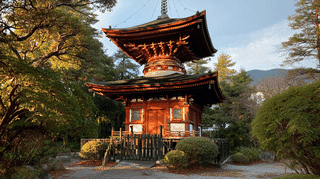
An early Edo-period Buddhist pagoda in Kashihara, Nara Prefecture, Japan. It stands on the great foundations there that are some 1000 years older still.
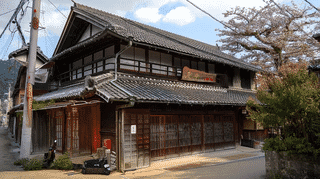
Explore Tamaya Omoya, a beautifully preserved Edo-period hatago (traditional inn) at Taima-dera Temple in Nara Prefecture. This Registered Tangible Cultural Property features exquisite kote-e plaster art and now operates as a restaurant serving local Nara cuisine.
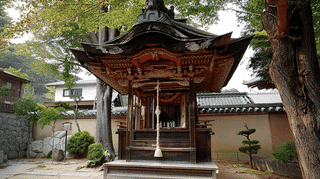
Discover the exquisite Nakanobō Inari Shrine, a Registered Tangible Cultural Property dating from the Edo period. This miniature architectural masterpiece features elaborate cypress bark roofing and vibrant decorations, enshrining the ancient deity Toyouke Ōkami once worshipped by the powerful Katsuragi clan.

Forty-one landscape panels by Sakaki Hyakusen, a pioneer of Japan's Nanga school, painted in 1751 near Nara and now on deposit at the Nara National Museum.
An Important Cultural Property by Ogata Kenzan: a half-cylinder tea bowl with an iron-brown waterfall on one side and a poem on the other, both from his own brush.
A National Important Cultural Property held privately in Nara Prefecture, this set of six color-on-paper fusuma panels was painted in 1751 by Sakaki Hyakusen (1697–1752), one of the four founding figures of Japanese Nanga literati painting, just one year before his death. Depicting Mount Tiantai's legendary stone bridge and its abode of five hundred arhats, the work is part of the 41-panel cycle known as the Former Jimon-in Wall Paintings — the largest surviving program of architectural painting by Hyakusen and a milestone in the adaptation of Chinese Southern School painting to Japanese fusuma format.
A herdboy rides his ox home through falling snow in Li Di's Returning Herd in Snow, a Southern Song National Treasure kept at Nara's Yamato Bunkakan museum.
The Matsura Screens, a National Treasure pair of gold-leaf screens, show 18 life-size Edo courtesans. See the 22 kimono and rosary at Nara's Yamato Bunkakan.
The Shoin at Okadera Temple in Asuka Village, Nara Prefecture, is a nationally designated Important Cultural Property dating to the late Momoyama to early Edo period. This rare surviving example of shoin-zukuri architecture uniquely combines a formal reception hall with domestic kitchen space under one roof, offering invaluable insight into Momoyama-period temple architecture.
Kashihara Jingu's Main Hall began as a Kyoto Imperial Palace sanctuary of 1855, moved here in 1890. On its bracketless detailing and what visitors can actually see.
The Kikuya Family Residence in Tsukigase, Nara, is a small thatched farmhouse built around 1700, preserving a three-room plan once common across the Kinai region.
Dated to the Kanbun era and designated in 1973, this cypress-bark hall at Konbu-in convent in Nara follows a Zen abbot's-quarters plan and holds Edo-period panels.
Saion-in Agetsuchimon at Hōryū-ji is an early Edo gate of a type surviving in only two examples. Designated in 1942, it stands on a path that is free to walk.
Head temple of the Shingon Risshū sect, rebuilt 1798–1808 with all-timber plank walls — a rare construction earning Important Cultural Property status in 1998.
Built in 1804 on Mount Tamaki in Nara, this Important Cultural Property holds Kano-school painted rooms above a basement retreat once used by mountain ascetics.
South of Sakurai in Nara, Tanzan Shrine holds the world's only wooden thirteen-story pagoda, rebuilt in 1532, among vermilion halls that honor Fujiwara no Kamatari.
Todai-ji's East Corridor folds from the Middle Gate to the east flank of the Great Buddha Hall. Built in 1716–1737, this tile-roofed cloister frames the approach.
Discover Todai-ji Nigatsu-do, a National Treasure in Nara, Japan. This iconic hall hosts Omizutori (Shuni-e), an unbroken Buddhist ceremony since 752 CE. Enjoy panoramic views, free 24-hour access, and centuries of living tradition at this UNESCO World Heritage site.
An early-Edo farmhouse in Nara's Yoshino hills, Nishida House keeps medieval rafter framing and a front-parlor plan, named an Important Cultural Property in 1968.
A large mid-Edo farmhouse in Kashihara, Nara, with the oldest known yamato-mune roof, once the moated seat of a senior village headman. An Important Cultural Property.