
Kamakura
Nara · 鎌倉Browse Nara’s cultural heritage from the Kamakura period (1185 – 1333). Filter by type and keyword, with concise stories, maps, and travel tips.

A Kamakura-period sword owned by Kasuga Taisha in Nara Prefecture. Its own commentary here lists only how it differs from the other sword kept there now.
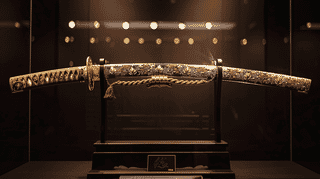
A Kamakura-period sword owned by Kasuga Taisha in Nara Prefecture. Unlike its own companion sword there, its commentary stands on its own two feet here.
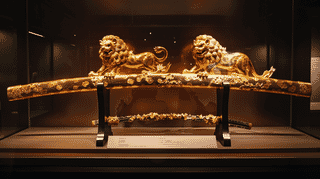
A Kamakura-period sword owned by Kasuga Taisha in Nara Prefecture. Of the three swords numbered in sequence there, only this one was listed early on now.
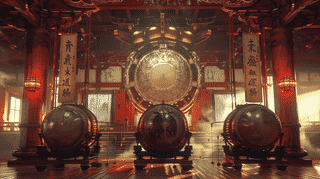
A pair of great ceremonial drums owned by Kasuga Taisha in Nara Prefecture. A hundred and nineteen full years lie between its own two listings here now.
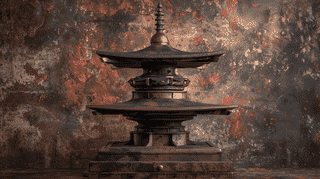
A Kamakura-period pagoda owned by Saidaiji in Nara Prefecture. A museum now holds it, so its own location and its own owner are recorded well apart here.
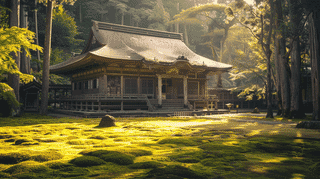
Experience Akishino-dera Temple's 8th-century National Treasure hall, Japan's only ancient Gigeiten statue, and enchanting moss garden with 120 varieties. This hidden Nara sanctuary offers intimate access to 1,300 years of Buddhist art away from crowds.

At Hannya-ji in Nara stand two granite kasa-tōba, stone memorial pillars raised in 1261 by I no Yukiyoshi for his late father and his still-living mother.
An Important Cultural Property in Nara: a bronze Buddhist chime cast in 1208 with paired peacocks, linked by hand to a National Treasure kei made the next year.
An Important Cultural Property in Nara, this Kamakura-period mandala on silk anchored the secret Ichiji Kinrin rite. Privately held, it is not on public display.
An Important Cultural Property tachi forged in 1319 by Kyoto's Rai Kunitoshi, its slender form and quiet straight temper marking the smith's late style.
An Important Cultural Property held privately in Nara Prefecture, the four-scroll Shihon Chakushoku Ippen Shōnin Emaki depicts the life of Ippen Shōnin (1239–1289), founder of the Ji-shū sect. As a transcribed copy of the Sōshun-bon tradition, it preserves the spirit of Kamakura-period yamato-e painting and Japan's medieval Pure Land devotion.
Discover the Kumano Junisha Gongen Mishōtai, an Important Cultural Property featuring thirteen Buddhist deities on a gilded bronze mirror disc. Explore the beauty of Shinto-Buddhist syncretism at Nara National Museum.
A herdboy rides his ox home through falling snow in Li Di's Returning Herd in Snow, a Southern Song National Treasure kept at Nara's Yamato Bunkakan museum.
Discover the National Treasure Kasugado and Hakusando at Enjoji Temple in the wooded hills east of Nara. Built in 1228 and originally part of Kasuga Taisha, these two diminutive vermillion shrines are the oldest surviving examples of kasuga-zukuri architecture in Japan. This guide explores their early-Kamakura craftsmanship, fascinating history, and how to visit them along the historic Yagyu Road.
Gangō-ji's Gokurakubō Main Hall in Nara is a National Treasure whose west roof still keeps gyōki-buki tiles brought from Asuka-dera, among the oldest in Japan.
Kudaraji's three-storied pagoda rises above rice fields in Koryo Town, Nara. Its late Kamakura design, 1675 finial, disputed founding legend, and how to get inside.
Standing quietly within the precincts of Kofukuji Temple in Nara City, the Three-Storied Pagoda is a National Treasure originally built in 1143 through the patronage of Empress Kokamon'in Shoshi, consort of Emperor Sutoku. After being destroyed in the 1180 burning of Nara, it was rebuilt in the early Kamakura period in faithful imitation of the original Heian style. Approximately 19 meters tall, the pagoda is celebrated for the refined delicacy of its timbering, its elegant silhouette, and a unique interior program of four thousand Buddha paintings arranged across X-shaped panels between the four central pillars. Its interior is opened to visitors only on July 7 each year during the Benzaiten ceremony.
Tucked into the northwestern corner of Kōfuku-ji in Nara, the National Treasure Hokuendō is an octagonal hall first built in 721 to memorialize Fujiwara no Fuhito and rebuilt in 1210 in the Kamakura style. Widely praised as Japan's most beautiful octagonal hall, it combines rare triple-stepped brackets, triple-rafter eaves, and hexagonal ground rafters with Unkei workshop masterpieces including Maitreya and the Asanga–Vasubandhu figures, viewable during special spring and autumn openings.
At the south edge of Tamukeyama Hachimangū, Tōdai-ji's guardian shrine since 749, this small late-Kamakura Sumiyoshi hall is an Important Cultural Property.
The Main Hall of Chōkyū-ji Temple in Ikoma City, Nara Prefecture, is a National Treasure built in 1279 during the late Kamakura period. Celebrated as a masterwork of the shin-wayō style blending Japanese wayō elegance with continental daibutsuyō elements, the hall preserves a mature esoteric Buddhist spatial plan beneath a gracefully curving cypress-bark roof, with its construction date confirmed by original ridge-beam inscriptions.