
Kamakura
Nara · 鎌倉Browse Nara’s cultural heritage from the Kamakura period (1185 – 1333). Filter by type and keyword, with concise stories, maps, and travel tips.
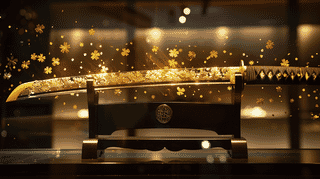
A Kamakura-period sword owned by Kasuga Taisha in Nara Prefecture. Its own commentary here lists only how it differs from the other sword kept there now.
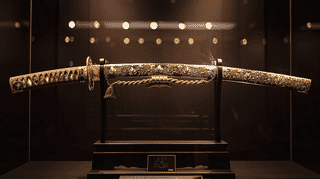
A Kamakura-period sword owned by Kasuga Taisha in Nara Prefecture. Unlike its own companion sword there, its commentary stands on its own two feet here.
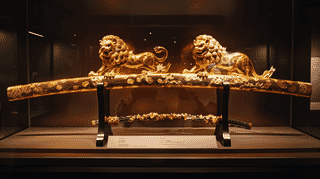
A Kamakura-period sword owned by Kasuga Taisha in Nara Prefecture. Of the three swords numbered in sequence there, only this one was listed early on now.
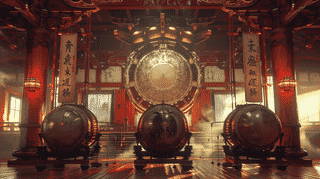
A pair of great ceremonial drums owned by Kasuga Taisha in Nara Prefecture. A hundred and nineteen full years lie between its own two listings here now.
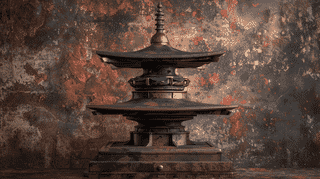
A Kamakura-period pagoda owned by Saidaiji in Nara Prefecture. A museum now holds it, so its own location and its own owner are recorded well apart here.
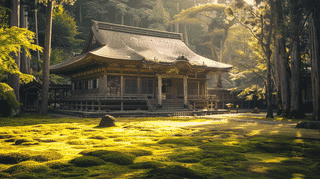
Akishino-Dera Temple Main Hall in Nara is an early Kamakura hall on the old lecture hall site, with an earthen floor and low hipped roof. National Treasure, 1953.
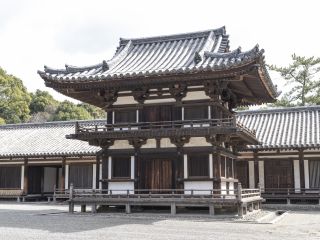
Built in 1240 and called the Relic Hall, the Drum Tower of Toshodai-ji enshrines relics said to have come with Ganjin and hosts the May fan-scattering rite, Uchiwamaki.
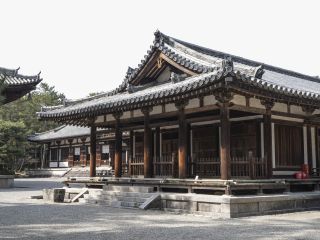
The Worship Hall of Toshodai-ji is a long nineteen-bay Important Cultural Property joining a chapel and a monks' dormitory, and still hosts the October Shaka rite.

At Hannya-ji in Nara stand two granite kasa-tōba, stone memorial pillars raised in 1261 by I no Yukiyoshi for his late father and his still-living mother.
An Important Cultural Property in Nara: a bronze Buddhist chime cast in 1208 with paired peacocks, linked by hand to a National Treasure kei made the next year.
An Important Cultural Property in Nara, this Kamakura-period mandala on silk anchored the secret Ichiji Kinrin rite. Privately held, it is not on public display.
An Important Cultural Property tachi forged in 1319 by Kyoto's Rai Kunitoshi, its slender form and quiet straight temper marking the smith's late style.
An Important Cultural Property held privately in Nara Prefecture, the four-scroll Shihon Chakushoku Ippen Shōnin Emaki depicts the life of Ippen Shōnin (1239–1289), founder of the Ji-shū sect. As a transcribed copy of the Sōshun-bon tradition, it preserves the spirit of Kamakura-period yamato-e painting and Japan's medieval Pure Land devotion.
Discover the Kumano Junisha Gongen Mishōtai, an Important Cultural Property featuring thirteen Buddhist deities on a gilded bronze mirror disc. Explore the beauty of Shinto-Buddhist syncretism at Nara National Museum.
A herdboy rides his ox home through falling snow in Li Di's Returning Herd in Snow, a Southern Song National Treasure kept at Nara's Yamato Bunkakan museum.
Three matching Kasuga-style halls at Uda Mikumari Shrine, Nara, the first dated 1320 by its ridge beam, with carved struts on every face and a reworked Second Hall.
Twin guardian shrine halls beside the main hall of Enjoji in Nara's hills: the oldest known Kasuga-zukuri buildings, and a National Treasure since 1953.
A late Kamakura shrine hall at Enjoji near Nara, kept inside a shed beside the Kasugado and Hakusando: an early Kasuga-style shrine with a karahafu porch.
A stone five-ring pagoda dated 1321 in a village cemetery near Enjoji, Nara, bearing the oldest date of any gorinto in the prefecture, raised by a band of believers.
Two late Kamakura hokyoin pagodas side by side at Enpukuji in Ikoma: one dated 1293 with Sanskrit letters for four Buddhas, the other carved with Buddha figures.