
Kamakura
Osaka · 鎌倉Browse Osaka’s cultural heritage from the Kamakura period (1185 – 1333). Filter by type and keyword, with concise stories, maps, and travel tips.
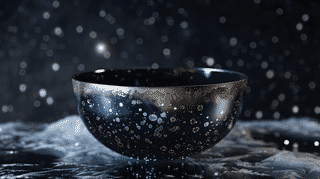
A Southern Song Jian bowl at the Museum of Oriental Ceramics in Osaka, silver spots packed tightly across both surfaces. Once owned by the regent Hidetsugu.

A Southern Song tenmoku bowl at the Fujita Museum in Osaka, its black glaze scattered with haloed spots. Alone among yohen bowls, it is mottled inside and out.
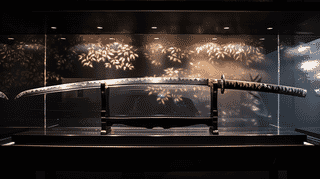
A Kamakura tachi in Osaka Prefecture, 73.3 centimetres long. Its unaltered tang still carries the signature of Sukekane. National Treasure since 1957.
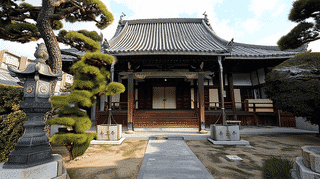
A late Kamakura-period Buddhist main hall in Kumatori, Osaka Prefecture. Its own front and its own depth there both measure exactly three bays even now.

A Kamakura katana by Mitsutada in a private collection, a National Treasure since 1951, regarded as his finest and said to have passed from Nobunaga to Ieyasu.
An unsigned katana attributed to Kyoto master Rai Kuniyuki, held privately in Osaka. We explain how a Kamakura blade lost its signature and where to see his swords.
A wide, unsigned katana attributed to the Kamakura smith Sadamune, now an Important Cultural Property in Osaka. Its broad form earned the byname Habahiro.
A Kamakura tachi by Chikakage of Osafune dated in the Karyaku era, in a private collection, a National Treasure since 1953.
A 1322 tachi by Sukemitsu of the Yoshioka Ichimonji school in a private collection, a National Treasure since 1953, inscribed with invocations.
Discover the National Treasure tachi signed by Moritoshi, a rare Kamakura-period masterwork from the Ko-Aoe school. Learn about its elegant chirimen-hada grain, historical significance, and how to appreciate Japanese swords in Japan.
An unsigned Kamakura tanto by Masamune in a private collection, one of the three Hocho Masamune, a National Treasure since 1952.
A Kamakura tanto by Shintogo Kunimitsu in a private collection, a National Treasure since 1954, an elegant typical work.
A 1324 tanto by Sadayoshi of the Yamato Hosho school in a private collection, a National Treasure since 1955, famed as Kuwayama Hosho.
A 1320 naginata by Sukemitsu of the Yoshioka Ichimonji school in a private collection, a National Treasure since 1953, an unaltered example of Kamakura form.
Held in Osaka Prefecture, this Important Cultural Property is a black-ink drawing on paper that depicts both the layout of a Buddhist goma fire-ritual altar and the thirty-seven principal deities of the Diamond Realm Mandala rendered as their symbolic samaya emblems. Transmitted within the lineage of the great pilgrim-monk Chishō Daishi Enchin (814–891), it offers a rare window into the visual language of Japanese Esoteric Buddhism.
With a ridge beam dated 1273, the Izumianashi Shrine Auxiliary Sumiyoshi Shrine Main Hall is said to be the oldest shrine sanctuary in Osaka Prefecture.
The Kannon Hall of Koonji in Kaizuka, Osaka, a late Kamakura National Treasure known as the hall without nails, mixes old and new styles under a gyoki-tiled roof.
Built in 1320 at Amanosan Kongoji in Kawachinagano, Osaka, this 7-bay main hall replaced a smaller hall of 1178 and was restored in 1605, 1700 and from 2009 to 2017.
A late Kamakura gate at the entrance to the central compound of Amanosan Kongoji in Kawachinagano, Osaka, housing two guardian kings, with a 1938 marker in front.
The golden hall of Jigenin in Izumisano, Osaka, a three-bay hall of the late Kamakura period, survived with the National Treasure pagoda when the temple burned.