
Registered Tangible Cultural Properties of Tokyo
東 京 都 の 登 録 有 形 文 化 財Tokyo · Registered Tangible Cultural Properties
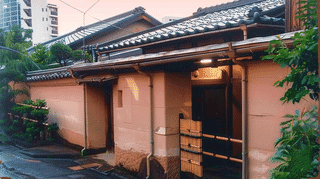
Discover Ohashi Saryo, a registered cultural property in Tokyo featuring five exquisite tea houses including a replica of National Treasure Joan. Experience authentic Japanese tea ceremonies in this urban oasis near Kamiyacho Station.
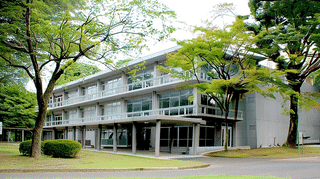
Discover ICU's Diffendorfer Memorial Hall, a registered tangible cultural property designed by Vories Architectural Office in 1958. Explore its modernist design, early aluminum sash windows, and rich heritage on the tranquil Mitaka campus.
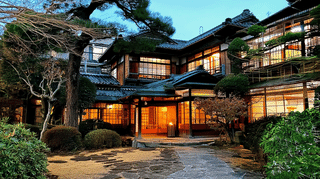
Discover Mitsubishi Electric Takanawa-so, a Registered Tangible Cultural Property in Tokyo's prestigious Shirokanedai district. This historic estate features three early Showa-period buildings showcasing the finest Japanese-Western hybrid residential architecture of the 1930s.

Standing at the heart of Aoyama Gakuin University's campus in Shibuya, Tokyo, Berry Hall was completed in 1931 as the new School of Theology building, the final phase of recovery from the 1923 Great Kanto Earthquake. This three-story reinforced concrete Neo-Gothic structure honors Dean Arthur D. Berry, who led the American fundraising campaign for its construction. Inside, the Charles Oscar Miller Memorial Chapel houses a 1932 German Walcker pipe organ — believed to be the oldest of its maker still in active use in Japan — and inspired the famous Showa-era song 'Student Days.' Registered as a National Tangible Cultural Property in 2008.
Discover the Arai Family Residence Inner Storehouse (Uchigura) in Chofu, Tokyo — a nationally registered tangible cultural property dating from the late Edo period. Explore this rare surviving example of traditional Musashino farmstead architecture surrounded by historic estate woodland.
The Igusa Kindergarten Building in Suginami, Tokyo, is a 1933 timber schoolhouse with an L-shaped plan around its hall. Registered in 2017, it is still in daily use.
The Ikegami Family Residence in Setagaya, Tokyo, is a 1932 Western-style house with Spanish tiles, a sunroom and Art Deco rooms. Registered in 2006; a private home.
Built around 1915 in Bunkyo Ward and registered as a Tangible Cultural Property in 2025, this timber house pairs Japanese rooms with a Western wing. Not open.
Registered in 2018, Isago Family Nagaya is a five-unit timber row house of c.1932 on the Kishimojin approach in Zoshigaya, Tokyo, with an ochre metal-banded front.
A small dozo tool store beside the Isego rice shop in Sengoku, Bunkyo Ward, Tokyo, registered in 2003. Mortar render scored into stone-like joints gives it weight.
An early Meiji rice shop in Sengoku, Bunkyo Ward, Tokyo, registered in 2003. Low dashigeta eaves and lattice windows survive, and the family still sells rice here.
Registered in 2010, Iseya Shop and Residence is a small 1927 timber shop-house in Nihonzutsumi, Tokyo, still a tempura shop, its gable facing a vanished embankment.
A 1.5-metre kitchen gate of about 1907 with sliding board doors, a lamp hung between lintel and ridge beam, and moulded brackets facing a Ueno back lane.
A two-metre bracket gate of about 1907, gabled and tiled, with a lattice window above the opening, chamfered timbers, and a black-plastered wing wall in Ueno.
This 25-square-metre kura of about 1907 looks like stone but is brick over a timber frame, rendered and scored with false joints. Its ground floor held the altar.
Built in 1907 as a Nihonbashi cloth wholesaler's retirement house, this timber home in Ueno Sakuragi appeared in a Meiji plan book and was registered in 2005.
Tucked away in a Kagurazaka backstreet, Issuiryō is a two-story wooden building constructed around 1951 as a carpenters' dormitory. Now a Registered Tangible Cultural Property, it preserves the hand-adzed lattices and skilled joinery of postwar Japanese craftsmanship.
Discover the Echisou Building, a Registered Tangible Cultural Property in Bunkyo, Tokyo. Built in 1924 as a thread merchant's headquarters, this reinforced concrete gem features elegant dentils, arched windows, and a distinctive corner tower.
Discover the Edoya Store and Residence in Nihonbashi, Tokyo — a Registered Tangible Cultural Property built in 1924. This Art Deco kanban-style building houses Japan's oldest brush specialty shop, founded in 1718 under the Tokugawa shoguns.
Discover the Okada Nikki Shōnin Memorial Auditorium in Suginami, Tokyo — a 1937 reinforced-concrete school hall registered as a Tangible Cultural Property in 2022. Learn about its modernist design, founder Okada Nikki Shōnin's vision, and connection to Horinouchi Myōhōji Temple.
More from Tokyo
Tokyo’s registered properties across designations, with featured heritage and travel notes.
The complete kokuhō catalogue — browse by prefecture, period, and category.
Nationwide jūyō bunkazai — architecture, sculpture, painting, crafts, and documents.