
Edo
Yamanashi · 江戸Browse Yamanashi’s cultural heritage from the Edo period (1603 – 1868). Filter by type and keyword, with concise stories, maps, and travel tips.
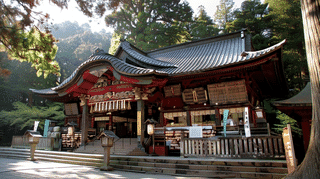
Eight halls built 1736-1753 with donations gathered by the pilgrim leader Murakami Kosei, from the worship hall to a lava-basin water pavilion, designated in 2017.
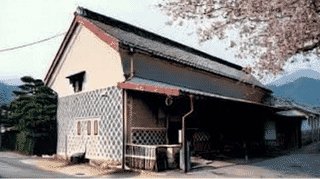
An Edo-period oil storehouse in Fujikawa, Yamanashi Prefecture, Japan. Of its three rooms only one has an upper floor; the rest rise open to the roof.
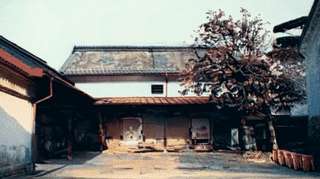
An Edo-period salt storehouse in Fujikawa, Yamanashi Prefecture, Japan. Only its western room held salt, yet that one room gives the whole building its name.
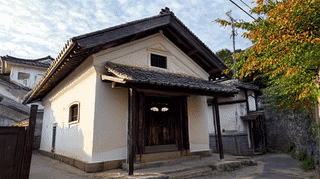
An Edo-period document storehouse in Fujikawa, Yamanashi Prefecture, Japan. Two other buildings on the grounds are placed by reference to this small store.
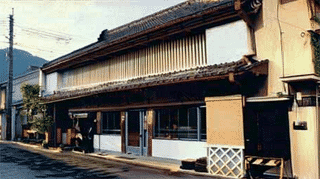
An Edo-period shop storehouse in Fujikawa, Yamanashi Prefecture, Japan. Shop below and rooms above, it was drawn back whole in 1960 to widen the road.
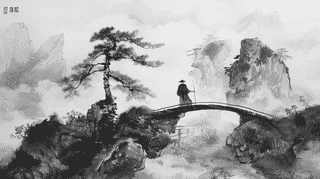
A Southern Song painting on one scroll at Kuonji in Yamanashi, recorded as having once formed a single set with two other scrolls held elsewhere today.

An iron sword guard carved with shore pines and plovers by Tsuchiya Yasuchika, a leading master of Edo metalwork. Designated an Important Cultural Property in 1955.
The kuri at Unpoji in Koshu, Yamanashi, held the kitchen and living quarters: a long thatched, gable-entry building of the early Edo period, the widest of the four halls.
Unpoji's shoin in Koshu, Yamanashi, is a mid-Edo Important Cultural Property of 1716: a hipped, thatched residential hall behind the garden, the newest of its four.
On Mt. Yumura in Kōfu, Entaku-ji's hipped-roof Jizō-dō shelters a stone Jizō. An Important Cultural Property since 1949, its soot-black interior rewards a visit.
Built in 1615 by Torii Narutsugu, the irimoya-roofed main hall behind the worship hall is praised for lacquer, carving and gilt fittings equal to Momoyama work.
Hime Sanjin Main Hall at Kubo Hachiman Shrine, said to be rebuilt in 1625, is a small lacquered sanctuary in white, vermilion and black on an island in the pond.
Two-storey gate of Kai Zenkoji in Kofu, Yamanashi, raised in 1767 after a fire, 15 metres high and blending Japanese and Zen styles, with unfinished Nio figures.
Main hall of Kai Zenkoji in Kofu, Yamanashi, rebuilt in the late 18th century in the T-shaped shumoku style, 27 metres high, known for its echoing dragon ceiling.
The Takamuro estate in Kofu, Yamanashi, home of physicians to the Kofu garrison, keeps a thatched main house of 1788 with its dispensary among nine listed buildings.
A late 17th-century thatched farmhouse in Hokuto, Yamanashi, 19.7 metres wide, built for a village headman. Designated in 1989, open near Kobuchizawa Station.
The Monzai Family Residence in Minobu, Yamanashi, an Important Cultural Property since 1964, is a late 17th-century thatched farmhouse typical of the Fuji valley.
The Sakurabayashi Family Residence Rice Storehouse and Tool Storehouse in Kofu is a late Meiji storehouse: an open rice store, a 2-level tool store, a lean-to.
The Sakurabayashi Family Residence East Document Storehouse in Kofu is a late Edo-period earthen storehouse, the oldest building on the site, set on brick footings.
A late Edo wing behind the West Shop in Katsunuma, with white plastered gables and two differently finished zashiki rooms beside a central passage. Registered 2018.