
Registered Tangible Cultural Properties of Nagano
長 野 県 の 登 録 有 形 文 化 財Nagano · Registered Tangible Cultural Properties
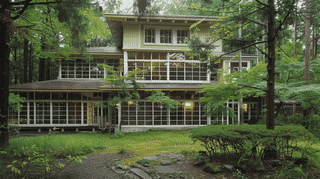
Discover the Former Kato Family Villa, a registered tangible cultural property representing Japan's pre-war wooden modernist architecture. Built in 1929, this Karuizawa villa features innovative sun rooms, billiard room, and stone fireplace - a must-see for architecture enthusiasts visiting Japan.
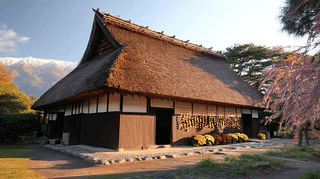
Discover the Former Takahashi Family Residence in Azumino, a registered Tangible Cultural Property featuring an authentic Edo-period farmhouse and three Meiji-era storehouses. Birthplace of renowned lacquer artist Takahashi Setsuro, this hidden gem offers a rare glimpse into traditional Japanese rural architecture amid the stunning North Alps landscape.
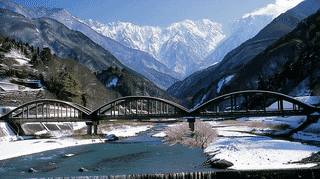
Discover Koshibu Bridge, a registered tangible cultural property in Oshika Village, Nagano. This elegant 1957 Lohse girder arch bridge offers stunning views of the Southern Alps and represents the pinnacle of mid-century Japanese bridge engineering.
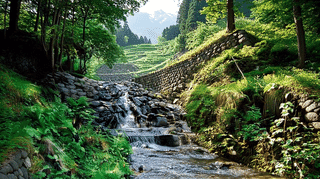
Discover Yakushizawa Stone-lined Waterway in Ogawa Village, Nagano - a Registered Tangible Cultural Property showcasing 19th-century stone masonry erosion control near the Fossa Magna. Perfect for hiking enthusiasts seeking authentic Japanese heritage.
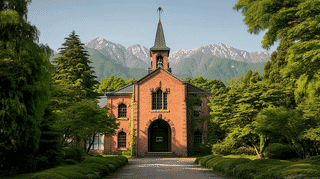
Discover Rokuzan Museum Rokuzan Hall, a registered tangible cultural property in Azumino, Nagano. Explore Japan's pioneering modern sculptor Ogihara Moriei's masterpieces in a stunning church-inspired building designed by architect Imai Kenji, set against the backdrop of the Northern Japanese Alps.

Discover the Ashizawa No. 3 Stone Masonry Check Dam in Omi Village, Nagano Prefecture — a Registered Tangible Cultural Property built in 1887 using traditional dry stone masonry techniques, still protecting the valley after over 135 years.
A dry-stone check dam of c.1884 in Kuwabara, Chikuma, Nagano. Just 3.8 m high, it leans back at a 1:1.6 slope and runs a 7.2 m stone apron below to steady the bed.
The widest of four Meiji check dams on the Izawa River in Chikuma, Nagano. Only 3.7 m high but 35 m across, its spillway uses big blocks and its wings small ones.
The lowest and smallest of four Meiji check dams on the Izawa River in Chikuma, Nagano. Built under Home Ministry works, its crest sags like a slack rope.
Visit the Iwadare Family Residence Main Building in Shiojiri, Nagano — a registered cultural property built in 1836, with a special upper-level reception room added in 1861 for attendants of Princess Kazunomiya's historic Nakasendō procession to Edo.
The Ueda Sanshu Cooperative Office Building in Nagano is a registered Tangible Cultural Property completed in 1917. This elegant timber-framed office, with its symmetrical facade and pediment windows, stands as a proud symbol of Uedas golden age as Japans foremost silkworm-egg producing city.
The Ueda St. Michael and All Angels Church in Ueda City, Nagano Prefecture, is a wooden Christian chapel built in 1932 in the style of a Japanese Buddhist temple. With its distinctive tiled hip-and-gable roof crowned by a cross and a three-aisle interior crafted from Kiso cypress, the church was registered as a national Tangible Cultural Property in 2021 — one of only two temple-style churches in Japan.
A Meiji-era stone masonry erosion control dam built on the Ai-shimizu-zawa tributary of the Ushibuse River in Matsumoto, Nagano. Registered as a National Tangible Cultural Property in 2021, this 7.8-meter-tall, 17.5-meter-long structure features an elegantly curved spillway and is a still-functioning relic of the Meiji-era Ministry of Home Affairs sabō (erosion control) project.
The Emyoji Temple Sanmon Gate in Matsushiro, Nagano, is a wooden gateway built in 1677 by Sanada Yukimichi, the third lord of the Matsushiro domain. As the sole structure to survive a devastating fire in 1825, this Edo-period gate features distinctive architectural elements and period-appropriate ornamentation, earning its registration as a National Tangible Cultural Property.
The Emyoji Bell Tower in Matsushiro, Nagano City, is a National Registered Tangible Cultural Property rebuilt in 1833 by Sanada Yukitsura, the eighth lord of Matsushiro Domain. Standing within the precincts of an Ōbaku Zen temple founded in 1677 by the third lord Sanada Yukimichi, this Edo-period structure reflects Chinese-influenced architecture and the deep ties between the Sanada clan and Zen Buddhism. The temple is also renowned as the resting place of Toyohime, the legendary Apricot Princess.
Discover Emyoji Temple Main Hall, a Registered Tangible Cultural Property in Matsushiro, Nagano. Founded in 1677 by the Sanada clan, this Obaku Zen temple features a striking dragon ceiling painting, Chinese-influenced architecture, and the grave of Princess Toyo.
A late Edo merchant house on the old Ina Highway in Miyada, Nagano, where a single unbroken roof covers both the dwelling and its soy sauce brewing storehouse.
In Matsumoto's Hofukuji post town the Ozawa family kept the honjin inn. Their gable-fronted main house, rebuilt in 1913, rises around a skylit three-storey atrium.
The oldest of the four Ozawa buildings, this late-Edo storehouse in Matsumoto's Hofukuji town turns its gable to the old road, its base clad in namako-kabe tiling.
East of the Ozawa main house in Matsumoto's Hofukuji town, this early-Showa annex sets stained glass and coved plaster below tatami rooms, listed as a model of design.
More from Nagano
Nagano’s registered properties across designations, with featured heritage and travel notes.
The complete kokuhō catalogue — browse by prefecture, period, and category.
Nationwide jūyō bunkazai — architecture, sculpture, painting, crafts, and documents.