Muromachi

Osaka · 室町

Browse Osaka’s cultural heritage from the Muromachi period (1336 – 1573). Filter by type and keyword, with concise stories, maps, and travel tips.

116 total Osaka Muromachi Period 1336 – 1573
Showing 1 – 20 of 116
Yuteki Tenmoku Tea Bowl
Osaka 南宋
Yuteki Tenmoku Tea Bowl

A Southern Song Jian bowl at the Museum of Oriental Ceramics in Osaka, silver spots packed tightly across both surfaces. Once owned by the regent Hidetsugu.

Yohen Tenmoku Tea Bowl
Osaka 南宋
Yohen Tenmoku Tea Bowl

A Southern Song tenmoku bowl at the Fujita Museum in Osaka, its black glaze scattered with haloed spots. Alone among yohen bowls, it is mottled inside and out.
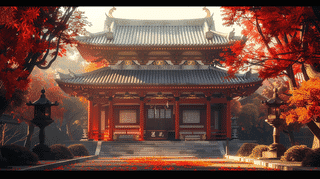
Kanshinji Temple Golden Hall
Osaka 室町前期
Kanshinji Temple Golden Hall

An early Muromachi-period hall in Osaka Prefecture. Its commentary misspells a founder's name there, and it lists out the nine rounds of repair since.

Ogami Shrine Main Hall
Osaka 室町中期
Ogami Shrine Main Hall

Built in 1442 beside the Kashii River in Izumisano, Ogami Shrine's main hall is Osaka's oldest kasuga-style hall, with a rare karahafu gable over its front eaves.

Katano Tenjin Shrine Main Hall
Osaka 室町中期
Katano Tenjin Shrine Main Hall

The Main Hall of Katano Tenjinja in Hirakata City, Osaka, is a cypress bark-roofed shrine building from 1402 — the oldest surviving structure in the city and a designated Important Cultural Property of Japan. Founded in 787 when Emperor Kanmu established a sacred altar honoring his father Emperor Kōnin, the shrine preserves exquisite Kamakura-period carvings and stands near the traditional site of Emperor Keitai's 6th-century Kuzuha Palace.

Main Hall of Hachiman Shrine, a Branch Shrine of Katano
Osaka 室町中期
Main Hall of Hachiman Shrine, a Branch Shrine of Katano

At Katano Tenjinsha in Hirakata, Osaka, the Hachiman auxiliary shrine's main hall is a small Muromachi one-bay nagare-zukuri, an Important Cultural Property of 1917.

Kanshinji Temple Haritaibo Heaven Hall
Osaka 室町後期
Kanshinji Temple Haritaibo Heaven Hall

The Kariteimo-do at Kanshinji Temple in Kawachinagano, Osaka, is a compact shrine hall rebuilt in 1549 and designated as an Important Cultural Property of Japan. Dedicated to Kariteimo (Hariti), the Buddhist guardian of children, this late Muromachi-period structure features elegant ikkensha kasuga-zukuri architecture with a cypress bark roof and cusped gable.

Kanshinji Temple Hanging Pagoda
Osaka 室町後期
Kanshinji Temple Hanging Pagoda

A ‘pagoda’ one story tall: Kanshin-ji’s Tatekake-tō, begun on Kusunoki Masashige’s vow and halted by his death at war in 1336, stands thatched and unfinished.

Kuanji Temple Gate
Osaka 室町中期
Kuanji Temple Gate

The Romon of Kyuan-ji in Ikeda, Osaka, is an early-15th-century temple gate and the oldest building on the grounds, mixing native wayo with Zen-style carving.

Kinzenji Triple Treasure Pagoda
Osaka 室町前期
Kinzenji Triple Treasure Pagoda

The Three-Tiered Hōkyōintō at Kinzenji Temple in Toyonaka City, Osaka, is an Important Cultural Property of Japan dating to 1349 during the Nanbokuchō period. Featuring an exceptionally rare triple-canopy structure carved in granite with Buddhist figures and Sanskrit seed syllables, this stone pagoda stands in a tranquil Ōbaku Zen temple originally founded by the monk Gyōki and later revived by the celebrated Tetsugen Dōkō.

Hibe Shrine Main Hall
Osaka 室町前期
Hibe Shrine Main Hall

The main hall of Kusabe Shrine in Sakai City, Osaka, is a nationally designated Important Cultural Property dating from the Nanbokucho period (circa 1369). Notable for its unusual dual roof style — gable front and hip-and-gable rear — and richly carved kaerumata struts depicting bulls, Chinese lions, go players, and mandarin ducks, the hall preserves the artistry of medieval Izumi craftsmen. As an ancient shrine listed in the Engishiki with connections to Emperor Jimmu's legendary eastern campaign and the beloved Urashima Tarō folktale, Kusabe Shrine offers visitors over a thousand years of layered Japanese heritage.

Kumata Shrine Main Hall (Third Hall)
Osaka 室町後期
Kumata Shrine Main Hall (Third Hall)

Three main halls stand in a row at Kumata Jinja in Osaka. The Third Hall, built in 1513 in single-bay Kasuga style, ranks among the city's oldest wooden buildings.

Kumata Shrine Main Hall (Second Hall)
Osaka 室町後期
Kumata Shrine Main Hall (Second Hall)

At Kumata Shrine in Osaka's Hirano district, the central Second Hall is a three-bay nagare-zukuri building of 1513, among the city's oldest, dated by its ridge tags.

Daiitokuji Temple's Tahoto Pagoda
Osaka 室町後期
Daiitokuji Temple's Tahoto Pagoda

The Tahoto pagoda of Daitokuji Temple on Mt. Ushitaki in Kishiwada City, Osaka, is a nationally designated Important Cultural Property built in 1515 during the late Muromachi period. Notable for its rare placement behind the main hall, this striking vermilion tower preserves refined medieval craftsmanship and creates an iconic autumn scene surrounded by spectacular foliage. Discover this treasure of mountain Buddhism at a sacred Shugendo training site along the Japan Heritage–certified Katsuragi Shugendo pilgrimage route.

Tajihayahime Shrine Main Hall
Osaka 室町後期
Tajihayahime Shrine Main Hall

Built in 1541, the main hall of Tajihayahime Shrine in Sakai carries carved struts and openwork brackets, among them a praying mantis on a banana plant.

Landscape of the Four Seasons with Sun and Moon (Color on Paper)
Osaka 室町
Landscape of the Four Seasons with Sun and Moon (Color on Paper)

Kongo-ji's National Treasure screens set a gold sun over spring hills and a silver moon over snowy pines. Explore this Muromachi masterpiece and its rare openings.

Celadon Phoenix Ear Vase (signed Mansei)
Osaka 南宋
Celadon Phoenix Ear Vase (signed Mansei)

The National Treasure celadon vase 'Bansei', fired at Southern Song China's Longquan kilns, passed from an empress to a Kyoto temple before reaching Izumi, Osaka.

Song Dynasty Book History Collection
Osaka 南宋
Song Dynasty Book History Collection

Osaka's Kyou Shooku library holds eleven Song-printed volumes of the Shiji jijie, the oldest Shiji commentary, a National Treasure once owned by Naito Konan.

Song Edition of the Maoshi Zhengyi (printed in 1139; Kanazawa Bunko copy)
Osaka 南宋
Song Edition of the Maoshi Zhengyi (printed in 1139; Kanazawa Bunko copy)

Printed in Southern Song China in 1139, these 17 National Treasure volumes of the Maoshi zhengyi rest at Kyo-U Library in Osaka with Kanazawa Bunko seals.

Flying Celadon Flower Vase
Osaka 南宋~元
Flying Celadon Flower Vase

The Tobiseiji Hanaike at the Museum of Oriental Ceramics, Osaka, is a National Treasure regarded as the finest surviving example of Chinese Yuan-dynasty Longquan celadon with iron-spot decoration. Standing 27.3 cm tall in the elegant yuhuchun form, twenty-one iron spots dance across its jade-green glaze. Discover this masterpiece treasured in Japan for centuries through the Konoike merchants and the famed Ataka Collection.
