
Shōwa
Hyogo · 昭和Browse Hyogo’s cultural heritage from the Shōwa period (1926 – 1989). Filter by type and keyword, with concise stories, maps, and travel tips.
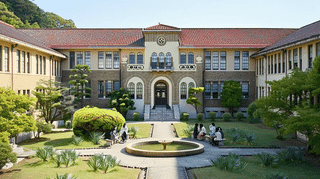
Twelve Showa-period school buildings in Hyogo Prefecture. Three of them, with their own two corridors, are counted together as just a single one here.
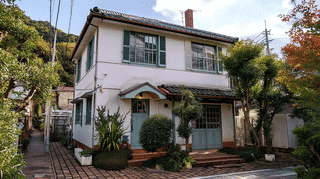
Discover the American House (Former Hamway Residence), a National Registered Tangible Cultural Property in Kobe's historic Kitano Ijinkan district. This early Showa period Western-style residence showcases exceptional architectural design and stands next to the famous Moegi-no-Yakata.
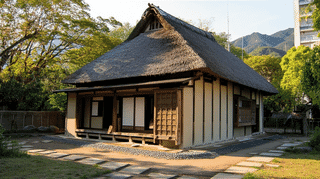
Discover the Oishi Family Residence in Toyooka City's Tanto area - a remarkable collection of 15 traditional farm buildings dating back to 1875. Learn about these registered cultural properties showcasing Meiji-era rural architecture in Hyogo Prefecture.
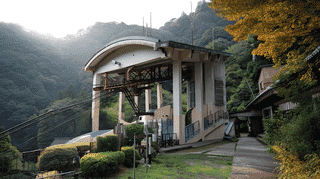
Discover the Kinosaki Onsen Ropeway Onsenji Station, a Registered Tangible Cultural Property built in 1962. This architectural gem connects visitors to the ancient Onsenji Temple while offering stunning views of Japan's most famous hot spring town.
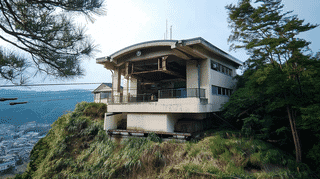
Discover the Kinosaki Onsen Ropeway Summit Station, a Registered Tangible Cultural Property featuring Michelin-starred views, Kurobe Dam construction techniques, and mid-century modern architecture atop Mt. Daishi.
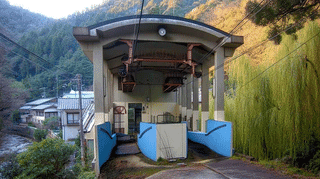
Discover the Kinosaki Onsen Ropeway Base Station, a 1962 Registered Tangible Cultural Property featuring distinctive vault-style architecture. This gateway to Michelin-starred views connects ancient Onsenji Temple with panoramic vistas of the Sea of Japan, offering a unique blend of modern design and traditional onsen culture.
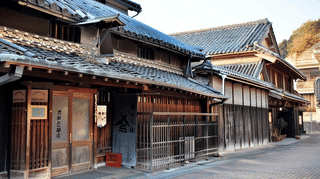
Explore the nationally registered cultural property of Kuroda Seiemon Shoten's outer wall in Miki City, Hyogo. This Edo-era merchant house preserves Japan's traditional hardware industry heritage along the historic Yunoyama Kaido road.

Built directly on the 135th meridian east — Japan's Standard Time Meridian — the Akashi Municipal Planetarium is Japan's oldest astronomical science museum, opened in 1960. Registered as a national Tangible Cultural Property, it houses Japan's longest-operating Carl Zeiss Jena planetarium and a 54-meter clock tower with panoramic observation decks, offering an unforgettable journey through time and space.
Built in 1927 and designed by architect Kataoka Yasushi, Ashiya Buddhist Hall is a nationally registered cultural property blending modern architecture with Eastern and Indian motifs. Featuring innovative earthquake-resistant construction, lotus stained glass, and nearly a century of Buddhist lectures, it stands as an icon of Hanshinkan Modernism along the scenic Ashiya River.
Atago Bridge spans the Otani River in the heart of Kinosaki Onsen, Toyooka City, Hyogo Prefecture. Built in 1926 as part of the reconstruction following the devastating 1925 Kita-Tajima Earthquake, this reinforced concrete pedestrian bridge features an elegant bow-shaped arch adorned with lantern pillars and giboshi finials in traditional Japanese style. Registered as a National Tangible Cultural Property in 2015, Atago Bridge serves as the gateway to Atago Shrine and forms an iconic part of Kinosaki's famous willow-lined riverscape.
Originally built in 1937 as a disaster recovery project following the devastating Muroto Typhoon, the former Kaimei Ordinary Elementary School is a three-story reinforced concrete building with a distinctive ship-like silhouette. Its semi-cylindrical staircase tower, strong horizontal window canopies, and L-shaped plan make it an outstanding example of early Showa school architecture. Registered as a National Tangible Cultural Property in 2007, the building preserves a prewar imperial portrait safe and WWII bullet scars on its perimeter wall.
The former Osho Village Hall in Amagasaki City, Hyogo Prefecture, is the first government building designed by Togo Murano, one of Japan's most celebrated modern architects and a recipient of the Order of Culture. Completed in 1937, this three-story reinforced concrete structure features distinctive brown tile walls, decorative reliefs of eagles and griffins, and an inventive floor plan. Registered as a National Tangible Cultural Property, it embodies the prosperity of a village once known as the richest in Japan.
A 1933 bracket-arm gate on a street in Ashiya Midorigaoka: gabled pantiles, copper eaves and adze-marked board doors. Registered 2024. A private home.
Inaoka Family Residence Detached Wing, Kasai: an early Showa guest wing of two eight-mat rooms, with a one-room Western annex in French tile and rough render.
Ō-bashi (King's Bridge) spans the Ōtani River in the heart of Kinosaki Onsen, Toyooka City, Hyogo Prefecture. Built in 1927 as part of the post-earthquake reconstruction following the devastating 1925 Kita-Tajima Earthquake, this reinforced concrete road bridge features towering granite pillars crowned with stone lanterns and bronze-decorated balustrades inspired by shrine and temple architecture. Registered as a National Tangible Cultural Property in 2015, the bridge stands before the iconic Ichi-no-yu bathhouse and defines the scenic identity of one of Japan's most beloved hot spring towns.
This eleven-square-metre storehouse at Otsuchi Shrine in Kobe holds ritual gear behind walls broken only by one door and a vent. Built 1929, registered in 2016.
Built around 1929, Otsuchi Shrine's joined worship and offering halls in Kobe pair the plainest bracketing with a wide coffered ceiling. Registered in 2016.
A 1953 municipal apartment block in Ashiya, Hyogo, built of Nikkaseki tuff laid in courses alternating with concrete block. Its eight units now hold studios.
A 1929 telephone exchange in Ashiya, Hyogo, by ministry architect Uenami Akira. Two-tone scratch tile, an arcaded north wall, lion reliefs; now a restaurant.
Completed in 1938 on the inner bailey of Amagasaki Castle, this three-story concrete school rings a courtyard. Registered in 2024, it is now the city history museum.