
Heian
Osaka · 平安Browse Osaka’s cultural heritage from the Heian period (794 – 1185). Filter by type and keyword, with concise stories, maps, and travel tips.
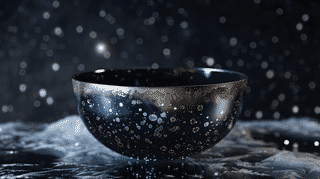
A Southern Song Jian bowl at the Museum of Oriental Ceramics in Osaka, silver spots packed tightly across both surfaces. Once owned by the regent Hidetsugu.

A Southern Song tenmoku bowl at the Fujita Museum in Osaka, its black glaze scattered with haloed spots. Alone among yohen bowls, it is mottled inside and out.
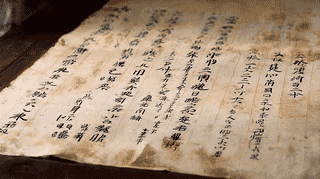
A Heian-period text owned by Amanosan Kongoji in Osaka Prefecture. Its own date field is empty, and yet a year still survives in another field of it here.
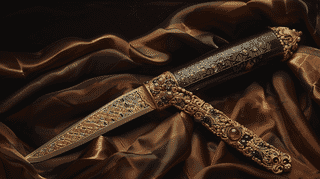
A Heian-period knife owned by Domyoji Tenmangu in Osaka Prefecture. Its own handle runs some three centimetres longer than the blade that it holds now.
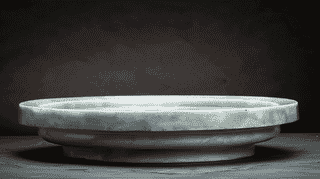
An inkstone owned by Domyoji Tenmangu in Osaka Prefecture. Its own country field reads Japan, while its own text still calls the work Tang instead here.
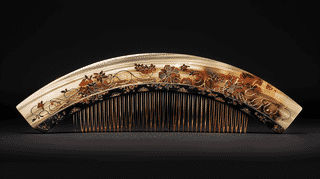
A Heian-period comb owned by Domyoji Tenmangu in Osaka Prefecture. Red and green colouring lies beneath its tortoiseshell and shows right through it now.
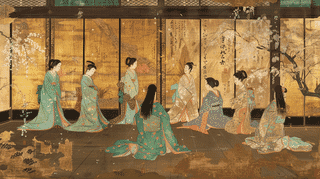
A Heian-period handscroll in Nara owned by a listed company. The company owns the scroll itself while a museum that it runs is the place that keeps it.

A Heian tachi by Ko-Bizen Masatsune in a private collection, a National Treasure since 1953, brilliantly made and flawless.
The Colored-Picture Decorated Paper, Ink-Written Kanfugen-kyo (Fragment / Fan-Shaped Sutra) is a single surviving leaf of the celebrated Senmen Hokekyo Sasshi, originally a ten-volume fan-shaped sutra booklet from late Heian Japan. Layered with mica, gold and silver leaf, yamato-e painting, and elegant ink calligraphy, it is now an Important Cultural Property held by the Fujita Museum in Osaka.
A late Heian two-storey pagoda south of the main hall at Amanosan Kongoji in Kawachinagano, Osaka, with a shingle roof and a painted first storey holding a Dainichi.
An unsigned straight double-edged Heian sword owned by Kongo-ji, tied by temple tradition to the monk Akan's esoteric rites and kept at the Kyoto National Museum.
Kongo-ji in Osaka keeps a National Treasure scroll of the Engishiki shrine register, copied in 1127, naming 2,861 shrines recognized by the Heian court.
Six Bai Juyi poems in three scripts, with Ono no Michikaze's only surviving standard-script hand. See this National Treasure at Osaka's Masaki Art Museum.
Seven Heian-era kakemamori amulets at Osaka's Shitennoji, National Treasures worn at the neck, one concealing a wooden Buddha revealed by a 2018 CT scan.
A Heian National Treasure handscroll pairing thirty poets across fifteen rounds, with 130 waka in mature kana on purple-and-indigo tobikumo paper, in Izumi, Osaka.
The Kacho Maki-e Kyosoku, a 9th-century lacquered armrest at Osaka's Fujita Museum, is one of Japan's earliest maki-e works, decorated in gold and rare tin.
Dated 883, this National Treasure handscroll records Kanshinji's founding by Kukai's disciple Jichie and inventories the Osaka temple's early Heian halls and images.
A Heian court belt at Domyoji Tenmangu in Osaka, set with fifteen silver-plated plaques of hunters and ducks. A National Treasure linked to Sugawara no Michizane.
At Dōmyōji Tenmangū near Osaka, this 36.4 cm ivory court scepter is a National Treasure and one of six relics tied by tradition to Sugawara no Michizane.
The Revelation of the Two Great Sutras, a pair of Heian paintings at Osaka's Fujita Museum and a National Treasure since 1973, depicts two esoteric sutra legends.