Shōwa
Osaka · 昭和Browse Osaka’s cultural heritage from the Shōwa period (1926 – 1989). Filter by type and keyword, with concise stories, maps, and travel tips.
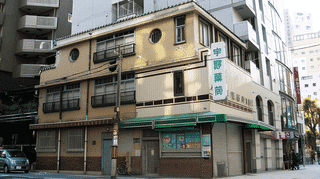
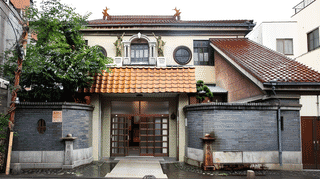
Explore Uno Pharmacy, a nationally registered tangible cultural property in Osaka. This 1933 wooden building showcases rare "Kanban-Kenchiku" (signboard architecture) with Spanish-style tiles, Art Deco elements, and distinctive porthole windows—a unique survivor of prewar Japanese commercial design.
Discover Gengahashi Onsen, a 1937 Showa modernist bathhouse in Osaka featuring an iconic Statue of Liberty and shachihoko roof ornaments. Learn about Japan's first registered cultural property public bath and its unique architectural legacy.
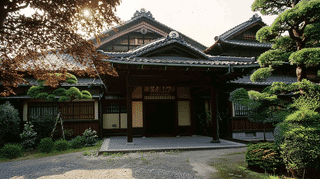
Discover Shotokukan, a registered tangible cultural property in Osaka featuring exquisite Japanese-Western fusion architecture, rare timbers from across Japan, and Art Deco craftsmanship from the 1930s.
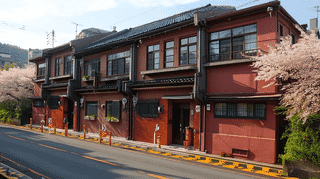
Discover Hazama House, a beautifully preserved 1932 luxury nagaya row house in Osaka's Miyakojima district. This Registered Tangible Cultural Property features a unique hybrid design with reinforced concrete basement and wooden upper floors along the scenic Okawa River.
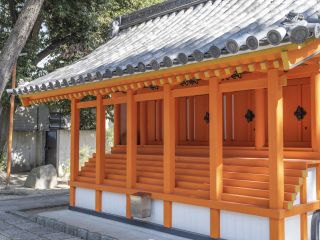
The Onshi Kodo at Kanshinji Temple in Kawachinagano, Osaka, was constructed in 1930 using materials from the grand banquet hall built for Emperor Showa's enthronement ceremony in 1928. Featuring vivid hosoge ceiling decorations and chandeliers, it is the sole surviving structure preserving the original banquet hall's appearance, designated an Important Cultural Property in 2017.
Completed in 1931, the Mengyo Kaikan (Cotton Industry Club Hall) is a designated Important Cultural Property standing in Osaka's historic Semba district. Designed by architect Setsu Watanabe with a Renaissance-inspired exterior and lavish interiors featuring distinct European styles in each room — from Jacobean to Queen Anne to Adam — this grand building symbolizes the golden age when Osaka was hailed as the Manchester of the East. Monthly public tours offer a rare glimpse inside.
Completed in 1953 by Mirei Shigemori, this stone garden at Kishiwada Castle sets nine rock groups after Zhuge Liang's eight battle formations, best seen from above.
The Ikoma Clock Shop (Ikoma Building) in Hiranomachi, Osaka, completed in 1930 and designed by the master Kansai architect Sou Hyozo, is a National Registered Tangible Cultural Property. Its rooftop clock tower and pendulum-inspired vertical bay windows and round window, scratch-tile and terracotta Art Deco facade, granite eagle sculptures, and Italian-marble staircase make it one of central Osaka's finest early Showa-era commercial buildings — and it remains in operation as a clock and jewelry shop, just two minutes' walk from Kitahama Station.
Gazoku-sanso, the 1937 Ikeda home of Hankyu founder Kobayashi Ichizo, blends Spanish tiles and Tatsuyama stone. It is now the Kobayashi Ichizo Memorial Hall.
A 47-metre reinforced-concrete wall around Kobayashi Ichizo's Ikeda villa, topped with the same tiles as the house so the boundary reads as part of the design.
Conceived by Kobayashi Ichizo, Sokuan rings a three-and-a-half-mat daime room with chair seating so guests take tea at the same eye level as on the tatami.
A tiny two-mat tea room in Kobayashi Ichizo's south garden, with a crawl-in entrance and a cusped window, said to be named by former premier Konoe Fumimaro.
Discover the Edobori Kodama Building, a 1935 reinforced concrete residence blending Spanish and Japanese design in Osaka's Nishi Ward. Registered as a national tangible cultural property, this architectural gem tells the story of a self-made textile merchant.
Completed in 1930 as the Mitsubishi Corporation Osaka branch and renamed after being acquired by retired Ministry of Agriculture officials in 1949, the Osaka Norin Kaikan Building is a five-story reinforced concrete landmark in the heart of Minamisemba. Its stone-and-tile facade, original mail chutes, vault doors, and chandelier-lit entrance hall remain remarkably intact. Registered as a Tangible Cultural Property in 2021, it now houses fashion boutiques, ateliers, and design shops.
Completed in 1933 to a design by architect Takeo Yasui, the Osaka Gas Building stands as a masterpiece of early Showa-era modernist architecture on Midosuji Boulevard. Its iconic facade — black granite below and creamy white tiles above — has often been likened to a great ocean liner, and the building was designated a Registered Tangible Cultural Property in 2003 as a fine example of transitional modern architecture. Still serving as the headquarters of Osaka Gas, it remains an emblem of historic Senba district.
The iconic Osaka Castle Tenshukaku is the third-generation donjon — rebuilt in 1931 entirely through citizens' donations after the Toyotomi-era and Tokugawa-era keeps were destroyed. As Japan's first modern castle reconstruction, combining steel-reinforced concrete with a faithful Momoyama-style exterior, it was registered as a National Tangible Cultural Property in 1997 and designated an Osaka City Tangible Cultural Property in 2025. This guide introduces overseas visitors to its rich museum collection, panoramic 8th-floor observation deck, and the newly opened adjacent Toyotomi Stone Wall Museum.
Located just south of Osaka Castle Park in the Tamatsukuri district, Hale Chapel of Osaka Jogakuin was designed by the office of American architect-missionary William Merrell Vories and completed in 1951. A symbol of postwar reconstruction, the chapel combines a restrained modernist exterior with a soaring auditorium interior, qualities that earned it designation as a Registered Tangible Cultural Property of Japan in 2017.
Opened in 1936 as Japan's third municipal art museum, the Osaka City Museum of Fine Arts is a rare surviving example of a large-scale prewar museum building, registered in 2015 as a Tangible Cultural Property. Its elegant blend of Japanese and Western architectural motifs, world-class collection of approximately 8,700 works including National Treasures and Important Cultural Properties, and a major March 2025 renovation as an 'open museum' make it a must-visit cultural destination in Tennoji Park.
Discover Osaka Celluloid Kaikan, a 1931 modernist building in Higashinari Ward designed by Isamu Nishida. This Registered Tangible Cultural Property tells the story of Japan's pre-war celluloid industry through its expressionist columns, Spanish-tile roof, and ground-floor exhibition room.
Discover the Kaizuka City History Museum, a 1935 Registered Tangible Cultural Property in Osaka. Originally built as the Unitika textile factory office, this early Showa-era building now showcases Japan's industrial history and the legendary "Oriental Witches" volleyball team that won gold at the 1964 Tokyo Olympics.