Taishō

Osaka · 大正

Browse Osaka’s cultural heritage from the Taishō period (1912 – 1926). Filter by type and keyword, with concise stories, maps, and travel tips.
137 total Osaka Taishō Period 1912 – 1926
Showing 1 – 20 of 137
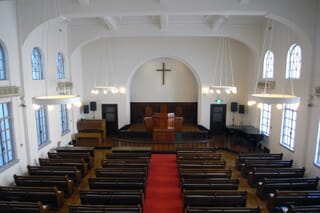
Japan Free Methodist Church, Osaka Nipponbashi Christ Church
Osaka 大正
Japan Free Methodist Church, Osaka Nipponbashi Christ Church

Discover the historic Osaka Nipponbashi Christian Church, a 1925 Gothic Revival masterpiece and Registered Tangible Cultural Property. Located near Kuromon Market and Den Den Town, this architectural treasure offers a peaceful spiritual retreat in bustling Osaka.

Aoyama Building
Osaka 大正
Aoyama Building

Built in 1921 as the private home of an Osaka importer who had traveled across Europe, the Aoyama Building is a Spanish-style gem in the historic Funaba district. Designed by Ito Tsuneji and constructed by Obayashi Gumi, it is wrapped in ivy grown from cuttings of the famous Hanshin Koshien Stadium vines, changing colors with every season. Inside, Taisho-era Italian stained glass, a hand-twisted ironwork staircase, and grape-motif beams remain beautifully preserved. Registered as a Tangible Cultural Property of Japan in 1997, it sits one minute from Kitahama Station and is one of central Osaka's most photographed historical buildings.

Abe No Seimei Shrine Lattice Fence
Osaka 大正
Abe No Seimei Shrine Lattice Fence

The Sukibei (transparent fence) of Abe no Seimei Shrine in Abeno Ward, Osaka, is a wooden fence with a copper-plate roof built in 1924 that encircles the main hall as a sacred boundary. Registered as a National Registered Tangible Cultural Property in 2019, it features chamfered square pillars with diamond-shaped lattice strips crafted from fine timber. Discover the history and architectural beauty of this shrine at the legendary birthplace of Abe no Seimei, Japan's most famous onmyoji.

Abe No Seimei Shrine Worship Hall and Offering Hall
Osaka 大正
Abe No Seimei Shrine Worship Hall and Offering Hall

The Haiden (worship hall) and Heiden (offertory hall) of Abe no Seimei Shrine in Osaka's Abeno Ward are Taishō-era structures built in 1924 at the legendary birthplace of Abe no Seimei, the greatest onmyōji of the Heian period. Registered as a Tangible Cultural Property of Japan, the buildings feature refined revivalist architecture with hip-and-gable copper-plate roofing that harmonizes with the main sanctuary. The shrine grounds also feature pentagram motifs, a bronze statue of Seimei, and sites connected to the famous Kuzunoha fox legend.

Abe No Seimei Shrine Main Hall
Osaka 大正
Abe No Seimei Shrine Main Hall

The Main Hall of Abe no Seimei Shrine in Osaka's Abeno Ward is dedicated to Abe no Seimei, the legendary Heian-period onmyōji (yin-yang diviner). Completed in 1924, the hall was designed by former Nara Prefecture engineer Yoshida Tanejirō in the traditional ichiensya nagare-zukuri style with copper plate roofing, incorporating Daibutsuyō-style kibana brackets and medieval kaerumata struts. Registered as a National Tangible Cultural Property in 2019, the shrine stands on the traditional birthplace of Seimei along the historic Kumano Kaidō pilgrimage route, drawing visitors as one of Osaka's most celebrated spiritual power spots.

Arai Building
Osaka 大正
Arai Building

Built in 1922 as the Osaka branch of Hotoku Bank, the Arai Building is a Registered Tangible Cultural Property designed by renowned architect Kawai Kozo. Featuring imposing Doric columns and an elegant Taisho-era interior, it now houses the acclaimed patisserie GOKAN on its lower floors, offering visitors a unique blend of architectural heritage and exquisite Japanese-inspired confections in Osaka's historic Kitahama financial district.

Ikeda Pier Maru Center (former Ikeda Jitsugyo Bank Head
Osaka 大正
Ikeda Pier Maru Center (former Ikeda Jitsugyo Bank Head

Located in Ikeda City, Osaka, the Ikeda Pia Maru Center (Former Ikeda Industrial Bank Head Office) is the oldest reinforced concrete building in the city, completed in November 1925 and designed by Ogasawara Hisashi (Shōkō). Registered as a National Tangible Cultural Property in 2004, this elegant Taishō-era bank now lives on as a coworking and startup incubation hub.

Main House of the Ogura Family Home (former Kakutani Family
Osaka 大正
Main House of the Ogura Family Home (former Kakutani Family

Udatsuya, formally the Former Kadoya Residence Main House, is a wooden tsushi two-story machiya townhouse built in 1913 in Osaka's Nishinari Ward. Featuring two striking udatsu firebreak walls on its facade, this Nationally Registered Tangible Cultural Property preserves the architectural heritage of the Tamade district's rapid transformation from farmland to urban neighborhood. Now operating as an exclusive guesthouse, it offers visitors a rare chance to stay in a Taisho-era merchant's residence.

Umedani Dental Clinic
Osaka 大正
Umedani Dental Clinic

Discover Umetani Dental Clinic, a Registered Tangible Cultural Property in Osaka's Nishinari Ward. Built around 1922, this three-story wooden building blends Western exterior design with a traditional machiya interior, standing as an outstanding example of Taisho-era architecture in Osaka's shitamachi district.

Endo Family Residence (Former Presbyterian Mission House)
Osaka 大正
Endo Family Residence (Former Presbyterian Mission House)

Discover the Endo Family Residence in Osaka's Tezukayama district, a 1922 Western-style wooden two-story house designed by American architect William Merrell Vories. Originally built as a Presbyterian missionary house, this Registered Tangible Cultural Property features a central front porch, a staircase hall, and a fireplace-warmed living room from Japan's Taishō era.

Osaka Club
Osaka 大正
Osaka Club

Standing in the heart of Osaka's historic financial district, the Osaka Club is a stately 1924 building designed by architect Takeo Yasui. Registered as a Tangible Cultural Property in 1997, it is celebrated as one of "Osaka's Three Great Modern Buildings" alongside the Cotton Industry Hall and the Osaka Gas Building. Its bold blend of Southern European massing with Asian, Indian, and Islamic decorative motifs makes it the defining masterpiece of Yasui's "Free Style" — a unique window into the elegant world of Taisho-era Japanese gentlemen's society.

Katashimo Wine Food Storage
Osaka 大正
Katashimo Wine Food Storage

Discover the Katashimo Wine Food Storage in Kashiwara City, Osaka — a Taisho-period wine cellar registered as a national tangible cultural property. Explore the oldest winery in western Japan, its innovative charcoal-insulated walls, and the rich grape heritage of Kawachi.

Former Osaka City Central Fire Department Imabashi Branch
Osaka 大正
Former Osaka City Central Fire Department Imabashi Branch

Built in 1925 as a neighborhood fire station in Osaka's historic Semba district, the Imabashi Building is a compact three-story reinforced concrete structure registered as a national Tangible Cultural Property. Featuring distinctive Tudor arches and tile-clad walls, this charming building served firefighters for 71 years before being transformed into the Italian restaurant Dal Pompiere. It stands as a celebrated example of creative architectural preservation amid Osaka's rich collection of early modern buildings.

Odani Castle Local Museum Tile Storehouse and Rice
Osaka 大正
Odani Castle Local Museum Tile Storehouse and Rice

Built in 1925, this shinkabe storehouse holds a rice store and a tile store. Its gabled roof mixes heavier tile to the south and lighter tile to the north.

Odani Castle Local Museum No.2 Storehouse
Osaka 大正
Odani Castle Local Museum No.2 Storehouse

This Taishō dozō east of the gate holds a rice store and a book store. Its library reflects the record-keeping of the family that later founded the museum.

Waterworks Memorial Hall (former Shibashima Water
Osaka 大正
Waterworks Memorial Hall (former Shibashima Water

Discover Osaka's Waterworks Museum, a beautifully preserved 1914 Neo-Renaissance red brick pumping station. Registered Tangible Cultural Property, free admission, and a hidden gem of Taisho-era industrial architecture.

Semba Building
Osaka 大正
Semba Building

Discover the Semba Building in Osaka, a 1925 registered tangible cultural property featuring a stunning open-air patio courtyard, Art Deco details, and Taisho-era charm in the heart of Semba.

Taiyoshi Hyakuban
Osaka 大正
Taiyoshi Hyakuban

Discover Taiyoshi Hyakuban, a Taisho-era former pleasure quarter building now serving as a renowned restaurant. Registered as a national tangible cultural property in 2000, this Osaka landmark features Momoyama-style ornamentation and rooms inspired by the Fifty-Three Stations of the Tokaido.

Takahashi Family Residence
Osaka 大正
Takahashi Family Residence

The Takahashi Family Residence in Minoh, Osaka is a Western-style mansion built around 1919 as a villa for sugar trade magnate Arima Hikokichi. Featuring an English-style steep slate roof, stained glass windows, and numerous bay windows, it is registered as a National Tangible Cultural Property and was the first Scenery Important Building designated in Osaka Prefecture.

Donburiike Textile Hall
Osaka 大正
Donburiike Textile Hall

Built in 1922 as the headquarters of Aikoku Savings Bank, Dobuike Textile Hall is a National Registered Tangible Cultural Property on Dobuike-suji in Osaka's Semba district. After serving as a textile wholesale hub in the postwar era, the building underwent an innovative 2016 renovation that revealed its hidden Taisho-era facade. Discover the charm of this century-old modern architecture with its tile-clad walls and elegant curved corners.
