
Muromachi
Shiga · 室町Browse Shiga’s cultural heritage from the Muromachi period (1336 – 1573). Filter by type and keyword, with concise stories, maps, and travel tips.
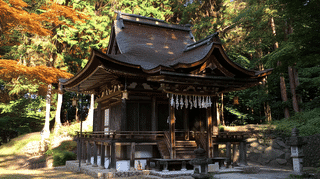
A middle Muromachi-period shrine hall in Shiga Prefecture. Its own name and its address here use two quite different characters for the one same sound.
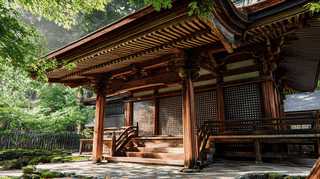
An early Muromachi hall in Shiga Prefecture, rebuilt in 1347. A temple building, it is filed here under the shrines rather than under any temples at all.
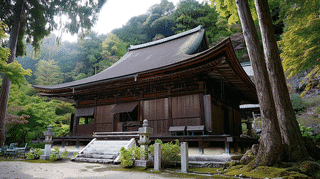
An early Muromachi-period Buddhist main hall in Shiga Prefecture. The Agency's own commentary field for the hall there has been left entirely empty now.

The main hall of Ikuwa Shrine in Yasu, Shiga, from the early Muromachi period, is a one-bay nagare-style hall roofed in cypress bark, designated with 2 ridge tags.
The main hall of Isasa Shrine in Kusatsu, Shiga, built in 1468, is a one-bay nagare-style hall roofed in cypress bark, designated with two ridge tags.
The listed stone hokyointo at Ishiyama-dera in Otsu: the left of 2 pagodas west of the Tahoto, an early Muromachi memorial to Kamegaya Zenni designated in 1961.
A mid-Muromachi one-bay shrine hall with a flowing roof in the Inari Shrine precinct at Yasu, Shiga. Designated in 1917, it once served the vanished Fukurin-ji.
Built in 1347 and moved from Onjo-ji in 1595, the main hall of Mount Hiei's Saito precinct is Enryakuji's oldest building, a seven-bay hall known as the Shaka-do.
A three-bay late-Muromachi hall roofed in cypress bark, in cedar forest north of Saitō on Mount Hiei. Enryakuji calls it the only building to survive the 1571 fire.
Oisugi Shrine Main Hall in Kusatsu, Shiga, is a 1452 nagare-zukuri hall with painted carvings, designated in 1906, and host to the UNESCO Sanyare Odori.
The 1427 Main Hall of Shinohara Shrine in Yasu, Shiga, stands beside a National Treasure. This Important Cultural Property is nicknamed the Rice-Cake Shrine.
Ozu Shrine Main Hall in Moriyama, Shiga: a three-bay nagare-style hall with a cypress-bark roof, rebuilt around 1526 in the late Muromachi period, in wooded grounds.
Oda Shrine's two-story Romon Gate in Omihachiman, Shiga, is a 14th-century Important Cultural Property, its cypress-bark roof and Muromachi form intact.
Kagami Shrine Main Hall in Ryuo, Shiga, is a mid-Muromachi 3-bay nagare-zukuri sanctuary with a 3-bay porch and shingle roof, an Important Cultural Property.
Kasuga Shrine Gate in Takagi, Yasu, is a cypress-bark munamon of about 1511: two posts and a gabled roof. Designated in 1961. What to notice and how to walk there.
Kasuga Shrine Main Hall in Koyagi, Higashiomi, is a three-bay nagare-zukuri hall of 1444 roofed in cypress bark, designated in 1911 with its ridge tag. How to visit.
Kannonji Amida Hall in Kusatsu, Shiga, is an early Muromachi hall three bays square, roofed in cypress bark. Listed in 1901; said to have come from Kyoto in 1553.
The medieval main hall of Kongorinji in Aisho, Shiga, a National Treasure since 1952, a large Japanese-style esoteric hall traditionally dated 1288.
Shikobuchi Shrine in Takashima, Shiga, hides three tiny mise-dana-zukuri sanctuaries from around 1371 inside a protective hall. See why they matter and how to visit.
The main hall of Jishu Shrine in Katsuragawa, Otsu, is the only three-bay Kasuga-style shrine in Shiga. Rebuilt in 1502, it guards the Tendai temple of Myoo-in.