
Kofun
Tokyo · 古墳Browse Tokyo’s cultural heritage from the Kofun period (300 – 538). Filter by type and keyword, with concise stories, maps, and travel tips.
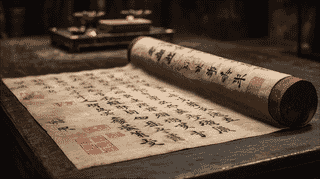
A Tang-dynasty copy of a letter by Wang Xizhi, kept in Tokyo. Nothing at all in his own hand survives, and so the copy itself is now the treasure here.
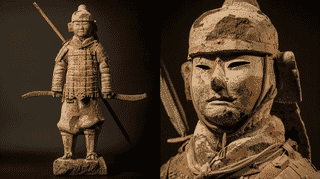
A Kofun-period haniwa at the Tokyo National Museum in Tokyo, counted here as one single figure rather than being gathered into a lot with other finds.
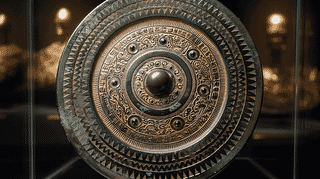
A Kofun-period mirror owned by the Gotoh Museum in Setagaya, Tokyo. Its own commentary there now runs to just one single sentence and no more than this.

Discover the Jinbutsu Gazō Kyō, a 5th–6th century bronze mirror designated as a National Treasure of Japan. Featuring a 48-character inscription with one of the earliest uses of the title "Great King," this extraordinary artifact at the Tokyo National Museum offers a rare window into ancient Japan's diplomacy, craftsmanship, and the origins of written Japanese.
The Haniwa Horse (Important Cultural Property), excavated from Kamichūjō in Kumagaya City, Saitama Prefecture, and housed at the Tokyo National Museum, is one of the finest horse-shaped haniwa from Japan's 6th-century Kofun period. Its exquisitely detailed horse tack—including bridle bells, horse bells, stirrups, and pendant ornaments—offers an invaluable glimpse into ancient Japan's equestrian culture and the symbols of power.
Discover the National Treasure gilt-bronze horse trappings excavated from the Saitobaru Kofun cluster in Miyazaki. Now housed at the Gotoh Museum in Tokyo, these exquisite 6th-century artifacts illuminate ancient Hyuga's role in East Asian diplomacy and craftsmanship.
A Tang manuscript of the Book of Han, chapter 57 on poet Yang Xiong, at Kyoto National Museum. Taboo strokes and 948 reading marks trace ten centuries of study.
This Tang-dynasty scroll at the Kyoto National Museum preserves 172 lines of the Shishuo Xinshu, the world's oldest surviving manuscript of the Chinese classic.
On the back of the Akihagi-jo handscroll lies a Tang copy of the Huainanzi's military chapter, older than the poems on its front. Both sides are National Treasures.
At the Tokyo National Museum, this Tang scroll is the oldest surviving copy of the early Tang writer Wang Bo, brushed around 685 to 689, a decade after his death.
Two white-bronze mirrors at the Tokyo National Museum, donated to Hōryūji by Empress Kōmyō in 736. Their backs cast a Daoist realm of sacred peaks and seas.
Volume nine of the Yupian, a Chinese dictionary lost in China, survives in Japan as a Tang scroll. This Waseda National Treasure bears a Buddhist text dated 1021.
At the Tokyo National Museum, the gilt Dragon-Head Ewer fuses a Persian form, four engraved Pegasus, and an East Asian dragon. A National Treasure from Hōryū-ji.
Discover Jieshi Diao Youlan Daiwo, the world's oldest complete instrumental music manuscript. This 7th-century guqin tablature, designated a National Treasure of Japan, is preserved at the Tokyo National Museum in Ueno, Tokyo.
Preserved at Waseda University Library in Tokyo's Shinjuku Ward, this National Treasure is the sole surviving volume of a lost 100-volume Chinese Confucian commentary. A Tang-dynasty handscroll that reached Japan in the Nara period, it bears the personal library seal of Empress Kōmyō. Discover its extraordinary journey, scholarly importance, and how to experience it today.