
Muromachi
Tokyo · 室町Browse Tokyo’s cultural heritage from the Muromachi period (1336 – 1573). Filter by type and keyword, with concise stories, maps, and travel tips.
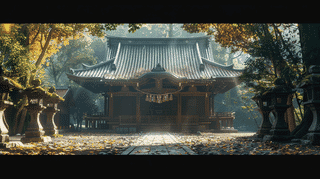
A middle Muromachi-period hall in Tokyo. One single ink inscription found there fixed its own date, the temple's own name and its own image all at once.

A Southern Song tea bowl in Tokyo, known as the Inaba Tenmoku. Another bowl of the very same name here was listed on exactly the same day as this one.
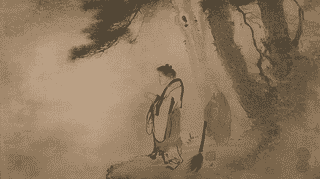
An ink painting on deposit at the Tokyo National Museum, owned by a foundation. Its title names Shide alone, and not the usual pair of the two figures.

A Southern Song-period silk painting of a quail bearing the "Zakkashitsu-in" connoisseurship seal of Shogun Ashikaga Yoshinori, this Important Cultural Property descends from the celebrated Higashiyama lineage of Chinese paintings cherished by the Ashikaga shogunal house, and is privately preserved in Tokyo as a quiet witness to Japan's medieval engagement with classical Chinese art.
A hanging scroll in ink and color on silk, named an Important Cultural Property in 1959. Lan Ying, who painted it, was a leading landscape master of the late Ming.
Seeking Blossoms (Tankazu) by the early Ming court painter Shi Rui is a fifteenth-century Chinese masterpiece preserved in Japan as an Important Cultural Property. The hanging scroll depicts literati seeking out early-spring blossoms in a mountainous landscape, rendered in the brilliant blue-and-green style with lavish use of mineral pigments and gold. Surviving works by Shi Rui are exceptionally rare, making this painting one of the finest examples of Chinese imperial court painting preserved in Japan. It is occasionally displayed in special exhibitions at the Tokyo National Museum.
Discover the Pigeon on a Peach Branch (Momohato-zu), a Japanese National Treasure attributed to Emperor Huizong of the Northern Song Dynasty. This exquisite silk painting from 1107 showcases the boneless (mokkotsu) technique, Slender Gold calligraphy, and a provenance tracing back to Shogun Ashikaga Yoshimitsu.
Calligraphy by the Southern Song Chan master Xutang Zhiyu on wax-coated paper, an Important Cultural Property prized as a tea-room scroll, privately held in Tokyo.
This fifteenth-century pair of six-panel screens at the Tokyo National Museum is the oldest surviving Hamamatsu-zu, its mica ground glowing softly like moonlight.
A Muromachi ink painting of the poet Li Bai watching a waterfall, inscribed by the Zen monk Ishō Tokugan around the early 1420s, the oldest such work in Japan.
Discover the Rogan-zu (Reeds and Wild Geese) by Shūgetsu Tōkan, a designated Important Cultural Property of Japan. This Muromachi-period ink painting by a direct disciple of Sesshū captures the poetic beauty of autumn marshlands.
Discover the Celadon Ewer with Peony Design at Tokyo National Museum — a 15th-century Longquan ware masterpiece from Ming-dynasty China, beloved in Japan as classic Tenryu-ji celadon and designated an Important Art Object.
Discover the National Treasure "Autumn Pasture with Cattle" (Akino Bokugyu-zu), a masterpiece of Southern Song Chinese painting attributed to court artist Yan Ciping. Housed at the Sen-oku Hakukokan Museum in Roppongi, Tokyo, this exquisite silk scroll once belonged to the Ashikaga Shogun's famed Higashiyama Collection.
This National Treasure colophon by Yuan literatus Feng Zizhen praises a lost insect scroll by Song painter Yi Yuanji. Sen no Rikyu's letter saved it from being cut.
Kongō-ji Niō-mon Gate in Hino City, Tokyo, is the main gate of Takahata Fudōson, one of the Three Great Fudō of the Kantō region. Built in the late Muromachi period as a three-bay, single-entrance two-story gate (sangen ikko rōmon), it was returned to its original two-story irimoya form during the 1959–1960 dismantling and restoration. Designated a National Important Cultural Property in 1946, the gate houses a fierce pair of Muromachi-period Niō guardian statues. Just 35 minutes from Shinjuku by Keiō Line and a 5-minute walk from the station, it offers a rare encounter with medieval temple architecture amid the seasonal beauty of hydrangeas and autumn maples.
Kongoji Fudodo in Hino City, Tokyo is an early Muromachi-period temple hall rebuilt in 1342 and widely regarded as the oldest existing cultural-property building within Tokyo Metropolis. Designated a Nationally Important Cultural Property, the hall — five bays square with a hip-and-gable roof, a one-bay front canopy, and copper sheeting in thatched-roof profile — stands at the heart of Takahata Fudoson, one of the Kantō region's three great Fudō temples and the ancestral temple of Shinsengumi vice-commander Hijikata Toshizō.
Court robes, maki-e boxes, mirrors, 29 combs, and silver toiletries offered to the Kumano gods around 1390 survive nearly complete at the Kyoto National Museum.
At the Kyoto National Museum, this gold-on-indigo scroll is the sole survivor of a handwritten Goryeo Buddhist canon vowed in 1006 by a Korean queen dowager.
A National Treasure album at the Kyoto National Museum, holding 240-plus calligraphy fragments from the 8th to 16th centuries, once used to authenticate old writing.
Sesshu's View of Amanohashidate, a National Treasure in Kyoto, maps the famed sandbar from a sky-high viewpoint that never existed. An unsigned sketch turned icon.