
Shōwa
Tokyo · 昭和Browse Tokyo’s cultural heritage from the Shōwa period (1926 – 1989). Filter by type and keyword, with concise stories, maps, and travel tips.
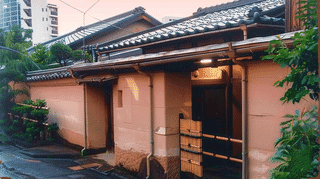
Discover Ohashi Saryo, a registered cultural property in Tokyo featuring five exquisite tea houses including a replica of National Treasure Joan. Experience authentic Japanese tea ceremonies in this urban oasis near Kamiyacho Station.
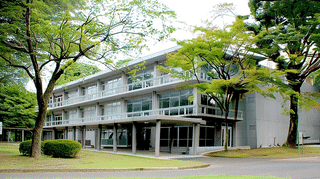
Discover ICU's Diffendorfer Memorial Hall, a registered tangible cultural property designed by Vories Architectural Office in 1958. Explore its modernist design, early aluminum sash windows, and rich heritage on the tranquil Mitaka campus.
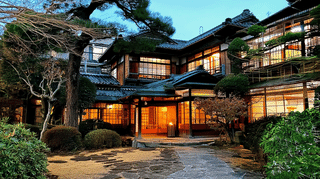
Discover Mitsubishi Electric Takanawa-so, a Registered Tangible Cultural Property in Tokyo's prestigious Shirokanedai district. This historic estate features three early Showa-period buildings showcasing the finest Japanese-Western hybrid residential architecture of the 1930s.

Held at The National Museum of Modern Art, Tokyo, this 1953 hanging scroll by Yasuda Yukihiko (1884–1978) depicts Konohana-no-Sakuyabime—the goddess of Mount Fuji and cherry blossoms from the Kojiki and Nihon Shoki. Designated a Registered Work of Art in 2019, it is recognized as one of the artist's representative masterworks of modern Nihonga.
Completed in 1933 at Shirokanedai, Tokyo, the Former Residence of Prince Asaka was designated an Important Cultural Property in 2015. Lalique glass survives inside.
Kiyosu Bridge, completed in 1928 over the Sumida River, is a graceful self-anchored suspension bridge modeled after Cologne's Hindenburg Bridge. Designated an Important Cultural Property of Japan in 2007, it remains a masterpiece of post-earthquake reconstruction engineering and modern bridge aesthetics.
The only building Le Corbusier designed in Japan, opened in 1959. Its pilotis, central hall and spiral ramp embody his concept of a Museum of Unlimited Growth.
Completed in 1933 and extended by a second architect until 1965, this Nihombashi store was Japan's first department store designated an Important Cultural Property.
Completed in 1937 in Ueno Park, Tokyo, and designated an Important Cultural Property in 2001, this tile-roofed concrete building is the Tokyo National Museum Honkan.
Standing in stately proportion at the heart of Nihonbashi-Muromachi, the Mitsui Main Building is one of Tokyo's most magnificent surviving works of early Showa-era architecture. Completed in 1929 as the headquarters of the prewar Mitsui zaibatsu, it was designed by the New York firm Trowbridge & Livingston in a confident American Beaux-Arts neoclassical style. Towering Corinthian columns line three street facades, and a vast marble banking hall on the first floor embodies the design ideals of "Grandeur, Dignity, and Simplicity" set out by managing director Dan Takuma. In 1998 it became the first large multi-tenant office building in Japan to receive Important Cultural Property status. Today the seventh floor houses the Mitsui Memorial Museum, displaying six National Treasures and dozens of further masterpieces from three centuries of the Mitsui family collection.
Mitsukoshi Nihonbashi Main Store, tracing its origins to the Echigoya kimono shop founded in 1673, was designated a National Important Cultural Property in 2016. Designed by the Yokogawa Engineering Office, the building features a majestic Western classical exterior, a breathtaking five-story marble central hall, and Art Deco interiors that showcase pioneering design from each era of expansion. Highlights include the towering Magokoro wooden sculpture, historic Wurlitzer pipe organ performances, and a tranquil rooftop garden. Located just one minute from Mitsukoshimae Station on the Tokyo Metro.
Meiji Seimeikan in Marunouchi, completed 1934, was the first Showa-era building listed as an Important Cultural Property. Its Corinthian colonnade faces the moat.
Built for the 1964 Tokyo Olympics and made an Important Cultural Property in 2021, Yoyogi National Stadium hangs its roof from cables slung between two 40m masts.
Standing at the heart of Aoyama Gakuin University's campus in Shibuya, Tokyo, Berry Hall was completed in 1931 as the new School of Theology building, the final phase of recovery from the 1923 Great Kanto Earthquake. This three-story reinforced concrete Neo-Gothic structure honors Dean Arthur D. Berry, who led the American fundraising campaign for its construction. Inside, the Charles Oscar Miller Memorial Chapel houses a 1932 German Walcker pipe organ — believed to be the oldest of its maker still in active use in Japan — and inspired the famous Showa-era song 'Student Days.' Registered as a National Tangible Cultural Property in 2008.
The Igusa Kindergarten Building in Suginami, Tokyo, is a 1933 timber schoolhouse with an L-shaped plan around its hall. Registered in 2017, it is still in daily use.
The Ikegami Family Residence in Setagaya, Tokyo, is a 1932 Western-style house with Spanish tiles, a sunroom and Art Deco rooms. Registered in 2006; a private home.
Registered in 2018, Isago Family Nagaya is a five-unit timber row house of c.1932 on the Kishimojin approach in Zoshigaya, Tokyo, with an ochre metal-banded front.
Registered in 2010, Iseya Shop and Residence is a small 1927 timber shop-house in Nihonzutsumi, Tokyo, still a tempura shop, its gable facing a vanished embankment.
Tucked away in a Kagurazaka backstreet, Issuiryō is a two-story wooden building constructed around 1951 as a carpenters' dormitory. Now a Registered Tangible Cultural Property, it preserves the hand-adzed lattices and skilled joinery of postwar Japanese craftsmanship.
Discover the Okada Nikki Shōnin Memorial Auditorium in Suginami, Tokyo — a 1937 reinforced-concrete school hall registered as a Tangible Cultural Property in 2022. Learn about its modernist design, founder Okada Nikki Shōnin's vision, and connection to Horinouchi Myōhōji Temple.