
Heian
Tokyo · 平安Browse Tokyo’s cultural heritage from the Heian period (794 – 1185). Filter by type and keyword, with concise stories, maps, and travel tips.
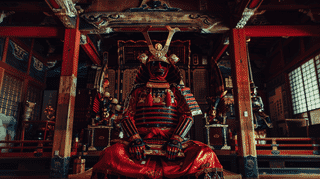
A Heian-period great armour at Musashi Mitake Shrine in Tokyo. The Agency calls it the finest work in Kanto; Meiji repairs took the colour from its lacing.
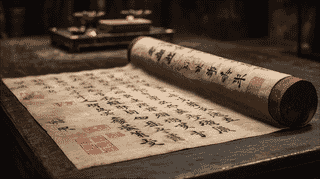
A Tang-dynasty copy of a letter by Wang Xizhi, kept in Tokyo. Nothing at all in his own hand survives, and so the copy itself is now the treasure here.
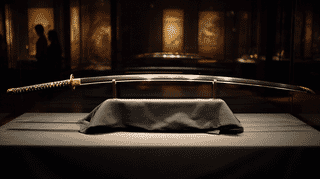
A Heian-period tachi held at the Tokyo National Museum in Tokyo. Its signature does survive, but several smiths in Bizen once bore this very same name.
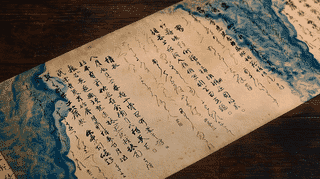
Two Heian-period scrolls kept in Tokyo, written on paper bearing indigo cloud shapes. Tradition and inference here name two quite different hands for it.

Twelve Heian-period hanging scrolls held at the Kyoto National Museum. Twelve more of the very same name and owner hang at a different museum entirely.
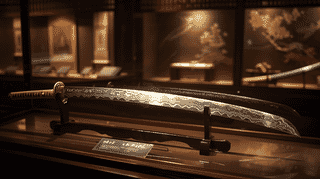
A Heian-period tachi held at the Tokyo National Museum in Tokyo. Its by-name here comes from the crescent moon shapes running along the temper line of it.
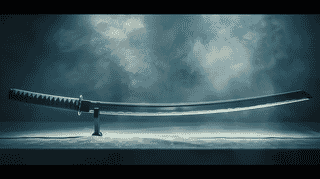
A Heian-period tachi held in Tokyo. One single maker goes under three names across the one record here: the signature, a surname, and a by-name as well.
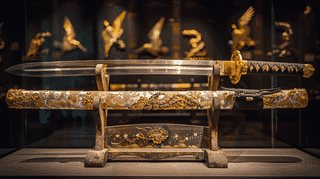
A Heian-period ceremonial sword at the Tokyo National Museum in Tokyo. Its title here uses the older variant characters for two of the words within it.

A Southern Song tea bowl in Tokyo, known as the Inaba Tenmoku. Another bowl of the very same name here was listed on exactly the same day as this one.
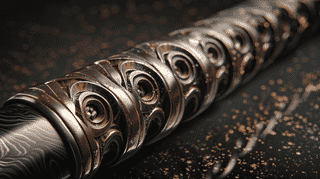
Explore the Gindo Hirumaki Tachi, a rare 12th-century National Treasure featuring unique spiral metalwork. Located at Niutsuhime Shrine near Mount Koya, this masterpiece showcases Japan's finest sword mounting craftsmanship.

A Southern Song-period silk painting of a quail bearing the "Zakkashitsu-in" connoisseurship seal of Shogun Ashikaga Yoshinori, this Important Cultural Property descends from the celebrated Higashiyama lineage of Chinese paintings cherished by the Ashikaga shogunal house, and is privately preserved in Tokyo as a quiet witness to Japan's medieval engagement with classical Chinese art.
Held privately in Tokyo, this Heian-period painting sets Vajrasattva among four bodhisattvas of desire, touch, love and pride: passion turned toward awakening.
Discover the Pigeon on a Peach Branch (Momohato-zu), a Japanese National Treasure attributed to Emperor Huizong of the Northern Song Dynasty. This exquisite silk painting from 1107 showcases the boneless (mokkotsu) technique, Slender Gold calligraphy, and a provenance tracing back to Shogun Ashikaga Yoshimitsu.
Designated as a National Treasure, Kokin Wakashū Volume 5 (Kōya-gire) is the oldest surviving manuscript of Japan's first imperially commissioned poetry anthology and a supreme masterpiece of kana calligraphy. Written around 1050 CE, this scroll of autumn poems showcases the dynamic Second Style attributed to Minamoto no Kaneyuki. Discover its profound significance, the three distinct calligraphic styles, and where to appreciate this millennium-old treasure.
A tachi signed "Shinbo saku," once a National Treasure and now an Important Cultural Property of unknown whereabouts. Related blades survive in Yamagata and Tokyo.
The Nihon Shoki Jindai Jōkan Dankan is a rare manuscript fragment of Japan's first official chronicle, transcribed in the late 8th to early 9th century. Designated an Important Cultural Property, it preserves the foundational myths of the Age of Gods—creation, the birth of the islands, the sun goddess Amaterasu—in pure classical Chinese without later reading marks, ranking among the oldest extant copies of the Nihon Shoki and bearing the distinguished provenance of poet-scholar Sasaki Nobutsuna.
A precious fragment of the Lotus Sutra in gold ink on indigo paper, handwritten by Fujiwara no Michinaga — the most powerful nobleman of the Heian period — and buried at the summit of Mount Kinpu in 1007. Housed at the Tokyo National Museum, this Important Cultural Property is among the earliest sutra mound artifacts in Japan, bearing witness to the deep Buddhist faith of the Heian aristocracy.
Calligraphy by the Southern Song Chan master Xutang Zhiyu on wax-coated paper, an Important Cultural Property prized as a tea-room scroll, privately held in Tokyo.
Discover the National Treasure "Autumn Pasture with Cattle" (Akino Bokugyu-zu), a masterpiece of Southern Song Chinese painting attributed to court artist Yan Ciping. Housed at the Sen-oku Hakukokan Museum in Roppongi, Tokyo, this exquisite silk scroll once belonged to the Ashikaga Shogun's famed Higashiyama Collection.
Discover Byōbu Dodai, a National Treasure calligraphy scroll by Ono no Michikaze, written in 928 as a draft for imperial folding screens. Housed at the Sannomaru Shōzōkan in Tokyo, this rare Heian-period masterpiece marks the birth of Japan's native wayō calligraphy style. Learn its history, highlights, and how to visit.