
National Treasures of Osaka
大 阪 府 の 国 宝Osaka’s national treasures — properties designated kokuhō for their exceptional value to the nation.

An Asuka-period straight sword owned by Shitennoji in Osaka, the Big Dipper and clouds inlaid in gold. Star-inlaid blades survive in only three groups.

A Southern Song Jian bowl at the Museum of Oriental Ceramics in Osaka, silver spots packed tightly across both surfaces. Once owned by the regent Hidetsugu.

A Southern Song tenmoku bowl at the Fujita Museum in Osaka, its black glaze scattered with haloed spots. Alone among yohen bowls, it is mottled inside and out.
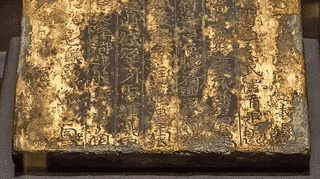
A Nara-period gilt bronze epitaph found at Magami in Takatsuki, Osaka, now at the Osaka Museum of History. Dated 762, it records lineage, office and burial.
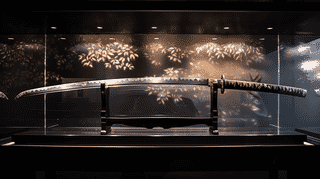
A Kamakura tachi in Osaka Prefecture, 73.3 centimetres long. Its unaltered tang still carries the signature of Sukekane. National Treasure since 1957.
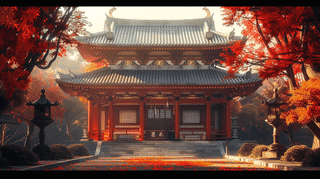
The Golden Hall of Kanshinji in Kawachinagano, Osaka, rebuilt before 1378, is a leading eclectic-style hall that mixes three styles around a divided sanctuary.
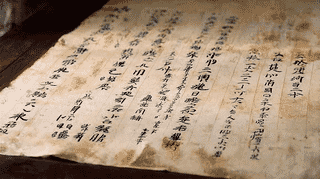
A Heian-period text owned by Amanosan Kongoji in Osaka Prefecture. Its own date field is empty, and yet a year still survives in another field of it here.
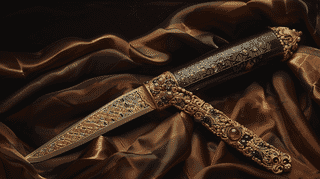
A Heian-period knife owned by Domyoji Tenmangu in Osaka Prefecture. Its own handle runs some three centimetres longer than the blade that it holds now.
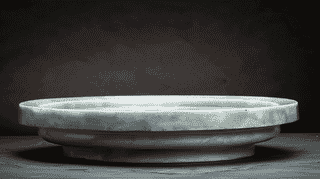
An inkstone owned by Domyoji Tenmangu in Osaka Prefecture. Its own country field reads Japan, while its own text still calls the work Tang instead here.
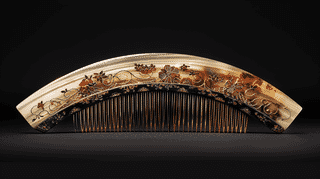
A Heian-period comb owned by Domyoji Tenmangu in Osaka Prefecture. Red and green colouring lies beneath its tortoiseshell and shows right through it now.
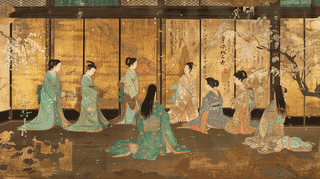
A Heian-period handscroll in Nara owned by a listed company. The company owns the scroll itself while a museum that it runs is the place that keeps it.
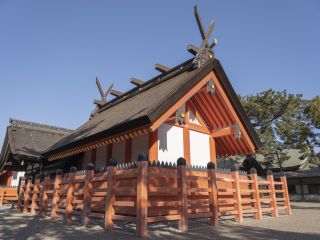
The Sumiyoshi Taisha Main Hall in Osaka is four National Treasure sanctuaries rebuilt in 1810 in the archaic Sumiyoshi style, all facing west like a fleet.

A Kamakura katana by Mitsutada in a private collection, a National Treasure since 1951, regarded as his finest and said to have passed from Nobunaga to Ieyasu.
A Kamakura tachi by Chikakage of Osafune dated in the Karyaku era, in a private collection, a National Treasure since 1953.
A 1322 tachi by Sukemitsu of the Yoshioka Ichimonji school in a private collection, a National Treasure since 1953, inscribed with invocations.
A Heian tachi by Ko-Bizen Masatsune in a private collection, a National Treasure since 1953, brilliantly made and flawless.
Discover the National Treasure tachi signed by Moritoshi, a rare Kamakura-period masterwork from the Ko-Aoe school. Learn about its elegant chirimen-hada grain, historical significance, and how to appreciate Japanese swords in Japan.
An unsigned Kamakura tanto by Masamune in a private collection, one of the three Hocho Masamune, a National Treasure since 1952.
A Kamakura tanto by Shintogo Kunimitsu in a private collection, a National Treasure since 1954, an elegant typical work.
A 1324 tanto by Sadayoshi of the Yamato Hosho school in a private collection, a National Treasure since 1955, famed as Kuwayama Hosho.
More from Osaka
Osaka’s registered properties across designations, with featured heritage and travel notes.
The complete kokuhō catalogue — browse by prefecture, period, and category.
Nationwide jūyō bunkazai — architecture, sculpture, painting, crafts, and documents.