
Momoyama
安土桃山Browse Japan’s cultural heritage from the Momoyama period (1573 – 1603). Filter by prefecture, type, and keyword, with concise stories, maps, and travel tips.

A haori held at the Tokugawa Art Museum in Nagoya. Its own period field says Momoyama, while its own date range reaches well into the Edo era besides.
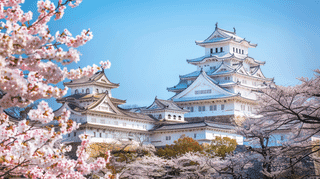
Himeji Castle I, Ro, Ha and Ni Corridor Turrets, National Treasure since 1951: four buildings closing the keep square, the 30 m Ro turret and the last-built Ni gate.
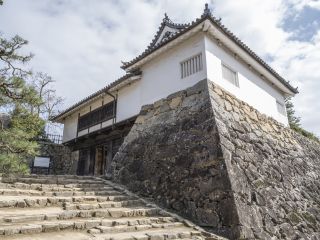
This Keicho-era gate turret guards the last approach to the keep of Hikone Castle. Its rear wall is replaced by an open balustraded gallery, a very rare arrangement.
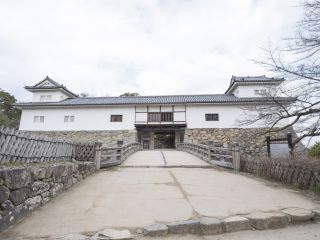
A Keicho-era gate turret at Hikone Castle with a matched corner turret at each end. The stone base joins original masonry on one side to late Edo work on the other.
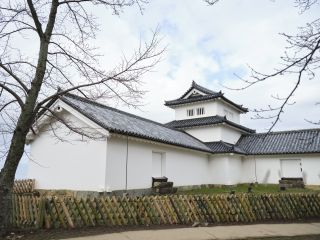
A three-tiered turret at the north-west corner of Hikone Castle's west bailey, commanding the rear approach across a dry cutting. It was heavily remodelled in 1853.
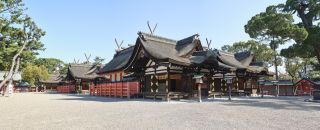
The Important Cultural Property Sumiyoshi Taisha in Osaka covers thirteen buildings, from Hideyori's 1607 South Gate and stone stage to the offering halls of 1810.

A Momoyama-period Oribe ware square bowl held privately in Aichi Prefecture, designated an Important Cultural Property in 1967 and fired at the Mino kilns.
The Momoyama armour of Honda Tadakatsu with large antler crests and a great rosary, an Important Cultural Property since 1977.
Pale green ash glaze runs down the shoulder while the foot scorches black. The Momoyama Iga flower vase Fuyo holds warped, deliberate beauty in 28 centimeters.
Discover the National Treasure imperial letter (shinkan) written by Emperor Go-Yōzei to Shōren-in Temple in Kyoto. Learn about its historical significance, exquisite calligraphy, and the dramatic events of 1596 Japan.
A National Important Cultural Property at Wakamatsu-dera, Tendo: a sacred-horse votive panel painted in 1563 by samurai-artist Gonome Sadashige for his late wife.
A silk sea pass issued in 1581 by Murakami Takeyoshi, with letters tracing the Noshima Murakami's path to Mori vassalage. Important Cultural Property, 2015.
An Important Cultural Property at Jōei-ji, Yamaguchi: a rare gold-rich portrait of the Zen abbot Ishō Enyū, painted about 1611 to 1614 by ink master Unkoku Tōgan.
An Important Cultural Property in Yamanashi, this iron sword guard by Hayashi Matashichi pierces cherry blossoms and nine-luminary crests, the two Hosokawa emblems.
Discover the 953-item Important Cultural Property collection documenting the achievements of Kunitomo Ikkansai (1778–1840), the 'Edison of the Edo Period.' From Japan's first reflecting telescope and sunspot observation records to the country's first practical air gun, explore the extraordinary scientific legacy born in a small gunsmith village in Shiga Prefecture.
A wakizashi dated 1586 by Horikawa Kunihiro, the smith later called the founder of Japan's new sword era. An early work, now an Important Cultural Property in Osaka.
In an Osaka museum, this pair of Momoyama folding screens paints Europeans arriving by ship and Christian worship on gold leaf. It opens only in May and November.
A Momoyama short sword sheathed in patterned gold, over an earlier Nobukuni blade. Its lion fittings are attributed to the Goto family, with Hosokawa provenance.
Hasegawa Tohaku's Crows and Egrets, a pair of six-panel ink screens from around 1605, sets black crows against white egrets in monochrome. Where to see it today.
The keep of Inuyama Castle above the Kiso River in Aichi, a National Treasure since 1952, built in stages from 1601 and regarded as the oldest surviving keep in Japan.