
Kamakura
鎌倉Browse Japan’s cultural heritage from the Kamakura period (1185 – 1333). Filter by prefecture, type, and keyword, with concise stories, maps, and travel tips.
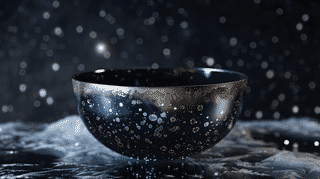
A Southern Song Jian bowl at the Museum of Oriental Ceramics in Osaka, silver spots packed tightly across both surfaces. Once owned by the regent Hidetsugu.

A Southern Song tenmoku bowl at the Fujita Museum in Osaka, its black glaze scattered with haloed spots. Alone among yohen bowls, it is mottled inside and out.
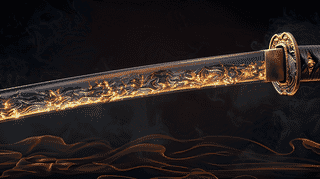
A Kamakura tachi owned by Setouchi City in Okayama, made by the Ichimonji smiths of Bizen. It descended in the Uesugi family. National Treasure since 1952.
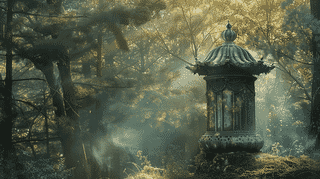
Finds from sutra mounds at Kuramadera in Kyoto, over twenty entries including three reliquary pagodas. Inscriptions show deposits made over 140 years from 1120.
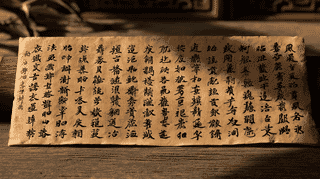
A Chinese calligraphy album in Kyoto Prefecture, the Thousand Character Classic written twice in two scripts. The Agency leaves the maker field blank.
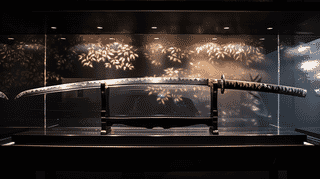
A Kamakura tachi in Osaka Prefecture, 73.3 centimetres long. Its unaltered tang still carries the signature of Sukekane. National Treasure since 1957.
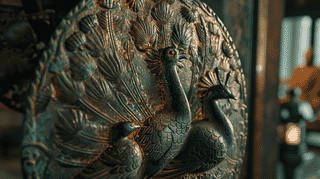
A Kamakura gong at the treasure hall of Usa Jingu in Oita. Its inscription records casting in 1209 for Mirokuji, making it a dated standard of reference.
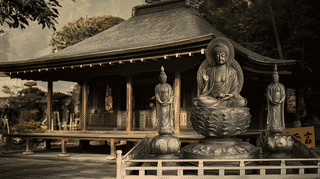
A Kamakura Amida hall in Nishio, Aichi, carrying techniques shared with Heian aristocratic houses. It is the oldest timber building in the prefecture.
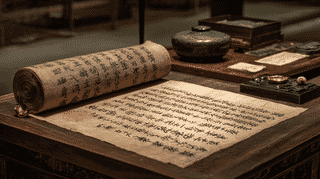
Forty volumes of the Shoku Nihongi at the Hosa Library in Nagoya. Volumes 11 to 40 are the oldest surviving copy, made in the later thirteenth century.
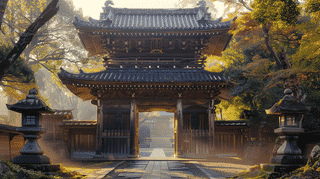
A two-storeyed gate at Ishiteji in Matsuyama, Ehime, said to date from 1318. Its frog-leg struts are held masterpieces carrying the Kamakura character.
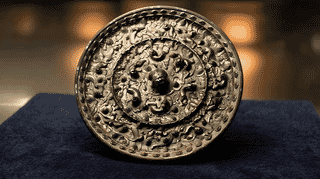
A Tang bronze mirror at Oyamazumi Shrine in Ehime, 26.8 centimetres across. A grapevine forms the ground beneath birds and beasts. National Treasure since 1953.
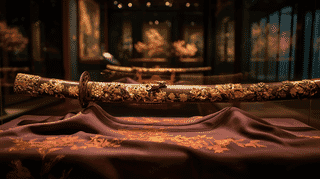
A Kamakura sword mounting at Oyamazumi Shrine in Ehime, 96.3 centimetres long. Its peony arabesque is cut differently on each part. National Treasure since 1955.
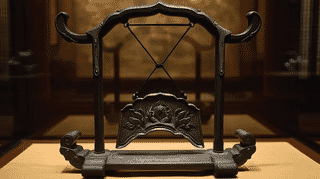
A Kamakura gong at Chusonji in Hiraizumi, Iwate. Its inscription records a gift to Motsuji in 1250, and only the peacocks on the front bear flowers in their beaks.
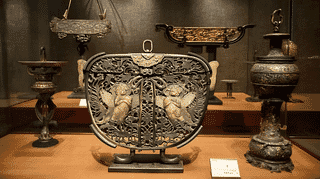
Four Kamakura ritual objects from the sutra repository at Chusonji in Iwate. The gong stand has lost its shell inlay, and only the cuts for it remain.
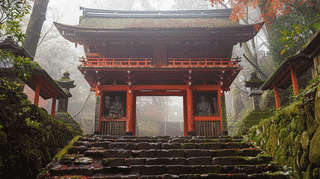
A two-storey gate of the Kamakura period on Kimino-san in Ayabe, Kyoto, roofed in thick chestnut boards. An inscription found in repair fixed its date.
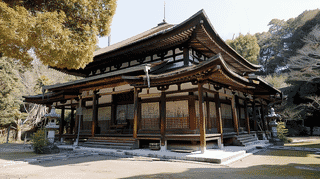
The Amida Hall of Hokaiji in Hino, Kyoto, is an early Kamakura Pure Land hall with a pent roof, a great seated Amida and painted celestials, clean and generous.
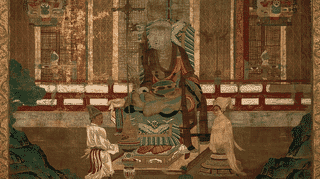
A Buddhist painting in sixteen scrolls owned by Seiryoji in Kyoto. The record gives its country as Song and its period as Northern Song, not as Japan.
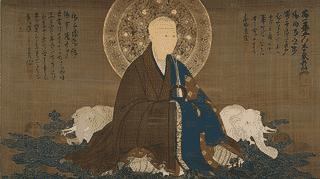
A Southern Song painting on one scroll at Tofukuji, Kyoto, showing the full figure. It came down in a single box with a second scroll of the same title.
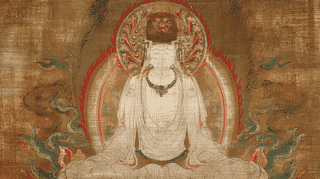
A Kamakura-period Buddhist painting on one scroll, owned by Kosanji in Kyoto. The whole of its official commentary runs to just a single short sentence.
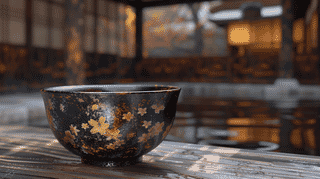
A Southern Song tea bowl held at Shokokuji in Kyoto Prefecture. On the inside, the pattern is formed exactly where the upper glaze was simply left off.