
Muromachi
室町Browse Japan’s cultural heritage from the Muromachi period (1336 – 1573). Filter by prefecture, type, and keyword, with concise stories, maps, and travel tips.
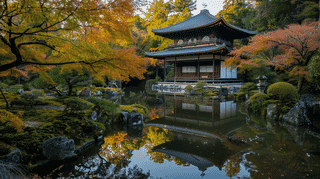
A pavilion of 1489 at Jishoji in Kyoto, its first storey a dwelling in the shoin manner and its second a Zen-style Buddhist hall. National Treasure since 1951.

A Southern Song Jian bowl at the Museum of Oriental Ceramics in Osaka, silver spots packed tightly across both surfaces. Once owned by the regent Hidetsugu.

A Southern Song tenmoku bowl at the Fujita Museum in Osaka, its black glaze scattered with haloed spots. Alone among yohen bowls, it is mottled inside and out.
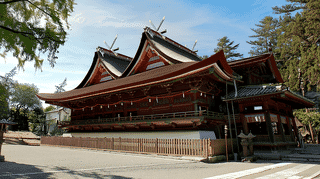
The halls of Kibitsu Shrine in Okayama were rebuilt in 1425 by Ashikaga Yoshimitsu. Two hip-and-gable roofs joined front and back form a shape found nowhere else.
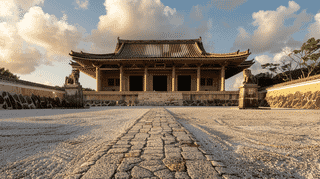
The royal tomb of the second Sho dynasty at Naha, built in 1501. Its three gabled chambers were divided by the stage of burial and by rank of the dead.
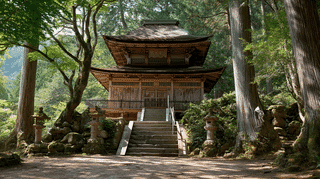
A sutra repository of 1408 at Ankokuji in Takayama, Gifu. Inside it stands an octagonal cabinet for the scriptures that turns about a post at its centre.
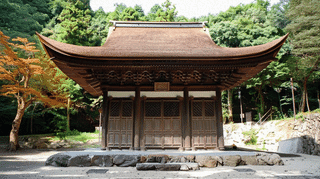
A founder's hall at Eihoji in Tajimi, Gifu, joining an outer and an inner chamber through a linking bay. The inner chamber is thought the older of the two.
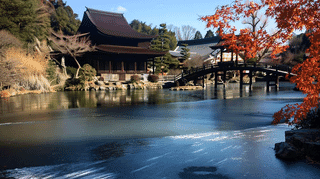
A middle-sized Zen Buddha hall at Eihoji in Tajimi, Gifu, three bays square. It simplifies the Zen manner and leaves its front open to the outside air.
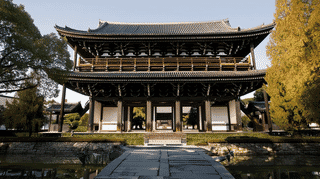
A two-storey gate of five bays at Tofukuji in Kyoto. Though it stands at a Zen temple, its structure follows the great Buddha manner instead of the Zen.
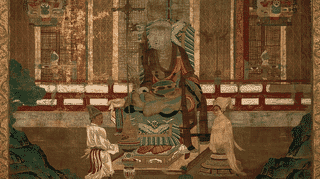
A Buddhist painting in sixteen scrolls owned by Seiryoji in Kyoto. The record gives its country as Song and its period as Northern Song, not as Japan.
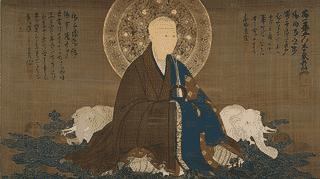
A Southern Song painting on one scroll at Tofukuji, Kyoto, showing the full figure. It came down in a single box with a second scroll of the same title.
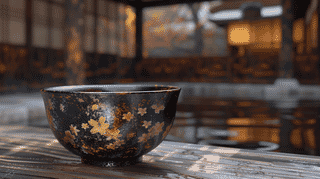
A Southern Song tea bowl held at Shokokuji in Kyoto Prefecture. On the inside, the pattern is formed exactly where the upper glaze was simply left off.
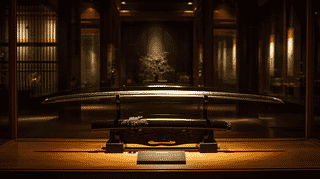
A Muromachi-period tachi at Kitano Tenmangu in Kyoto. Its title copies out the blade's own inscription, which can be read only as far as the year itself.
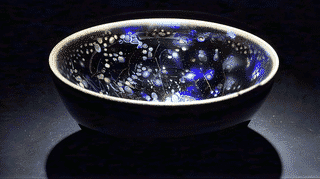
A tea bowl held at Ryukoin in Kyoto Prefecture. Yet another bowl of the very same name is recorded there under a different system of listing altogether.
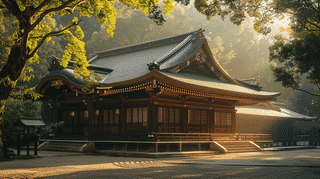
A late Muromachi-period hall in Hiroshima Prefecture. It once stood in Yamaguchi as the Buddha hall of a Zen temple, and was later moved over to here.
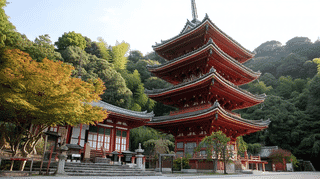
An early Muromachi-period pagoda in Hiroshima Prefecture. The image standing within it was renamed after an investigation carried out there in the 1990s.
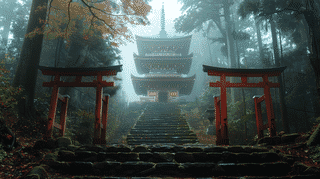
An early Muromachi pagoda on the approach to Hagurosan in Yamagata, over 29 metres in plain timber under a shingle roof. Made a National Treasure in 1966.
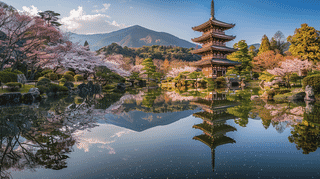
The pagoda at Rurikoji in Yamaguchi dates from about 1442. Slender above the third tier, it holds a circular altar platform found in no other pagoda in Japan.
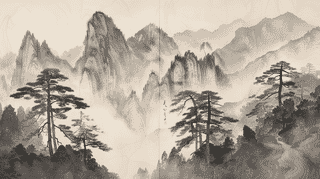
A handscroll by Sesshu in Yamaguchi Prefecture. A scroll held in Kyoto calls this one the long landscape scroll and calls itself the shorter of the two.
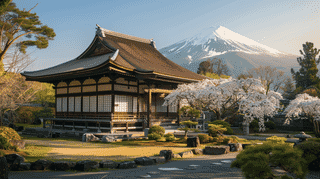
A middle Muromachi-period hall in Yamanashi Prefecture. Its own date field and its own commentary each give a year, and the two lie eighty-two years apart.