
Muromachi
室町Browse Japan’s cultural heritage from the Muromachi period (1336 – 1573). Filter by prefecture, type, and keyword, with concise stories, maps, and travel tips.
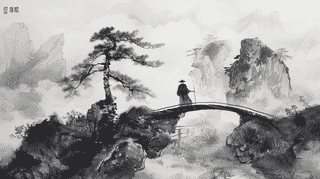
A Southern Song painting on one scroll at Kuonji in Yamanashi, recorded as having once formed a single set with two other scrolls held elsewhere today.
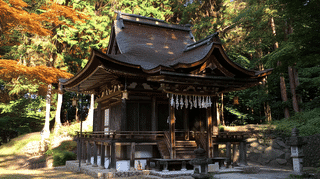
A middle Muromachi-period shrine hall in Shiga Prefecture. Its own name and its address here use two quite different characters for the one same sound.
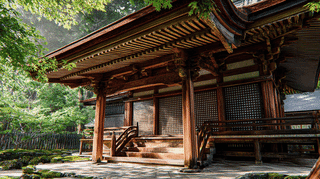
An early Muromachi hall in Shiga Prefecture, rebuilt in 1347. A temple building, it is filed here under the shrines rather than under any temples at all.
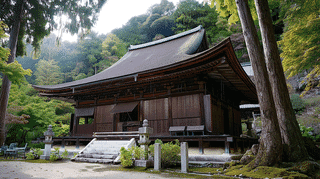
An early Muromachi-period Buddhist main hall in Shiga Prefecture. The Agency's own commentary field for the hall there has been left entirely empty now.
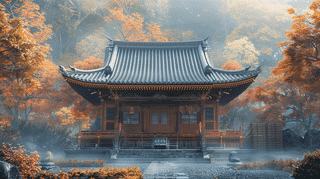
A mid-Muromachi hall at Shozokuin within Engakuji in Kamakura, held the oldest and purest Zen-style hall in Japan. Kanagawa's only National Treasure building.
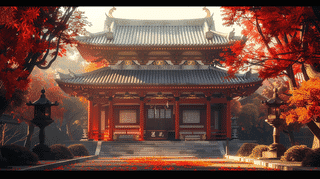
The Golden Hall of Kanshinji in Kawachinagano, Osaka, rebuilt before 1378, is a leading eclectic-style hall that mixes three styles around a divided sanctuary.
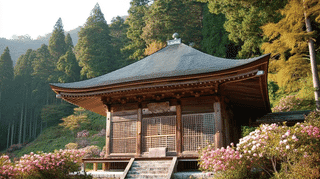
An early Muromachi-period main hall in Bungo-Ono, Oita Prefecture, Japan. Empty fields there now stand beside other fields that simply say none at all.
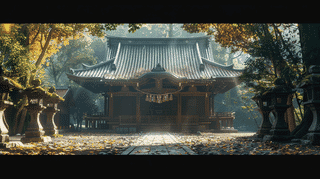
A middle Muromachi-period hall in Tokyo. One single ink inscription found there fixed its own date, the temple's own name and its own image all at once.

A Southern Song tea bowl in Tokyo, known as the Inaba Tenmoku. Another bowl of the very same name here was listed on exactly the same day as this one.
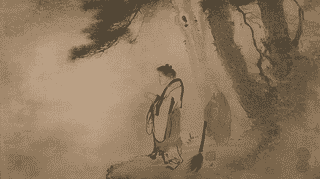
An ink painting on deposit at the Tokyo National Museum, owned by a foundation. Its title names Shide alone, and not the usual pair of the two figures.
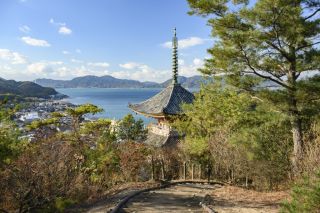
Kojoji Temple Three-Storied Pagoda on Ikuchijima dates from 1432: a Zen pagoda with strong karayo details and mostly original timber. National Treasure since 1958.
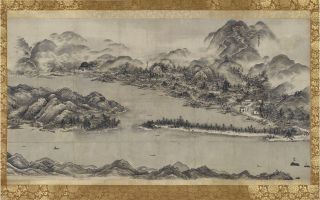
Sesshu's View of Amanohashidate, a National Treasure in Kyoto, maps the famed sandbar from a sky-high viewpoint that never existed. An unsigned sketch turned icon.

A fourteenth-century Yuan painting of a palace lady with a flute in a private collection, a National Treasure since 1952.
A late landscape by Sesshu in a private collection, a National Treasure since 1953, with two pines on a rock and layered lake and pavilions.
Discover the Persian Manuscript in Japan, a remarkable 13th-century document brought from Song-dynasty Quanzhou by the monk Keisei. This Important Cultural Property contains Persian poetry and reveals the vibrant maritime Silk Road connections between medieval Japan, China, and Persia.
Housed at the Kyoto National Museum, the Hanada-ito Odoshi Dōmaru is an Important Cultural Property of Muromachi-era armor laced with pale indigo cords and complete with its helmet and large shoulder guards. Its akoda-shaped helmet, intricate shakudō chrysanthemum fittings, and connection to the Nasu family — famed for the legendary archer Nasu no Yoichi — make it a rare window into medieval Japanese martial and craft heritage.
An Important Cultural Property of Japan held privately in Kyoto Prefecture. This hanging scroll is a Zen ink-trace (bokuseki) brushed in 1268 by the Southern Song Chan master Wu'er Kexuan (also known as Shiqiao Kexuan), giving a verse-poem to his disciple Ming, who served as the temple's head of guests. As a precisely dated late-Southern-Song original, it is a primary document of Sino-Japanese Zen exchange and an exemplar of the calligraphy that came to be revered as the highest form of hanging scroll in the Japanese tea ceremony.
This Important Cultural Property is an ink calligraphy (bokuseki) by Lingshi Ruzhi, a Yuan-dynasty Chan monk and direct disciple of the celebrated master Xutang Zhiyu. Written in 1330 as a gatha for the monk Zhèngtáng, this work connects the spiritual lineage of Rinzai Zen with Japan's tea ceremony culture and is privately held in Kyoto Prefecture.
A Muromachi-era Noh hunting robe in Kurokawa, Yamagata. Ming figured silk, tailored in Japan, bears a gold-leaf heavenly palace, sun, moon, stars and cranes.
A silk sea pass issued in 1581 by Murakami Takeyoshi, with letters tracing the Noshima Murakami's path to Mori vassalage. Important Cultural Property, 2015.