
Kofun
古墳Browse Japan’s cultural heritage from the Kofun period (300 – 538). Filter by prefecture, type, and keyword, with concise stories, maps, and travel tips.
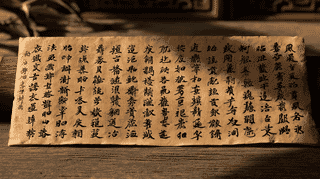
A Chinese calligraphy album in Kyoto Prefecture, the Thousand Character Classic written twice in two scripts. The Agency leaves the maker field blank.
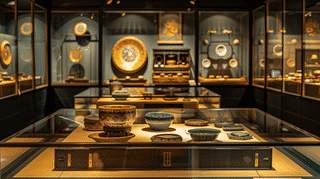
Objects said to come from the Okitsumiya ritual site on Okinoshima. The word attributed marks unconfirmed provenance, kept apart from the confirmed finds.
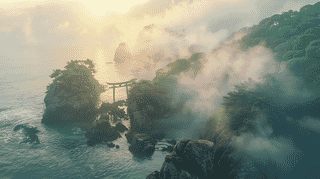
Finds from the Okitsumiya ritual site on Okinoshima in Fukuoka, spanning the Kofun to Heian periods. Designated a National Treasure as a single lot in 1962.
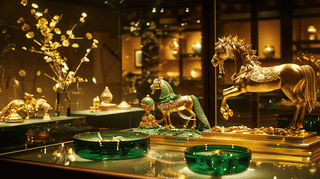
Grave goods from an early seventh-century mound in the precinct of Miyajidake Shrine in Fukuoka, including gilt bronze horse trappings. National Treasure since 1952.
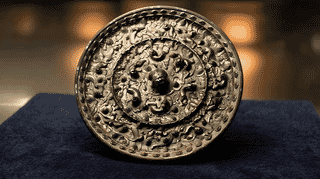
A Tang bronze mirror at Oyamazumi Shrine in Ehime, 26.8 centimetres across. A grapevine forms the ground beneath birds and beasts. National Treasure since 1953.
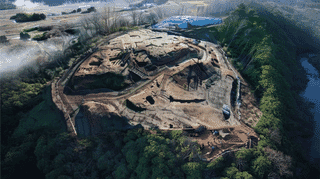
A large defended settlement of the later 4th century in Kurihara, Miyagi. Mirrors and ironwork came from pit dwellings that appear to have been burned.
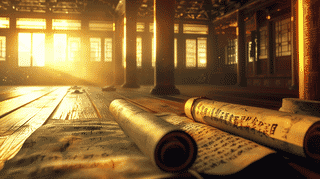
Three Tang-dynasty scrolls at Kosanji in Kyoto Prefecture. The country field of the official record reads China here, and it does not read Japan at all.
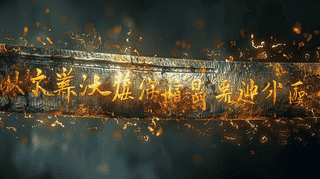
Kofun-period finds at a museum in Saitama, listed together as one single lot. The gold-inscribed iron sword among them is a contemporary source of it.
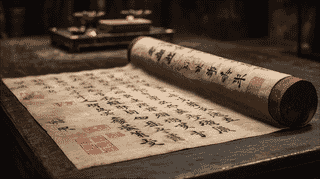
A Tang-dynasty copy of a letter by Wang Xizhi, kept in Tokyo. Nothing at all in his own hand survives, and so the copy itself is now the treasure here.
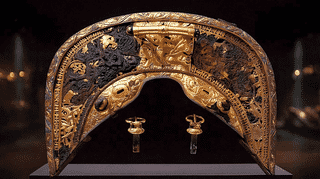
Kofun-period finds in Nara Prefecture, listed as a single lot. The tomb itself is placed about 350 metres to the west of Horyuji, and not by any address.
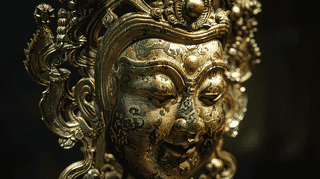
A Tang-period staff head owned by Zentsuji in Kagawa Prefecture. It came over from China long ago and is said to have changed the metalwork made here.

A Tang-period text owned by Enryakuji in Shiga Prefecture. Its own country field reads China, while its own period field gives the Tang dynasty of it.
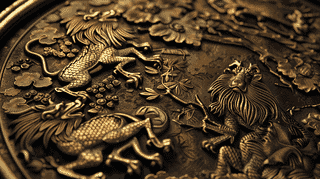
A mirror owned by Katori Jingu in Chiba Prefecture. Another one made from the very same mould is now among the Shosoin treasures over in Nara as well.
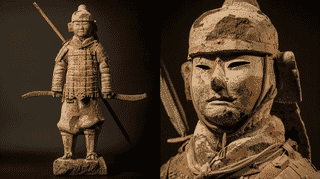
A Kofun-period haniwa at the Tokyo National Museum in Tokyo, counted here as one single figure rather than being gathered into a lot with other finds.
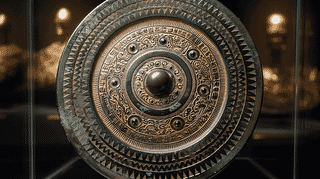
A Kofun-period mirror owned by the Gotoh Museum in Setagaya, Tokyo. Its own commentary there now runs to just one single sentence and no more than this.

Held privately in Kyoto, this Important Cultural Property is a stone Buddhist relief dated to Kaiyuan 12 (724 CE). One of the famed Baoqing Temple group that once adorned Empress Wu Zetian's Seven-Treasure Platform in Tang Chang'an, it represents the High Tang synthesis of Indian Gupta and Chinese sculptural traditions.
Housed at the Kyoto National Museum, these five 3rd-century bronze mirrors unearthed in 1921 from Akazuka Kofun in Usa City, Oita Prefecture, are designated Important Cultural Properties. Chiefly triangular-rimmed deity-and-beast mirrors, they share molds with mirrors from tumuli across Japan, offering rare evidence of the early Yamato polity's reach and illuminating the great Queen Himiko debate.
Discover the Henkei Hōkaku Kamon-kyō, an Important Cultural Property held by the Kyoto National Museum. Cast in bronze in early Kofun-period Japan around the 4th century, this remarkable wakyō mirror reinterprets the Chinese Han-dynasty TLV design, replacing the Four Divine Beasts with elegant whirl patterns. Its decorative band wrapping around onto the polished face is almost unique in East Asian bronze mirror history.
Preserved at the Kyoto National Museum, this manuscript carries the Benmeiron, or 'Discourse on Discriminating Fate,' from volume fifty-four of the Wen Xuan—the oldest surviving anthology of Chinese literature, compiled by Crown Prince Xiao Tong of the Liang dynasty. Reaching Japan by the Nara period and treasured by Heian-era aristocrats, manuscripts of the Wen Xuan reveal the deep cultural ties between Japan and continental East Asia. A meaningful destination for travelers drawn to classical Chinese thought, calligraphic beauty, and the literary world that shaped Japan's classical age.
The Yamashina Nishinoyama Kofun Excavated Artifacts, designated a National Treasure in 1953 and housed at the Kyoto University Museum, are an extraordinary collection of early Heian period grave goods. Featuring a gold-mounted great sword, a gold-and-silver twin-phoenix mirror, and stone belt ornaments befitting the highest court nobility, these artifacts are believed to have come from the tomb of Sakanoue no Tamuramaro — the legendary Sei-i Taishogun who pacified northern Japan and founded Kiyomizu-dera Temple.