
Asuka
Tokyo · 飛鳥Browse Tokyo’s cultural heritage from the Asuka period (538 – 710). Filter by type and keyword, with concise stories, maps, and travel tips.
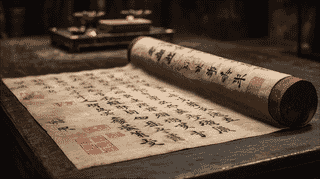
A Tang-dynasty copy of a letter by Wang Xizhi, kept in Tokyo. Nothing at all in his own hand survives, and so the copy itself is now the treasure here.
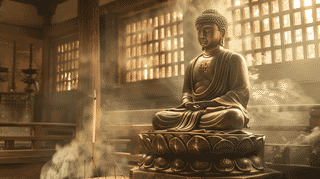
A gilt bronze Buddha at Jindaiji in Tokyo, seated on a chair with both feet forward. Found beneath an altar platform in 1909, it became a National Treasure in 2017.

A Southern Song tea bowl in Tokyo, known as the Inaba Tenmoku. Another bowl of the very same name here was listed on exactly the same day as this one.

Five Asuka-period murals from the Kitora tomb in Nara, the only set in Japan where all four guardians survive. Its ceiling star chart is the oldest in East Asia.

A Southern Song-period silk painting of a quail bearing the "Zakkashitsu-in" connoisseurship seal of Shogun Ashikaga Yoshinori, this Important Cultural Property descends from the celebrated Higashiyama lineage of Chinese paintings cherished by the Ashikaga shogunal house, and is privately preserved in Tokyo as a quiet witness to Japan's medieval engagement with classical Chinese art.
Discover the Pigeon on a Peach Branch (Momohato-zu), a Japanese National Treasure attributed to Emperor Huizong of the Northern Song Dynasty. This exquisite silk painting from 1107 showcases the boneless (mokkotsu) technique, Slender Gold calligraphy, and a provenance tracing back to Shogun Ashikaga Yoshimitsu.
Calligraphy by the Southern Song Chan master Xutang Zhiyu on wax-coated paper, an Important Cultural Property prized as a tea-room scroll, privately held in Tokyo.
Discover the National Treasure "Autumn Pasture with Cattle" (Akino Bokugyu-zu), a masterpiece of Southern Song Chinese painting attributed to court artist Yan Ciping. Housed at the Sen-oku Hakukokan Museum in Roppongi, Tokyo, this exquisite silk scroll once belonged to the Ashikaga Shogun's famed Higashiyama Collection.
A Tang manuscript of the Book of Han, chapter 57 on poet Yang Xiong, at Kyoto National Museum. Taboo strokes and 948 reading marks trace ten centuries of study.
At the Kyoto National Museum, the National Treasure Jōmyō Genron is an eight-scroll copy of Jizang's commentary on the Vimalakīrti Sutra, with colophons dated 706.
This Tang-dynasty scroll at the Kyoto National Museum preserves 172 lines of the Shishuo Xinshu, the world's oldest surviving manuscript of the Chinese classic.
A Southern Song celadon vase of shimokabura form, a Japanese National Treasure with a smooth, crackle-free pale-blue glaze. Its kiln is still debated by scholars.
A National Treasure near Tokyo: a Southern Song printing of the Hanshu in 61 fascicles, holding the earliest reliable Chinese record of Japan, the Wa people.
A complete Southern Song printing of the Book of the Later Han, kept in Sakura, whose account of the eastern peoples names Queen Himiko and an embassy of 57 CE.
A National Treasure near Tokyo: the Song-dynasty Shiji printed by Huang Shanfu, the oldest complete copy of the three-commentary edition, all 130 chapters intact.
On the back of the Akihagi-jo handscroll lies a Tang copy of the Huainanzi's military chapter, older than the poems on its front. Both sides are National Treasures.
Brushed in 1124, this is the oldest surviving Zen calligraphy. Cut in two long ago, its front half is National Treasure number one, the supreme tearoom scroll.
At the Tokyo National Museum, this Tang scroll is the oldest surviving copy of the early Tang writer Wang Bo, brushed around 685 to 689, a decade after his death.
Two white-bronze mirrors at the Tokyo National Museum, donated to Hōryūji by Empress Kōmyō in 736. Their backs cast a Daoist realm of sacred peaks and seas.
Discover the Matsuya Katatsuki, an Important Cultural Property of Japan — a Chinese-made shouldered tea caddy that passed through the hands of shoguns and tea masters for over 500 years. Now housed at the Nezu Museum in Tokyo's Aoyama district.