What Is the Sojiji Bell and Drum Tower?
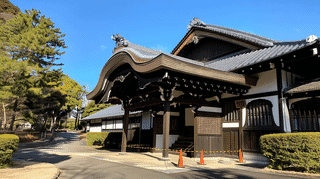
The Sojiji Bell and Drum Tower (總持寺鐘鼓楼, Shōkurō) is a small two-level tower at Sojiji Temple in Tsurumi-ku, Yokohama, built in 1915 and registered as a Registered Tangible Cultural Property in 2005.
It stands between the Hokodo and the Shoryo: a 2-storey timber structure with a tiled roof, just 16 square meters in area. It is three bays by two under a hip-and-gable roof (Irimoya-zukuri) of pantiles (Sangawara-buki). Both levels share the same footprint and continuous posts run the full height. The ground floor is a passage; the bell hangs at the centre of the upper floor, which has an exposed roof structure (Keshō-yaneura).
According to the temple's digital archive, the tower was donated by Murai Kichibei, a businessman active in the Meiji and Taisho eras. The relocated head temple relied on patrons like him to build its new precinct, and Murai also gave many Buddhist images and ritual objects.
Why the Bell and Drum Tower Was Registered
The Sojiji Bell and Drum Tower was listed as a model of design. The Agency for Cultural Affairs praises the skill with which it blends old-fashioned features and Zenshūyō ones.
On the old-fashioned side are a veranda with a railing (Kōran) and latticed windows (Renji-mado). On the Zen side are double-leaf panelled doors, bell-shaped windows (Katōmado) and rafters set in pairs. The tower fits both vocabularies into sixteen square meters without strain.
Putting a passage through the ground floor and the bell above is practical, too. The tower sits on a route between halls and serves both to mark the hours and to let people through.
What to Look For at the Bell and Drum Tower
Because both levels are the same size and the posts run straight up, the tower reads as a neat box, set off by the curve of its roof.
Around the upper floor, latticed and bell-shaped windows sit behind the railed veranda. Look under the eaves to see the rafters grouped in pairs.
Passing underneath, you cannot see the upper room, but you do feel how compact the tower is. The Sojiji Bell and Drum Tower concentrates a lot of design into very little space.
Visiting the Sojiji Bell and Drum Tower
The Sojiji Bell and Drum Tower stands between the Hokodo and the Shoryo on the west side of the precinct, and its exterior can be seen from there. There is no published access to the upper floor.
The ground-floor passage is part of the internal circulation, so whether you can walk through depends on the time and on ceremonies. On the guided building tour, follow your guide and do not touch the bell. Directions and booking details are on the Sojiji Temple page.
- 📍 Plan Your Visit to Kanagawa
- Find tours, activities & transport passes near Sojiji Bell and Drum Tower
- [ Kamakura Buddha Hakone Onsen & Yokohama Tours ]
Q&A
- Where is the Sojiji Bell and Drum Tower?
- Between the Hokodo and the Shoryo, on the west side of the central precinct.
- Who donated the Sojiji Bell and Drum Tower?
- The temple archive credits Murai Kichibei, a businessman of the Meiji and Taisho eras.
- What is distinctive about the Sojiji Bell and Drum Tower?
- Both levels share one footprint with continuous posts; the ground floor is a passage and the bell hangs upstairs. It mixes a railed veranda and latticed windows with Zen-style doors, bell-shaped windows and paired rafters.
- When was the Sojiji Bell and Drum Tower built and registered?
- It was built in 1915 and registered on 12 July 2005.
- Can I climb the Sojiji Bell and Drum Tower?
- There is no published access to the upper floor; the exterior can be viewed from the grounds.
Basic Information
| Name | Sojiji Bell and Drum Tower (總持寺鐘鼓楼) |
|---|---|
| Location | 2-1-1 Tsurumi, Tsurumi-ku, Yokohama City, Kanagawa Prefecture |
| Designation | Registered Tangible Cultural Property (Structure) |
| Year Designated | 2005 (Heisei 17) |
| Quantity | 1 building |
| Dimensions | Timber, 2-storey; building area 16 square meters |
| Owner | Religious Corporation Daihonzan Sojiji |
| Public Access | Exterior viewable from the grounds; no published access to the upper floor |
References
- Sojiji Bell and Drum Tower - Database of National Cultural Properties, Agency for Cultural Affairs
- https://kunishitei.bunka.go.jp/bsys/maindetails/101/00004720
- History of Sojiji Through Its Collections - Sojiji Digital Archive
- https://adeac.jp/sojiji/top/timeline/index.html
- Visiting Information (Japanese) - Sotoshu Daihonzan Sojiji
- https://www.sojiji.jp/visit/
Last verified: 2026.09.16