What Is Ninnaji Temple Black Study Hall?
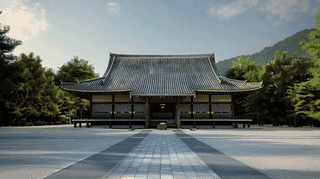
Ninnaji Temple Black Study Hall (仁和寺黒書院, Kuroshoin) is a south-facing reception hall built in 1910 on the west side of the Shinden in the Ninnaji palace compound, Omuro-Ouchi, Ukyo Ward, Kyoto City, and it was registered as a Registered Tangible Cultural Property on October 28, 2011.
Ninnaji lost most of its palace buildings in a fire in 1887 and rebuilt them one by one over the following decades. According to the temple, the Black Study Hall began as the main residential hall of the former Yasui Monzeki, the temple Rengeko-in, which was taken down, moved to Ninnaji and remodeled. The temple names Yasuda Tokihide as the designer.
Sources differ by a year on the completion date. The Agency for Cultural Affairs database gives 1910, and the temple's multilingual commentary also dates the move to 1910, while the precinct guide on the temple's website says the hall was completed in 1909. This article follows the Agency.
Why Ninnaji Temple Black Study Hall Is Registered
The criterion was serving as a model of design. The hall measures 15.5 m by 11.7 m, with a building area of 181 square metres, under a hip-and-gable (irimoya) roof of pantiles (Sangawara-buki). Corridors roofed in cypress bark (Hiwadabuki) join it to both the Shinden and the White Study Hall.
The plan is the six-room layout of a Zen abbot's quarters (Hōjō): two rows of three rooms, front and back. The rear west room carries the formal display features, including a Tokonoma alcove, and ranks highest. The temple's commentary adds that this northwest corner room has a special coffered ceiling.
Around the outside run Mairado, wooden doors crossed by closely spaced horizontal slats that close into an almost wall-like surface. The Agency credits them with giving the building the calm, inward-looking face of a private study hall. Compare the open veranda of the White Study Hall and you can see how the palace uses its doors to separate the public front from the private rooms behind.
The temple also notes that because elements were brought in from other buildings, the six rooms each differ a little, yet the whole reads in the same style as the Shinden and the White Study Hall, and the linking corridors make the three work together as ceremonial space.
Highlights: Domoto Insho's Panels and the Room Names
The painted sliding panels are by the Japanese-style painter Domoto Insho, who worked on them in 1937. The titles he gave his paintings, such as the Bamboo Room and the Autumn Grasses Room, became the names of the rooms themselves. Check the room name before you look at the panels and you will see how completely the painting sets the character of each space.
In the same year, 1937, Fukunaga Seihan painted the pines in the White Study Hall. Walking from one study hall to the other lets you compare two painters working at the same moment.
Pay attention to the corridors as well. Those linking Ninnaji Temple Black Study Hall to the Shinden and the White Study Hall carry bark roofs, unlike the tiled halls themselves. Look back at the Black Study Hall from a corridor and the horizontal lines of its slatted doors give the facade its quiet rhythm.
Visiting Ninnaji Temple Black Study Hall
Ninnaji Temple Black Study Hall is on the Ninnaji Palace Garden route; you reach it near the end, after the Shinden and the Reimeiden, and the corridors on the way give you the view back at its facade.
Personal photography is allowed in the grounds, but the temple does not permit it inside worship halls. Check the signs on site before photographing the painted panels.
Opening hours, admission and directions to the temple are covered on the Ninnaji Temple page.
- 📍 Plan Your Visit to Kyoto
- Find tours, activities & transport passes near Ninnaji Temple Black Study Hall
- [ Kinkakuji Fushimi Inari & Kimono Rental ]
Q&A
- When was Ninnaji Temple Black Study Hall built, and when was it registered?
- The Agency for Cultural Affairs database dates it to 1910; the temple's website gives 1909, so the sources differ by a year. Its registration as a Registered Tangible Cultural Property dates from October 28, 2011.
- Where did Ninnaji Temple Black Study Hall originally stand?
- According to the temple, it was the main residential hall of the former Yasui Monzeki (Rengeko-in), moved to Ninnaji and remodeled. The temple names Yasuda Tokihide as the designer.
- Who painted the sliding panels in Ninnaji Temple Black Study Hall?
- Domoto Insho, in 1937. The titles he gave his paintings, such as the Bamboo Room and the Autumn Grasses Room, are still used as the names of the rooms.
- How is Ninnaji Temple Black Study Hall laid out?
- It follows the six-room plan of an abbot's quarters, with two rows of three rooms. The rear west room holds the formal display alcove, and slatted mairado doors enclose the outside.
- Can I visit Ninnaji Temple Black Study Hall?
- Yes, it is on the Ninnaji Palace Garden route, after the Shinden and the Reimeiden. Photography inside worship halls is not permitted, so follow the signs on site regarding the panels.
Basic Information
| Name | Ninnaji Temple Black Study Hall (仁和寺黒書院) |
|---|---|
| Location | 33-1 Omuro-Ouchi, Ukyo Ward, Kyoto City, Kyoto Prefecture |
| Designation | Registered Tangible Cultural Property (Building) |
| Year Designated | Registered October 28, 2011 |
| Quantity | 1 building |
| Dimensions | 15.5 m by 11.7 m; building area 181 square metres (single-storey timber, hip-and-gable tile roof, connecting corridors) |
| Owner | Religious Corporation Ninnaji |
| Public Access | Inside the paid Ninnaji Palace Garden area; seen during regular visiting hours |
References
- Agency for Cultural Affairs Database: Ninnaji Kuroshoin
- https://kunishitei.bunka.go.jp/bsys/maindetails/101/00009041
- Japan Tourism Agency Multilingual Commentary Database: Kuroshoin
- https://www.mlit.go.jp/tagengo-db/R1-00369.html
- Ninnaji: Guide to the Precincts (Japanese)
- https://ninnaji.jp/precincts/
- Ninnaji: About the Temple (Japanese)
- https://ninnaji.jp/about_outline/
- Ninnaji: Frequently Asked Questions (Japanese)
- https://ninnaji.jp/question/
Last verified: 2026.09.19